
Bridges makes push for parole
Advertisement
Read this article for free:
or
Already have an account? Log in here »
We need your support!
Local journalism needs your support!
As we navigate through unprecedented times, our journalists are working harder than ever to bring you the latest local updates to keep you safe and informed.
Now, more than ever, we need your support.
Starting at $15.99 plus taxes every four weeks you can access your Brandon Sun online and full access to all content as it appears on our website.
Subscribe Nowor call circulation directly at (204) 727-0527.
Your pledge helps to ensure we provide the news that matters most to your community!
To continue reading, please subscribe:
Add Brandon Sun access to your Free Press subscription for only an additional
$1 for the first 4 weeks*
- Enjoy unlimited reading on brandonsun.com
- Read the Brandon Sun E-Edition, our digital replica newspaper
*Your next Free Press subscription payment will increase by $1.00 and you will be charged $20.95 plus GST for four weeks. After four weeks, your payment will increase to $24.95 plus GST every four weeks.
Read unlimited articles for free today:
or
Already have an account? Log in here »
Hey there, time traveller!
This article was published 30/03/2021 (1898 days ago), so information in it may no longer be current.
A man who has spent the last 17 years in prison for killing a woman and burying her in another person’s grave was back in court on Monday asking to be allowed to apply for parole.
Michael Bridges was convicted of first-degree murder in the death of 18-year-old Erin Chorney in 2005, when he was 24 years old. He was sentenced to spend 25 years in prison without parole, but is applying to be allowed to ask for parole earlier under a now-repealed section of the Criminal Code.
The murder was a cold case for nearly two years before the RCMP arrested him in a sting operation.
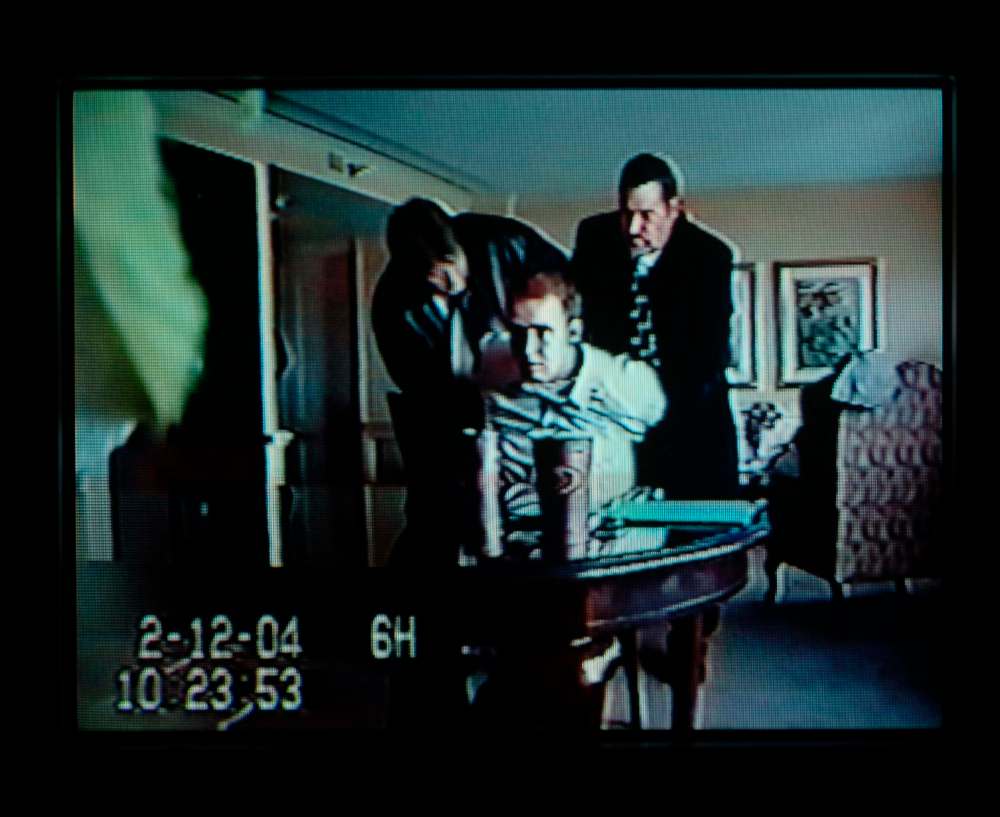
Monday marked the first day of Bridges’ faint hope clause hearing in the Court of Queen’s Bench, which determines whether he is allowed to apply for parole after serving 15 years of his sentence, Justice John Menzies said in his opening statement to the jury.
The hearing is not a trial and doesn’t determine whether he will receive parole, only whether he can apply.
Bridges appeared in court wearing a mask, glasses and a blue dress shirt. He sat in the accused’s box flanked by two Manitoba Sheriffs officers.
The day began with a jury selection, which was held at the Western Manitoba Centennial Auditorium. Nine women and three men sit on the jury.
In the defence’s opening statement, lawyer Ryan Amy said the jury will hear from a wide variety of people about the time Bridges has so far spent in jail and the progress he has made.
“Mr. Bridges committed a reprehensible crime against a young woman, Erin Chorney,” Amy told the jury.
“You will be provided information about this crime, about the coverup and what has happened since. You will hear about the transition of a young, ego-centric, callous, 21-year-old who has grown into an insightful, remorseful 40-year-old model prisoner.”
Crown attorney Joel Myskiw said Bridges walked into the courtroom on Monday a convicted murderer and he will leave the hearing the same way. He described the event as a “senseless murder.”
“Erin Chorney is not the only victim here. Erin’s entire family was victimized by what Michael (Bridges) did,” Myskiw said.
Chorney was killed by Bridges in April 2002 after a dispute around assault charges she pressed against him, according to an agreed statement of facts read by Crown attorney Mark Lafreniere.
Chorney spent the day with her mother watching a movie and had dinner with her family, Lafreniere said.
That evening, she told her mother she was going for coffee, but never returned.
Lafreniere said Chorney and Bridges were in a romantic relationship when she died.
The RCMP began a “Mr. Big” operation with Bridges involving an undercover officer pretending to be part of a criminal organization, Lafreniere said.
It started with an undercover officer telling Bridges he won tickets to a Calgary Flames hockey game in Winnipeg, where he was introduced to another officer posing as a member of a criminal organization.
The undercover officer struck up a friendship with Bridges and started to gain his trust, according to the agreed statement of facts.
He introduced Bridges to the fake criminal operation and Bridges slowly became more deeply involved over the course of several months in 2003 and 2004.
The officer told Bridges he would have to speak to “the boss” of the operation to fully join and admit to any past crimes before being allowed in.
Lafreniere said the officer told Bridges to be truthful with him about past mistakes. He told Bridges the boss doesn’t care about what happened and he could make problems go away.
Eventually, in early 2004, Bridges said on video he killed Chorney, who at that point was still missing, the Crown told the court. The confession was before a staged meeting with the boss in an upscale hotel room, video of which was played in court.
In the confession, Bridges said the dispute started over the assault charge. Chorney allegedly tried to punch Bridges, so he pushed her away, Lafreniere said.
Bridges then choked her for a “minute or two” before her body dropped, the Crown said. Bridges was still angry while Chorney was on the ground and he knew he would be going to jail.
“The applicant (Bridges) knew this time he was going to jail for sure. He said he was too pretty to go to jail. As well, the applicant felt his life would be ruined. He wouldn’t be able to cross the border into the United States and any career he might choose would be affected,” Lafreniere said.
Bridges cut the cord off a hairdryer and used it to strangle Chorney for another minute, Lafreniere said. She was still breathing, so he dragged her body to a full bathtub and put her head underwater for approximately 20 minutes.
The next day, Bridges wrapped her body in a bedsheet and buried her in a grave at the Brandon Municipal Cemetery.
Chorney’s body was found in an advanced state of decomposition where Bridges said it would be.
The faint hope clause was repealed from the Criminal Code in December 2011, but Bridges can still apply under it as he was convicted before it was removed. The clause, otherwise known as s.745.6 of the Canadian Criminal Code, was a statutory provision that allowed offenders sentenced to life imprisonment with a “parole eligibility period of greater than 15 years to apply for early parole once they have served 15 years.”
The faint hope clause hearing is scheduled to continue today with Amy and fellow defence lawyer Carley Mahoney calling their first witness.
» dmay@brandonsun.com
» Twitter: @DrewMay_