
Advisory body was ‘very keen’ to have Indigenous Supreme Court candidate: Campbell
Advertisement
Read this article for free:
or
Already have an account? Log in here »
We need your support!
Local journalism needs your support!
As we navigate through unprecedented times, our journalists are working harder than ever to bring you the latest local updates to keep you safe and informed.
Now, more than ever, we need your support.
Starting at $15.99 plus taxes every four weeks you can access your Brandon Sun online and full access to all content as it appears on our website.
Subscribe Nowor call circulation directly at (204) 727-0527.
Your pledge helps to ensure we provide the news that matters most to your community!
To continue reading, please subscribe:
Add Brandon Sun access to your Free Press subscription for only an additional
$1 for the first 4 weeks*
- Enjoy unlimited reading on brandonsun.com
- Read the Brandon Sun E-Edition, our digital replica newspaper
*Your next Free Press subscription payment will increase by $1.00 and you will be charged $20.95 plus GST for four weeks. After four weeks, your payment will increase to $24.95 plus GST every four weeks.
Read unlimited articles for free today:
or
Already have an account? Log in here »
Hey there, time traveller!
This article was published 22/06/2021 (1939 days ago), so information in it may no longer be current.
OTTAWA – The head of an independent advisory board on Supreme Court appointments said the body was “very keen” to find an Indigenous candidate to fill the latest vacancy.
But Kim Campbell suggested at a House of Commons committee Tuesday the need to be functionally bilingual limited the scope of choice.
Campbell, a former prime minister and justice minister, indicated that relatively junior judges or lawyers were among the bilingual Indigenous possibilities for the top court.
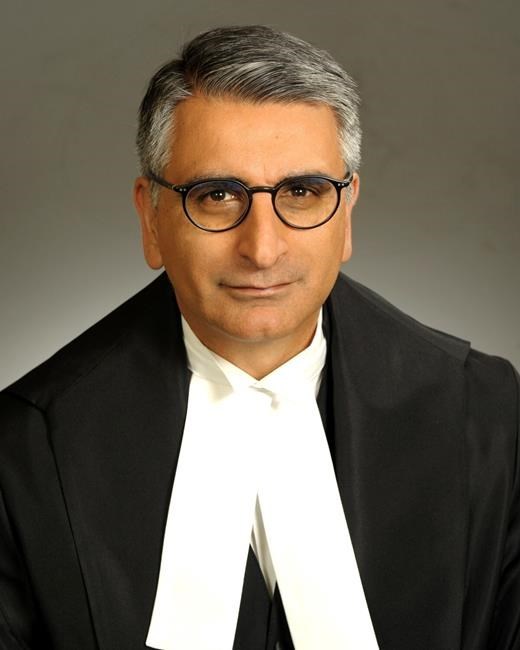
From a short list drafted by the advisory board, Prime Minister Justin Trudeau recently named Ontario judge Mahmud Jamal to the Supreme Court.
Jamal, born in Kenya to a family originally from India, is the first person of colour to be named to the country’s top court.
Campbell said the panel was gratified by the diversity of candidates available to vet.
Of 18 candidates, seven self-identified as visible minorities, three as being of a specific culture or ethnicity, five as Indigenous, one as LGBTQ and none as having a disability, she said.
“I do believe that within the next four or five years, we will see an Indigenous candidate on the Supreme Court of Canada,” Campbell said.
But she added there has already been significant recognition of the importance of non-Indigenous justices on the top court being well-versed in issues affecting First Nations.
Jamal has told of being taunted and harassed as a youth in England because of his name and appearance. His family moved to Edmonton in 1981, and he studied economics before finding his home in the law.
He was a longtime litigator before becoming a judge of Ontario’s Appeal Court two years ago.
At a question-and-answer session with parliamentarians Tuesday, Jamal said that as someone from a racialized background, he feels a tremendous responsibility.
“And so I’m very, very mindful of that,” Jamal said.
He emphasized that it was not about him personally, but said his presence on the bench allows other minorities to realize that public institutions are open to them, that they can see their own faces reflected in the judiciary. He said that, in turn, fosters trust in institutions.
Jamal said although he spent years at a Bay Street law firm, his roots as a newcomer to Canada instilled in him the importance of helping disadvantaged people. He has enjoyed doing pro bono work on cases throughout his career.
“I hope I made it part of who I was.”
Jamal, who speaks with the English accent of his youth, is poised to join the Supreme Court but is also very much a student of the institution, frequently quoting the sage observations of former high court justices.
He told the MPs and senators he relishes delving into complex cases and applying the law to make sense of them.
He stressed the importance of coming into a courtroom with an open mind and a willingness to listen, then deciding cases based on the facts and evidence before the court through the prism of the law.
Jamal said he tries to write decisions with the losing party in mind, hoping they will come away thinking they had been given a fair shake, “and that I’d listened to their arguments, that I’d understood their arguments and that I’d addressed them.”
“And I try to do that every day in my work on the Court of Appeal.”
This report by The Canadian Press was first published June 22, 2021.
Related Articles
Trudeau paints Parliament as dysfunctional
Advertisement Advertise With Us
Advertisement Advertise With Us