
First Nation in N.S. vows to keep fishing despite arrest for ‘unauthorized fishery’
Advertisement
Read this article for free:
or
Already have an account? Log in here »
We need your support!
Local journalism needs your support!
As we navigate through unprecedented times, our journalists are working harder than ever to bring you the latest local updates to keep you safe and informed.
Now, more than ever, we need your support.
Starting at $15.99 plus taxes every four weeks you can access your Brandon Sun online and full access to all content as it appears on our website.
Subscribe Nowor call circulation directly at (204) 727-0527.
Your pledge helps to ensure we provide the news that matters most to your community!
To continue reading, please subscribe:
Add Brandon Sun access to your Free Press subscription for only an additional
$1 for the first 4 weeks*
*Your next subscription payment will increase by $1.00 and you will be charged $20.00 plus GST for four weeks. After four weeks, your payment will increase to $24.00 plus GST every four weeks.
Read unlimited articles for free today:
or
Already have an account? Log in here »
Hey there, time traveller!
This article was published 20/08/2021 (1687 days ago), so information in it may no longer be current.
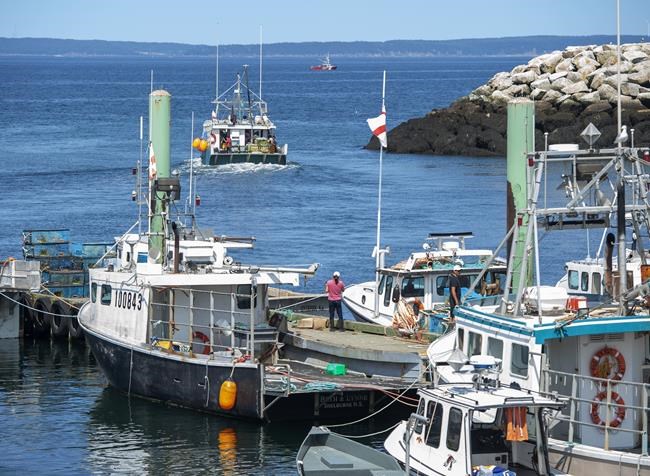
SAULNIERVILLE, N.S. – Days after he was arrested by federal Fisheries Department officers, Sipekne’katik First Nation Chief Mike Sack said Friday his band members will continue to fish in St. Marys Bay whether Ottawa likes it or not.
His community’s self-regulated lobster fishery — opened months ahead of the start to the federally regulated season — will continue to operate until the end of the year as planned, he said in an interview.
Officers with Fisheries and Oceans Canada, known as DFO, have pulled his members’ traps out of the water, but Sack says his community will replace them.
“For me it’s simple,” he said. “We have a right for this fishery and all we want them to do is to respect that and to let us govern our own fishery and to actually exercise that right.”
The Sipekne’katik First Nation argues that a 1999 Supreme Court of Canada decision affirming its members’ treaty right to fish allows them to harvest lobster year-round to earn a “moderate livelihood.”
But the court has also said the government can regulate that treaty right for conservation and other limited purposes. Federal regulation dictates that the area where the Sipekne’katik First Nation fishery is operating in southwestern Nova Scotia — LFA 34 — is open for lobster fishing from the last Monday in November until the end of May.
Last September, the band launched a self-regulated lobster fishery outside the federally regulated season, which led to violence and the burning of a lobster pound that stored Indigenous catch.
The band’s traps aren’t authorized under the Fisheries Act. And Noel d’Entremont with the Department of Fisheries says the federal agency will continue to remove the lobster traps and seize them as evidence.
The acting director of conservation and protection for the department, d’Entremont said in an interview Friday officers with his agency have collected “a couple hundred” traps in the area since Monday, about 90 of which were seized. He said about 500 live lobsters were released into the water.
On Monday, Sack announced his community had expanded and opened its lobster-fishing season, describing the operation as a “treaty fishery.” He was arrested by fisheries officers shortly after and held at the DFO detachment in Meteghan, N.S., for about 45 minutes.
Sack said he was questioned for being “party to the offence of (an) unauthorized fishery.” He was not charged.
He said he hopes his band can operate its own fishery without being subject to enforcement operations by the federal government. The community has said it will operate under the guidelines of its own fisheries-management plan, which it has said is based on sound conservation principles.
When asked if the Fisheries Department plans on considering the community’s conservation research, d’Entremont said, “the Government of Canada … is very interested in working with communities and making progress on negotiating moderate livelihood fishing licences.”
“Other parts of our department are actively working on that,” he added.
This report by The Canadian Press was first published Aug. 20, 2021.
—
This story was produced with the financial assistance of the Facebook and Canadian Press News Fellowship.