
Harassment toward doctors growing: Survey
Advertisement
Read this article for free:
or
Already have an account? Log in here »
We need your support!
Local journalism needs your support!
As we navigate through unprecedented times, our journalists are working harder than ever to bring you the latest local updates to keep you safe and informed.
Now, more than ever, we need your support.
Starting at $15.99 plus taxes every four weeks you can access your Brandon Sun online and full access to all content as it appears on our website.
Subscribe Nowor call circulation directly at (204) 727-0527.
Your pledge helps to ensure we provide the news that matters most to your community!
To continue reading, please subscribe:
Add Brandon Sun access to your Free Press subscription for only an additional
$1 for the first 4 weeks*
- Enjoy unlimited reading on brandonsun.com
- Read the Brandon Sun E-Edition, our digital replica newspaper
*Your next Free Press subscription payment will increase by $1.00 and you will be charged $20.95 plus GST for four weeks. After four weeks, your payment will increase to $24.95 plus GST every four weeks.
Read unlimited articles for free today:
or
Already have an account? Log in here »
Hey there, time traveller!
This article was published 20/12/2021 (1771 days ago), so information in it may no longer be current.
Manitoba doctors say it’s sad they have to legislate civility with the public, but it’s for the safety of medical staff and patients as the pandemic wears on.
The federal government passed Bill C-3 on Friday, which ensures the protection of health-care workers from harassment and intimidation, both in-person and online.
This was a necessary step considering the growing number of physicians who are reporting unsafe situations, in some instances, physical violence, brought on by rising COVID-19 cases and related measures, said Dr. Kristjan Thompson, president of Doctors Manitoba.
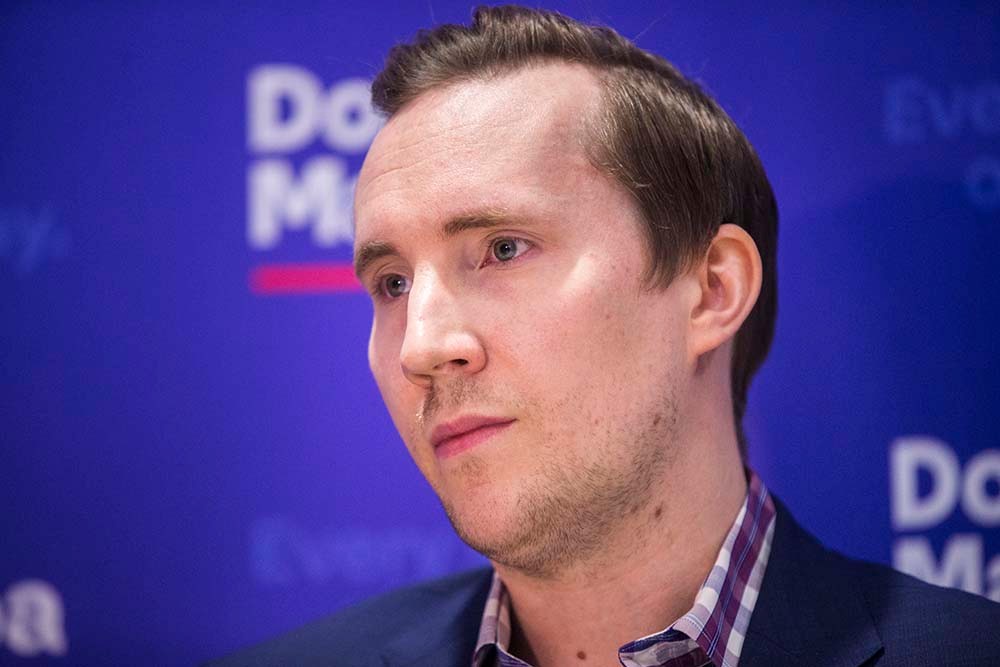
The onset of the more contagious omicron variant, tighter health restrictions and medical staff stretched thin won’t make it any better.
“We get it, you are tired; we are all frustrated, too,” Thompson said at a Zoom conference on Monday. “But doctors are in your corner, we are on your team. We are here for you. Please, be kind and understanding.”
Thompson pointed to key findings in a recent survey Doctors Manitoba conducted among physicians to track violence and harassment. The findings showed among those who responded, 57 per cent experienced incidents of mistreatment in November and 52 per cent appear to be linked to the pandemic in some way. Those incidents include verbal abuse, threats, bullying and even physical assault, such as being pushed, spat on and trapped in exam rooms with aggressive patients.
Incidents have been happening for more than year, with 59 per cent of physicians reporting increased frequency. Most incidents occurred in doctors’ offices or hospitals, though there were some incidents that occurred on social media, in public places and at physicians’ homes.
Many of these incidents seemed to be triggered by the pandemic, whether it be frustration over health restrictions and vaccination requirements, while others were brought on by longer surgical wait times, visitation restrictions and lack of vaccine supply.
Incidents of mistreatment appear to occur more frequently among physicians who are women, Black, Indigenous or people of colour, or working in family medicine. Physicians located in rural communities experienced mistreatment more frequently, too.
The abuse and harassment is leading to higher burnout as physicians have to worry about their personal safety, as well as the safety of their families and colleagues, Thompson said.
They are relying on those in government and hospital administration to take what the Canadian Medical Association (CMA) has done and make it a priority.
“The tone at the top matters,” he said. “This is a multi-pronged issue. Yes, we need to look at de-escalation, having on-the-ground supports for frontline staff, but the support has to come from the top.”
There is real concern about what this will mean for the recruitment and retention of physicians across this province.
“I’ve worked in the Southern Health region for decades and I’ve never seen anything like this,” said Dr. Don Klassen, a family physician who works at Boundary Trails Health Centre between Winkler and Morden. “I’ve heard from several physicians who are considering early retirement or relocation at least in part because of the threats and verbal abuse they’ve faced. Please know that physicians are going through this pandemic with you, every step of the way, and we’ll get through this together.”
Dr. Katharine Smart, president of the CMA, said neither she nor any of her colleagues felt they would need to reach out to the public, government and media to talk about violence against medical staff.
Doctors Manitoba and the CMA partnered to bring this issue to the public and government’s attention. Doctors and medical staff are already burning out from the heavy workload brought on by the pandemic and having to pivot to fight COVID, as well as their regular medical duties. Now they are facing increasing violence.
This is why they were happy to see the federal government pass Bill C-3. It shows they have been listening to physicians’ concerns and are supporting them in ensuring their safety.
Protecting medical staff means they can protect their patients and the public.
“Our goal is to care for Canadians and get as many people as they can through this pandemic safely,” she said. “This will help us reclaim our identity in what makes us Canadian, which is caring for each other.”
The other critical component is to stop normalizing violence in the medical field. This isn’t a new issue, but it is escalating. She said hospital administration should make it very clear they are not tolerating this behaviour and are supporting staff when it does happen, as well as calling it out when it is seen.
» kmckinley@brandonsun.com