
Thunderchild elected Canupawakpa chief
Advertisement
Read this article for free:
or
Already have an account? Log in here »
We need your support!
Local journalism needs your support!
As we navigate through unprecedented times, our journalists are working harder than ever to bring you the latest local updates to keep you safe and informed.
Now, more than ever, we need your support.
Starting at $15.99 plus taxes every four weeks you can access your Brandon Sun online and full access to all content as it appears on our website.
Subscribe Nowor call circulation directly at (204) 727-0527.
Your pledge helps to ensure we provide the news that matters most to your community!
To continue reading, please subscribe:
Add Brandon Sun access to your Free Press subscription for only an additional
$1 for the first 4 weeks*
- Enjoy unlimited reading on brandonsun.com
- Read the Brandon Sun E-Edition, our digital replica newspaper
*Your next Free Press subscription payment will increase by $1.00 and you will be charged $20.95 plus GST for four weeks. After four weeks, your payment will increase to $24.95 plus GST every four weeks.
Read unlimited articles for free today:
or
Already have an account? Log in here »
Hey there, time traveller!
This article was published 19/01/2022 (1731 days ago), so information in it may no longer be current.
Canupawakpa Dakota Nation members chose Lola Thunderchild as their new chief in a close election separated by less than 15 votes Tuesday.
The official results showed 68 votes for Thunderchild and 54 for her closest competitor, incumbent Viola Eastman. Gerald Sandy and Gabriel Sutherland were elected as councillors with 70 and 64 votes, respectively.
Canupawakpa saw 230 of 522 eligible voters participate in the election.
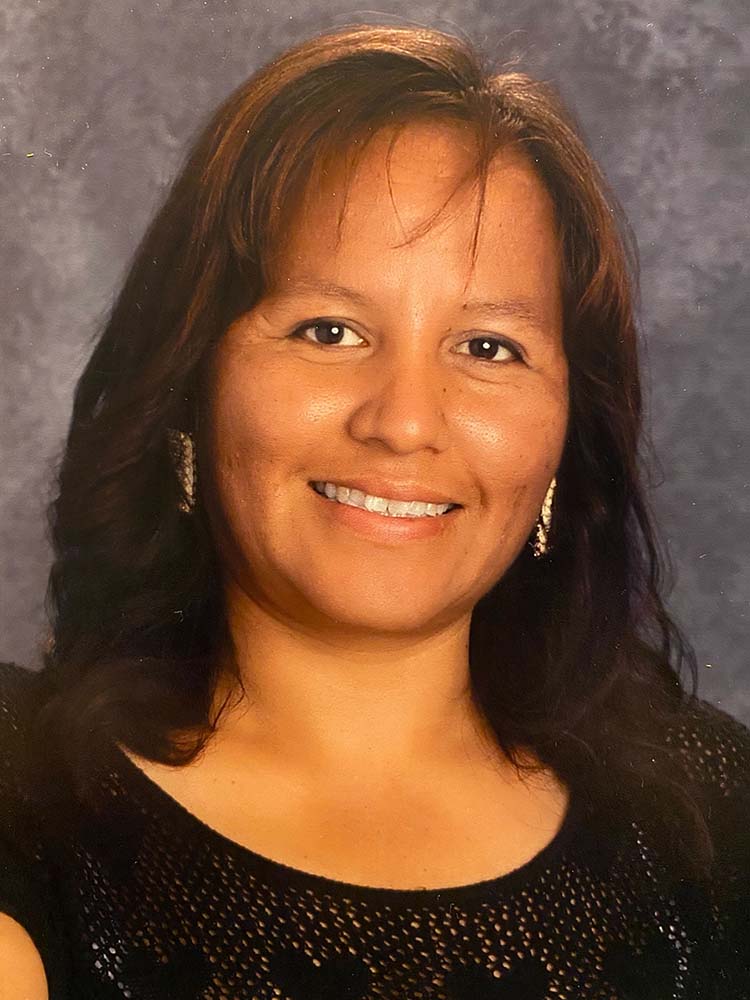
Thunderchild was inspired to enter the political arena by her fellow community members, who encouraged her to pursue a role in leadership. She reflected on these calls to action and decided it was time to try to become a stronger advocate for nation members by vying for the role of chief.
The specific issues she heard from the community were centred on “change,” she said.
“There was a need for change. People wanted to be heard. I’ve always been an advocate for different organizations, for different people, for the culture and for the language, and so I just kind of flowed into that position,” Thunderchild said.
She was nervous while watching election results roll in Tuesday, with the final count being shared around 9:45 p.m. When Thunderchild first found out she had been elected chief, it was a surreal and humbling experience, she said.
“It does not feel real. I’m just trying to take it easy, and just take it in step by step, and slowly learn as much as I can.”
She added she is grateful for elected councillors Sandy and Sutherland because of the years of experience they bring to their roles on council. Thunderchild said she will be looking to them for guidance while working to make her own mark as chief.
“I’m new to the political office, so I’m just learning new things, new protocols, new agendas,” Thunderchild said. “It has been quite a learning experience.”
Representing Canupawakpa has been a passion that lies close to Thunderchild’s heart. She said running for chief served as a step in pursuing these goals and ensuring she can act as a voice for her people.
Thunderchild worked as an educational assistant for 15 years at Virden Junior High through the Canupawakpa band. During her time with the school, she worked to actively promote and teach Dakota language and culture.
Her time as an education assistant was part of her lifetime commitment to learning and being an advocate for different types of Indigenous knowledge, language and culture.
“I’ve dedicated my life to the sharing and the knowledge of Dakota culture,” Thunderchild said.
Her experience as an educational assistant helped her find her footing as an advocate and built her conviction for these goals. Working with students to tackle difficult subjects like racism and sharing cultural knowledge fuelled her passion as a Dakota advocate.
“I had a chance to go through all of those steps and to gain that confidence,” she said. “This [being chief] is just kind of the next step in representing the Dakota people of Canupawakpa.”
Moving forward, Thunderchild wants her first year in office to focus on meeting the needs of nation members, serving as their advocate and finding her footing as chief as she learns to operate in the political system.
“It’s about getting things that are within my reach when obtaining goals,” Thunderchild said.
She praised Canupawakpa Dakota Nation band staff for the role they have played in helping guide the nation and the aid they have shown her as she adjusts to her new role.
Band staff have provided critical background information on finances and the situation the band faces as a whole, Thunderchild said.
It is an exciting time in Canupawakpa as the nation recently opened the new Canupawakpa Dakota Oyate community hall and the new Mni Wiconi Water Station, among other projects.
These initiatives give momentum to the nation, she said.
“They’ve always been moving forward. I can continue to want to move forward as well, too,” Thunderchild said.
She thanked Eastman for her dedication in representing Canupawakpa while serving in leadership.
“I hope to carry on where she is leaving off. It’s a pretty big job to fill,” Thunderchild said.
Brokenhead Ojibway Nation’s Burke Ratte, of First Nation-owned and Manitoba-based Turtle Nation Holdings, served as the elections officer for the chief and council race.
The election saw about 44 per cent of eligible voters cast a ballot.
“It’s great. A lot of times with the smaller communities, you do get a higher ratio,” Ratte said. “Typically, you get 30 per cent, is my opinion for turnout with a lot of chief and council elections. This is a little higher than average, in my opinion.”
Canupawakpa had interesting dynamics given the number of candidates splitting the votes. There were seven people vying for chief and 10 candidates running for two councillor positions.
Over the pandemic, Ratte has conducted more than 30 safe chief and council election processes. He said statistically speaking, he has seen a steady increase in the number of eligible voters casting their ballots.
“With technology and being accessible, the statistics I have with the 30-plus nations I have been to in the Manitoba and Saskatchewan region during the pandemic, all of my numbers were actually increased,” Ratte said.
» ckemp@brandonsun.com
» Twitter: @The_ChelseaKemp