
BU professor contributes cultural knowledge to Pixar film
Advertisement
Read this article for free:
or
Already have an account? Log in here »
We need your support!
Local journalism needs your support!
As we navigate through unprecedented times, our journalists are working harder than ever to bring you the latest local updates to keep you safe and informed.
Now, more than ever, we need your support.
Starting at $15.99 plus taxes every four weeks you can access your Brandon Sun online and full access to all content as it appears on our website.
Subscribe Nowor call circulation directly at (204) 727-0527.
Your pledge helps to ensure we provide the news that matters most to your community!
To continue reading, please subscribe:
Add Brandon Sun access to your Free Press subscription for only an additional
$1 for the first 4 weeks*
- Enjoy unlimited reading on brandonsun.com
- Read the Brandon Sun E-Edition, our digital replica newspaper
*Your next Free Press subscription payment will increase by $1.00 and you will be charged $20.95 plus GST for four weeks. After four weeks, your payment will increase to $24.95 plus GST every four weeks.
Read unlimited articles for free today:
or
Already have an account? Log in here »
Hey there, time traveller!
This article was published 23/03/2022 (1540 days ago), so information in it may no longer be current.
Westman film fans who sat through the credits of the latest Pixar animated feature, “Turning Red,” may have noticed a local connection, with Brandon University Prof. Alison Marshall being listed as one of 12 “cultural consultants” on the project.
“I’ve never done anything like this,” Marshall told the Sun in a Tuesday email.
“It was refreshing to try and articulate scholarly ideas in a mainstream context. I think as academics we need to … try to do this more.”

Marshall was originally contacted by the filmmakers around two years ago, although she initially mistook their email as spam.
But once she found out the offer was legitimate, Marshall served as a Pixar consultant for roughly a year, drawing on her two decades of experience researching Asian religion and history to lend some credibility to the proceedings.
“I was part of the film since the early animation phases and helped shape key cultural elements in the film to help ensure cultural authenticity and positive portrayals,” she said in a March 17 news release from BU.
The plot of “Turning Red” follows Meilin Lee, a 13-year-old Chinese Canadian girl living in Toronto who discovers she has the ability to transform into a giant red panda due to an ancient family curse.
As Meilin struggles to keep these new abilities in check, she must also contend with a variety of other seemingly insurmountable obstacles, including the horrors of puberty, peer pressure and her overbearing mother.
Once the film was released on March 11 through the Disney+ streaming service, “Turning Red” immediately received widespread acclaim from critics, with many praising its depiction of Chinese culture in a modern Canadian context.
Marshall admits she was quite moved watching the final product, especially since she is intimately familiar with a lot of the sights and sounds being depicted on screen.
The BU academic was originally attracted to this field of study through family connections, with an uncle who ran an Asian import-export business in 1920s Montreal and an aunt who was deeply embedded in Toronto’s Chinese community.
“I spent many happy years living in Toronto while I completed degrees at the University of Toronto,” she wrote on Tuesday.
“I shopped at Chinatown markets and volunteered with the Toronto Chinese community and later returned to do research there for two books. I was thrilled to see Toronto’s Chinatown and research related themes being portrayed as part of the fabric of diverse Canadian life.”
While Marshall isn’t sure if her work on “Turning Red” will lead to more film consultant gigs down the line, she’s just happy that the broader cultural significance of Canada’s Chinese communities is being highlighted on such a large stage.
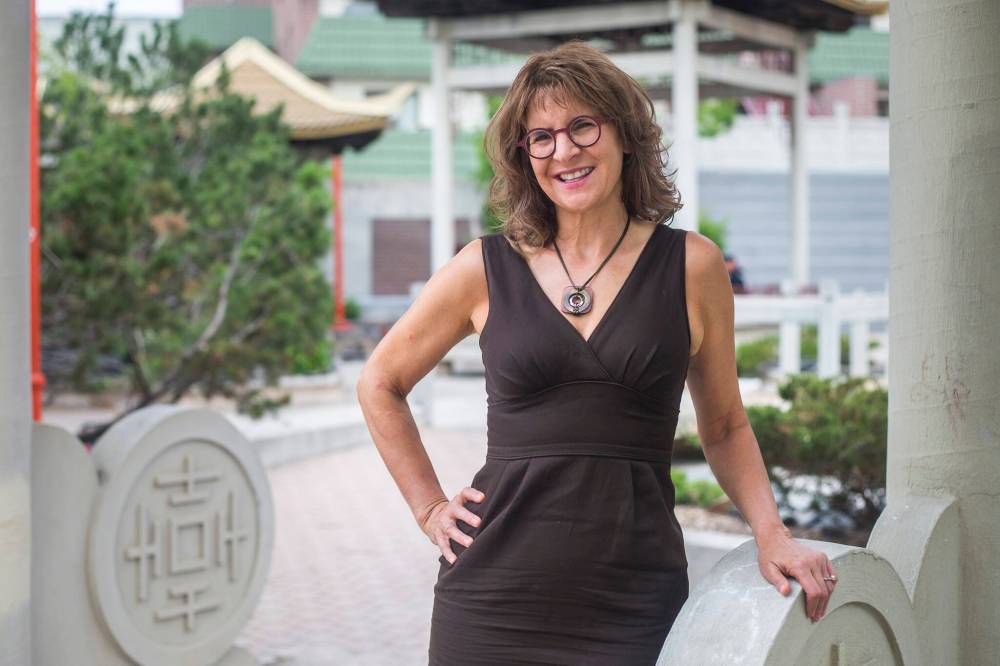
“Chinatown was and continues to be home to many people. It is also where people come to gather and celebrate diverse cultures in festivals and parades,” she wrote.
“‘Turning Red’ tells that story of welcoming communities, family, conviviality and belonging in Toronto, Ontario, Canada.”
Aside from teaching at BU, Marshall has authored three monographs in the field of Asian religion and history.
These books include: “The Way of the Bachelor: Early Chinese Settlement in Manitoba” (2011), “The Making of Chinese Prairie Canada” (2014) and “Bayanihan and Belonging: Filipinos and Religion in Canada” (2018).
Last year, Marshall was also presented with the William Norrie Arts and Culture Volunteer Award from Volunteer Manitoba for all her time working alongside members of the province’s Chinese community.
» kdarbyson@brandonsun.com
» Twitter:@KyleDarbyson