
Informal municipal meetings ‘not uncommon,’ Clarke says
Advertisement
Read this article for free:
or
Already have an account? Log in here »
We need your support!
Local journalism needs your support!
As we navigate through unprecedented times, our journalists are working harder than ever to bring you the latest local updates to keep you safe and informed.
Now, more than ever, we need your support.
Starting at $15.99 plus taxes every four weeks you can access your Brandon Sun online and full access to all content as it appears on our website.
Subscribe Nowor call circulation directly at (204) 727-0527.
Your pledge helps to ensure we provide the news that matters most to your community!
To continue reading, please subscribe:
Add Brandon Sun access to your Free Press subscription for only an additional
$1 for the first 4 weeks*
- Enjoy unlimited reading on brandonsun.com
- Read the Brandon Sun E-Edition, our digital replica newspaper
*Your next Free Press subscription payment will increase by $1.00 and you will be charged $20.95 plus GST for four weeks. After four weeks, your payment will increase to $24.95 plus GST every four weeks.
Read unlimited articles for free today:
or
Already have an account? Log in here »
Hey there, time traveller!
This article was published 09/06/2022 (1568 days ago), so information in it may no longer be current.
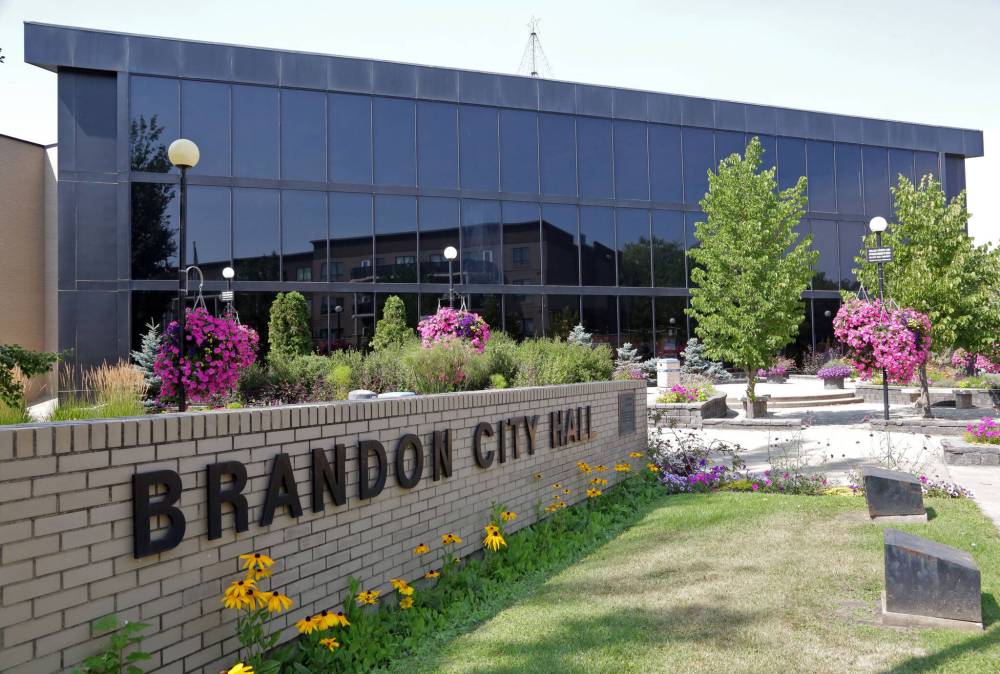
Brandon City Council’s informal meetings aren’t “out of the ordinary” for municipalities, the provincial minister responsible for the file says.
Municipal Relations Minister Eileen Clarke, a former mayor herself, said all municipal councils have committee meetings or in-camera meetings where items are discussed away from the public eye.
“All councils do that when they have issues that are not at the point yet where they could be made public or requires a sensitive discussion going forward before it can be public, so that is not uncommon at all,” Clarke said.
Once an agenda for a meeting has been distributed to councillors, she said, it is their duty to learn as much as they can about the items on that agenda beforehand.
Like Mayor Rick Chrest had expressed when asked about council’s informal meetings, Clarke said going over every agenda item in detail during a council meeting would make those meetings too long. Also like Chrest, she said that outside of Winnipeg, being a councillor is not usually someone’s day job.
“To have a formal discussion of every item at every meeting, the meeting would never get done even in four hours, typically,” Clarke said.
“Even for a smaller council. As a former mayor myself, I always encouraged our council members to make themselves very aware of the issue and to further discuss it amongst themselves or to try and find the information they would need. Sometimes they would go to the staff for information.”
Some items discussed among councils are so sensitive, she said, that sometimes she must sign a non-disclosure agreement when talking to councils so as not to jeopardize things like economic development opportunities.
Asked about Section 152(1) of The Municipal Act, which states “every meeting of a council or council committee must be conducted in public,” Clarke said it was her interpretation of the law that only council and committee meetings put on a schedule by a council after a municipal election are subject to that requirement.
“When a new council is formed, they have to disclose when meetings are — some have one a month, some have two a month — that is public information, it’s on the [provincial] government’s website. Each council has to have bylaws that describe when their meetings are, where their meetings are, what time they are. Other than that, I don’t think they’re bound that they have to make other meetings … open to the public.”
For Aaron Moore, a University of Winnipeg professor who specializes in municipal politics, that argument doesn’t line up.
“It sounds like she’s adding content to the legislation that isn’t there,” Moore wrote in an email. “The legislation is very clear: Every meeting of a council or council committee must be conducted in public. I’m not sure how every meeting becomes meetings scheduled by council at the beginning of the year. What if the council chooses not schedule any of their meetings at the beginning of the year? Would that give them free rein to hold all their meetings in private?
“I suspect the issue [the Sun] uncovered in Brandon isn’t that uncommon in many smaller municipalities in Manitoba, and it may be that the provincial government doesn’t want to get dragged into anything at the municipal level.”
This week, the Sun received emails from city staff and members of city council discussing formal, informal and special meetings of council from January to the end of April this year.
When informal meetings were called, usually at the request of the mayor, notices were distributed to all members of council and several high-ranking city staff, listing the date, time and location of the meetings.
These meetings were held at city hall and the T.E. Snure multipurpose room at the A.R. McDiarmid Building at 638 Princess Ave.
For example, the notice for an informal meeting held Feb. 28 on the conceptual design for the renovation of the downtown Library/Arts building stated:
“Please be advised that His Worship the Mayor has called a virtual informal session of City Council to be held at 6:30 p.m. on Monday, February 28, 2022. The session will cover two items: (1) Library/Arts Conceptual Design — a presentation of the preferred Library/Arts conceptual design and project costs; (2) City Plan Introduction — what a City Plan is and why it is important. This virtual meeting will be held using the TEAMS platform. Your attendance is anticipated and would be appreciated.”
This notice was also sent to city manager Ron Bowles, general manager of corporate services Dean Hammond, director of planning and buildings Ryan Nickel and community planner Sonikile Tembo.
On Feb. 17, council held a special meeting at the MNP Hall in the Keystone Centre as a public hearing for the proposed conversion of Aberdeen Avenue to a one-way street. The notice that city clerk Heather Ewasiuk sent to council members for this meeting was formatted the same way as the notices for the informal sessions.
Earlier in the year when council was preparing for budget deliberations, Chrest expressed concern in an email to Bowles and Hammond that he and his colleagues wouldn’t have enough information to make a proper decision on the community funding requests on budget day.
“During our meeting last night which included a few more budget requests for Council to consider, it occurred to me that we could benefit from a session or partial session to discuss the numerous requests we’ve received,” Chrest wrote.
“These may be somewhat sensitive to discuss in open Council on budget day and we may in fact may be lacking all of the information to properly make a decision — and to arrive at that state on budget day typically in the eleventh hour won’t be too conducive. Therefore, I’m wondering what your thoughts might be to having a session or adding to one?”
In response to Clarke’s comments and the informal meetings, the Manitoba NDP emphasized transparency.
“The decisions that city councillors make impact Brandon families. We value the work of local leadership and support transparent access to information,” municipal relations critic Matt Wiebe said.
Manitoba Liberal Leader Dougald Lamont shared that sentiment, adding that transparency empowers city residents to hold their elected officials accountable.
“The Municipal Act says that by default, meetings should be open, and that private meetings should be the exception,” Lamont wrote.
“Process does matter, and meetings that educate councillors presumably would benefit the public too. Public engagement takes work and can slow things down, but it’s about a better result in the end. The public can’t hold elected officials accountable if they don’t know what’s going on.”
» cslark@brandonsun.com
» Twitter: @ColinSlark