
Province expands cochlear implant funding, access
Advertisement
Read this article for free:
or
Already have an account? Log in here »
We need your support!
Local journalism needs your support!
As we navigate through unprecedented times, our journalists are working harder than ever to bring you the latest local updates to keep you safe and informed.
Now, more than ever, we need your support.
Starting at $15.99 plus taxes every four weeks you can access your Brandon Sun online and full access to all content as it appears on our website.
Subscribe Nowor call circulation directly at (204) 727-0527.
Your pledge helps to ensure we provide the news that matters most to your community!
To continue reading, please subscribe:
Add Brandon Sun access to your Free Press subscription for only an additional
$1 for the first 4 weeks*
- Enjoy unlimited reading on brandonsun.com
- Read the Brandon Sun E-Edition, our digital replica newspaper
*Your next Free Press subscription payment will increase by $1.00 and you will be charged $20.95 plus GST for four weeks. After four weeks, your payment will increase to $24.95 plus GST every four weeks.
Read unlimited articles for free today:
or
Already have an account? Log in here »
Hey there, time traveller!
This article was published 09/06/2022 (1565 days ago), so information in it may no longer be current.
A new government initiative aims to ease the financial burden Manitobans with cochlear implants face when it comes to access and surgery associated with the hearing device.
Manitoba is expanding its cochlear implant program to include adults and is expected to help about 40 people annually at a cost of $352,000 a year. Specifically, this is meant to subsidize the cost of replacing what are known as external processors that help wearers hear clearly.
Those under the plan only have to pay 20 per cent of the retail cost of the implants.
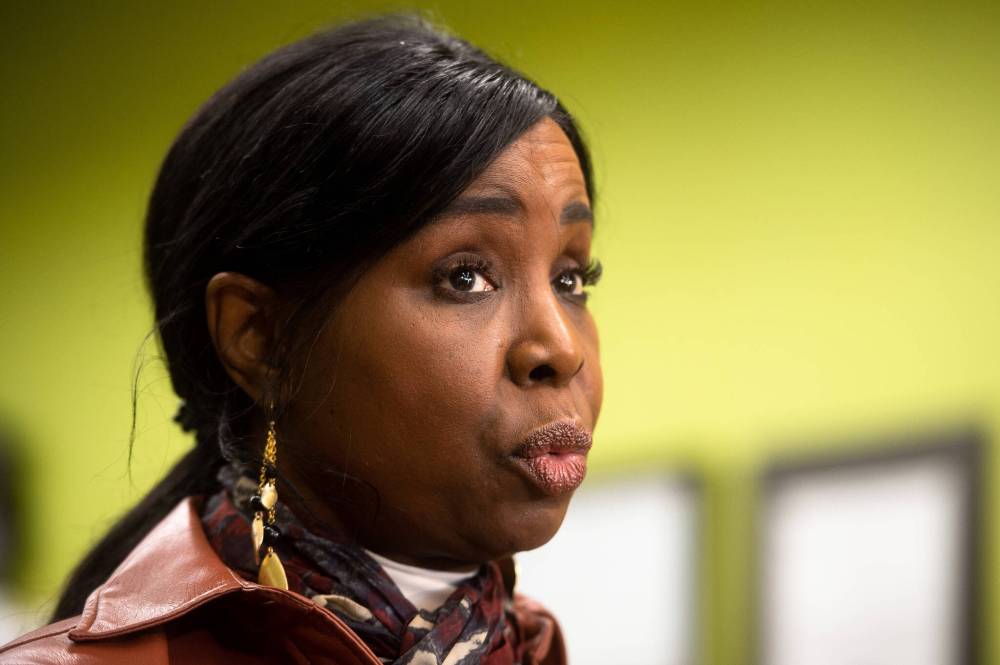
This is on top of additional surgery for the implants the province already covers, Health Minister Audrey Gordon said during a news conference at the Central Speech and Hearing Clinic in Winnipeg.
“Our government is strengthening health care by ensuring equitable access to programs and services for all Manitobans, regardless of income,” said Gordon. “We are investing in patients by following research that shows the sooner a cochlear implant candidate receives the device, the better the outcome and building an expanded coverage of this program to adults to ensure more Manitobans have access to this life-changing technology.”
Hearing is vitally important to living a normal life, Gordon said. Statistics Canada data shows around 19 per cent of Canadians have at least a mild loss in the speech frequency range.
The adult program will be identical to the pediatric program, which covers 80 per cent of the cost of an external sound processor replacement every five years with a 20 per cent co-pay, according to a news release. The expanded program is anticipated to benefit those who are older than 55 years.
The benefit to the province’s seniors cannot be overstated, said Seniors and Long-Term Care Minister Scott Johnston. Expanding this program will make it more affordable for those on fixed incomes and also has social benefits.
“An important aspect of healthy aging is social connectedness, and age-related hearing loss can have an isolating effect for seniors,” said Johnston. “Expanding the cochlear implant program will help to ensure older adults who may be facing financial barriers have equitable access to this important device, which will enable them to continue to participate fully in life with their families and communities.”
Cochlear implants involve surgical insertion of a device in the skull and external processors behind the ears to help people with significant hearing loss have access to sound, explained Dr. Jodi Jones, provincial otolaryngology lead at Shared Health. These processors take complex sounds, convert them into electronic signals and transmit them into electrodes implanted in the ear. Those signals are then carried to the brain to be interpreted as meaningful sounds, such as speech.
As with any machine, the processors can wear down. To replace these costs thousands of dollars, Jones said. Before this announcement, the province covered the initial implant, but not the replacement.
The announcement lets families and patients know they are being supported for their whole lives, she said.
As a physician, she is pleased to see the province rolling out one of the most general access programs for these implants in Canada.
“This will have a tremendously positive impact on cochlear implant recipients and their families whose financial worry over paying for replacement parts will be considerably lessened,” she said. “This will allow patients to maintain connections with the outside world, as we have seen are so vitally important during the pandemic.”
Jones also thanked the Manitoba chapter of the Canadian Hard of Hearing Association for working with the ministers to get this funding and expansion.
Past-president Gladys Nielsen, a cochlear implant recipient, said she was first implanted in 1995 on the right side of her head. She joked her external processors were likened to an old John Deere tractor; they worked, but were obsolete and needed to be replaced. She was told they would cost more than $10,000, which was way out of her budget as a senior on a fixed income. Without this funding, she would eventually be living in silence.
“No hearing, no conversations, no sounds of nature, no communications, no ability to feel safe,” she said. “It would mean feeling lonely, depressed, stressed and not my active self. A cochlear implant gave me my life back.”
The Manitoba Liberals were pleased with the announcement, too. The party’s health critic, Jon Gerrard, has been advocating for their coverage for more than two years.
Gerrard has been working with Nielsen by creating and reading a petition in the legislature, asking about the implants in question period, as well as helping organize a rally in front of the legislature last October, the release stated.
“Dr. Gerrard was the first to recognize and support the need for government financial assistance for all adult Manitobans who require a cochlear implant processor replacement. I believe that his outstanding advocacy, commitment, compassion and leadership is paramount in bringing this positive outcome,” said Nielsen.
While the NDP is also optimistic about the news, leader Wab Kinew said there are a few more steps the government could take to further protect people’s quality of life.
“We are of course pleased with this funding as it will help out many folks, but in relation to this, we are pushing for the hearing test extension for newborns because we know that will help a lot more people sooner,” Kinew said.
Health Critic Uzoma Asagwara has tabled a bill to extend hearing screening to newborns to catch hearing impairment sooner and qualify for cochlear implant surgery.
» kmckinley@brandonsun.com
» Twitter: @karenleighmcki1