
Park visitors reminded to mind their manners around wildlife
Advertisement
Read this article for free:
or
Already have an account? Log in here »
We need your support!
Local journalism needs your support!
As we navigate through unprecedented times, our journalists are working harder than ever to bring you the latest local updates to keep you safe and informed.
Now, more than ever, we need your support.
Starting at $15.99 plus taxes every four weeks you can access your Brandon Sun online and full access to all content as it appears on our website.
Subscribe Nowor call circulation directly at (204) 727-0527.
Your pledge helps to ensure we provide the news that matters most to your community!
To continue reading, please subscribe:
Add Brandon Sun access to your Free Press subscription for only an additional
$1 for the first 4 weeks*
*Your next subscription payment will increase by $1.00 and you will be charged $20.00 plus GST for four weeks. After four weeks, your payment will increase to $24.00 plus GST every four weeks.
Read unlimited articles for free today:
or
Already have an account? Log in here »
Hey there, time traveller!
This article was published 17/06/2022 (1386 days ago), so information in it may no longer be current.
Tourists are being encouraged to mind their manners when it comes to interacting with bears at Riding Mountain National Park to ensure their and the wild animals’ safety.
Bears have been noticeably showing up along Highway 10 this spring drawn into the ditches by the growing vegetation, said Tim Sallows, Riding Mountain National Park (RMNP) resource conservation officer with Parks Canada.
“You’re definitely going to see bears this time of the year,” Sallows said. “Be respectful, stay a fair distance and don’t linger [around] the animals — that stresses them out. Just take a quick picture and move on.”
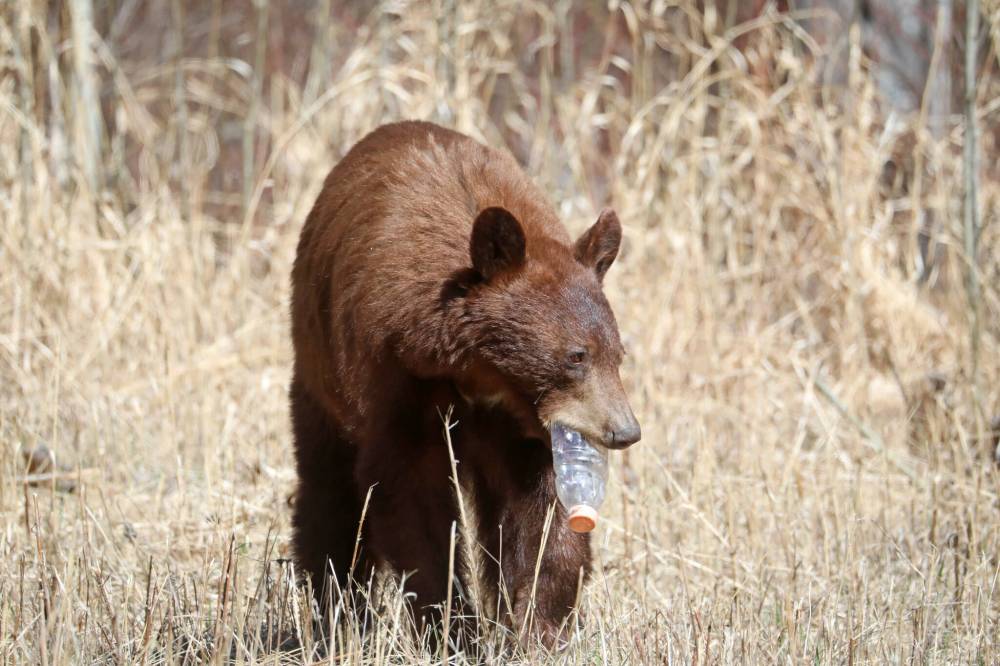
Sallows said the last summers in RMNP have seen good berry crops and the number of bears appears to have increased in tandem.
There are a couple of bears in the park: Anna (red tag bear 127), Makwa (yellow tag bear 52) and Cindy (un-tagged) who are becoming well-known. The sows have anywhere from two to four bear cubs with them.
The park has seen an increase in tourism during COVID-19. As people rediscover the great outdoors for the first time, he said, some people may not know proper wildlife etiquette.
“There’s definitely people who aren’t aware of what wildlife is and what dangers they pose.”
The new experience offers the opportunity to learn about the animals and their habits.
The number of people at the park has increased and social media is helping make the bears “Insta-famous,” encouraging visitors to come and see them. There have been incidents reported of people taking selfies with bears, which serve as a reminder to be bear smart and respect wildlife’s place in their natural environment, Sallows said.
If a bear is spotted while driving, Parks Canada is asking visitors to pull off the highway in a safe manner to ensure they are not interrupting traffic flow or endangering themselves or the bears.
He encouraged drivers to follow the speed limit of 80 kilometres per hour in the park, but to slow down if they spot wildlife while avoiding impeding other traffic.
“Don’t get out of the vehicle and don’t feed the bears at all, anywhere,” Sallows said.
When humans feed the bears, the animals can become habituated, meaning they depend on human food and start approaching people — a situation Sallows would like to see avoided.
Bears are smart animals and they will learn when they receive a reward for visiting certain areas. The associated food reward will encourage them to repeatedly visit an area.
When bears start approaching humans, they are removed from the region or killed, Sallows said, something he doesn’t want to see happen.
Steps are taken year-round to dissuade bears from interacting with humans, Sallows said, including not allowing bird feeders in RMNP. He added Parks Canada’s sister organization Manitoba Conservation encourages Manitobans to take down feeders in the summertime so bears are not attracted to them.
Those who live in Wasagaming or have cabins on Clear Lake are also encouraged to ensure garbage and other attractants are not accessible to wildlife.
“Bears won’t come around unless they have a reason to come around.”
As the weather improves, wildlife is beginning to come out more in RMNP, said George Hartlen, Friends of Riding Mountain National Park chief administrative officer.
Everyone is excited to see the bears and cubs throughout the summer season, but visitors need to be responsible and safe.
“We are definitely encouraging people to understand that the wildlife is exactly that — wild,” Hartlen said. “They are animals that need to be approached with caution if they’re seen out on the trails.”
Bears regularly pass through the townsite of Wasagaming during the summer season, moving between different natural food resources, Hartlen said.
If garbage is left on the road, on campsites, in picnic areas or people bait bears with food, this disrupts their natural lifeways and becomes problematic.
“In most times it’s the animal that pays for the human’s mistakes,” Hartlen said. “They’re tagged and their taken into the forest area a few times but eventually if they’ve become too habituated to eating human food, then that animal has to be put down.”
It is a balance of living with wildlife, Hartlen said, using the mantra of “letting the animals be” by being bear smart when visiting the park.
When hiking, visitors should be aware of their surroundings, move in large groups when possible, make lots of noise in different areas and keep dogs on leashes at all times.
Bulletins will be posted on trailheads if a bear or any wildlife is spotted and they can check-in at the park visitors centre or online for up-to-date information on the animal sightings.
The goal of RMNP is to keep everyone, including the wildlife, safe, by minimizing interactions between humans and wildlife.
“We’re trying to share the park with the wildlife,” Hartlen said. “We’re asking our visitors to be responsible. To understand that they can have a negative impact on the well-being of the wildlife and to make sure that they act accordingly.”
Visit pc.gc.ca/en/pn-np/mb/riding/securite-safety/ours-bears-smart for more information on being bear safe when visiting RMNP.
» ckemp@brandonsun.com
» Twitter: @The_ChelseaKemp