Liberals introduce legislation to create national council to oversee reconciliation
Advertisement
Read this article for free:
or
Already have an account? Log in here »
We need your support!
Local journalism needs your support!
As we navigate through unprecedented times, our journalists are working harder than ever to bring you the latest local updates to keep you safe and informed.
Now, more than ever, we need your support.
Starting at $15.99 plus taxes every four weeks you can access your Brandon Sun online and full access to all content as it appears on our website.
Subscribe Nowor call circulation directly at (204) 727-0527.
Your pledge helps to ensure we provide the news that matters most to your community!
To continue reading, please subscribe:
Add Brandon Sun access to your Free Press subscription for only an additional
$1 for the first 4 weeks*
*Your next subscription payment will increase by $1.00 and you will be charged $20.00 plus GST for four weeks. After four weeks, your payment will increase to $24.00 plus GST every four weeks.
Read unlimited articles for free today:
or
Already have an account? Log in here »
Hey there, time traveller!
This article was published 23/06/2022 (1408 days ago), so information in it may no longer be current.
OTTAWA – Crown-Indigenous Relations Marc Miller has tabled a bill that would create a national council for reconciliation — a recommendation the Truth and Reconciliation Commission made in 2015 and the Liberal government included in the 2019 budget.
The TRC, which investigated the history and legacy of residential schools, called for an independent, Indigenous-led council to monitor the progress of reconciliation in Canada over the long term and evaluate and report on the implementation of its 94 calls to action.
An interim board that was appointed in 2018 to advise the government on creating the council released a final report that same year, calling for the creation of a transitional committee, which was appointed in 2021.
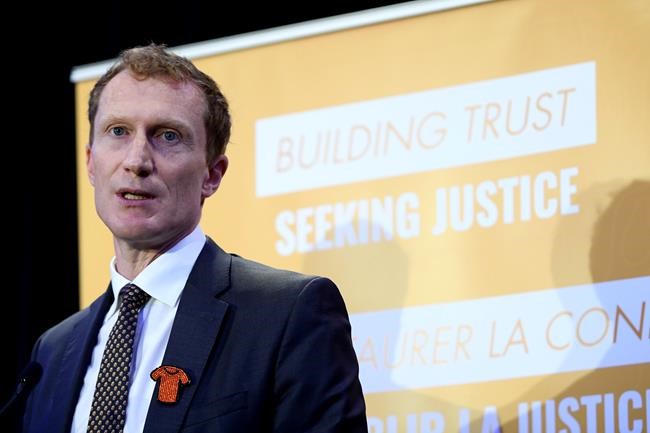
Bill C-29 says there will be between nine and 13 directors on the council’s board, including a nominee each from the Assembly of First Nations, Inuit Tapiriit Kanatami and the Métis National Council.
The other directors would be elected from a list of applicants and at least two-thirds must be Indigenous.
The council would be set up as a not-for-profit, and it would be required to report yearly on the progress being made toward reconciliation, including recommendations.
The Congress of Aboriginal Peoples, which represents primarily non-status Indigenous and Métis people living off-reserve, says in a statement that it is “deeply disturbed” by the structure proposed in the bill.
The group says it’s been excluded from the list of national Indigenous organizations for whom a seat on the board is guaranteed, and calls that discrimination against hundreds of thousands of Indigenous Peoples living in urban areas.
The bill was tabled in the House of Commons Wednesday, but the House is expected to rise Thursday for the summer break. MPs will not be back in their seats to debate legislation until September.
This report by The Canadian Press was first published June 23, 2022.