
BUAPC uniting stakeholders and advocates to tackle Brandon’s housing crisis
Advertisement
Read this article for free:
or
Already have an account? Log in here »
We need your support!
Local journalism needs your support!
As we navigate through unprecedented times, our journalists are working harder than ever to bring you the latest local updates to keep you safe and informed.
Now, more than ever, we need your support.
Starting at $15.99 plus taxes every four weeks you can access your Brandon Sun online and full access to all content as it appears on our website.
Subscribe Nowor call circulation directly at (204) 727-0527.
Your pledge helps to ensure we provide the news that matters most to your community!
To continue reading, please subscribe:
Add Brandon Sun access to your Free Press subscription for only an additional
$1 for the first 4 weeks*
*Your next subscription payment will increase by $1.00 and you will be charged $20.00 plus GST for four weeks. After four weeks, your payment will increase to $24.00 plus GST every four weeks.
Read unlimited articles for free today:
or
Already have an account? Log in here »
Hey there, time traveller!
This article was published 23/06/2022 (1345 days ago), so information in it may no longer be current.
The Brandon Urban Aboriginal Peoples’ Council brought together stakeholders and advocates to brainstorm solutions for the city’s housing crisis Thursday, while also providing support to Brandon’s unhoused community.
The council met Thursday to start dialogue on the issue.
Michéle LeTourneau, co-ordinator for the Brandon Urban Aboriginal Peoples’ Council (BUAPC), said the aim is to move forward with action items to find missing pieces of support for the vulnerable unhoused community.
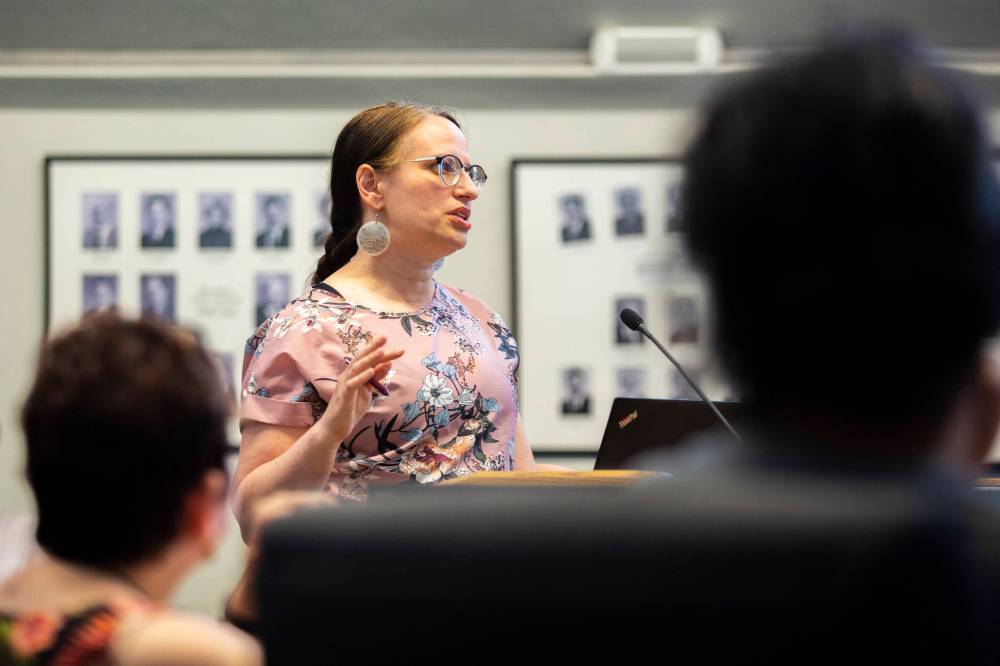
“There is not a fully developed approach for dealing with vulnerable people who are unhoused [in Brandon],” LeTourneau said. “Here in Brandon, we seem to have community interest, passion … we have the community interested, we just don’t have the money.”
Organizations present for the discussion included Brandon Neighbourhood Renewal Corporation (BNRC), Youth for Christ, the John Howard Society of Brandon (JHS), Indigenous and Northern Housing Solutions, Community Mobilization Westman, Brandon East MLA Len Isleifson, the Assembly of First Nations and Manitoba Housing.
Ensuring affordable and accessible housing is a complex issue to unpack, LeTourneau said.
“It’s really, really, really important to remember the cultural aspect of what we are talking about because … 80 per cent of what we’re talking about here are Indigenous people,” she said. “BUAPC is about urban Indigenous people, we’re talking about people who moved from land. I really think it’s important in all this to remember who we are talking about.”
During the COVID-19 pandemic, the number of unhoused people in Brandon more than doubled, said Megan McKenzie of BNRC. From Jan. 1, 2021, to the present day, 325 unique individuals have stayed at the Safe and Warm Shelter compared to the 168 individuals in 2019.
“The scary part about that though, is that according to our point in time count and also according to something called the vulnerability index … only a third of people are saying that they are staying in a shelter who are experiencing homelessness,” McKenzie said. “That means our numbers are actually a lot higher.”
Between 83 to 87 per cent of clients self-identify as Indigenous, she said, with about 60 per cent of people indicating they have mental health concerns and 33 per cent having learning or cognitive disability.
About 70 per cent have reported substance use concerns.
The gap widened when YWCA Meredith Place closed, taking with it 21 rooms and two family suites.
Precarious housing is available, but many renters face living spaces that are not up to health or building codes, said Shannon Saltarelli, community housing and wellness co-ordinator at the City of Brandon.
“It is very disheartening to see the conditions that many people in our community are living in without complaint for fear of eviction,” Saltarelli said. “We need to talk about affordable and appropriate housing.”
The shuttering of Meredith Place has heavily impacted the community in terms of recidivism, said Ross Robinson, JHS executive director. He said housing is an important part of community safety and part of the mission statement of the JHS.
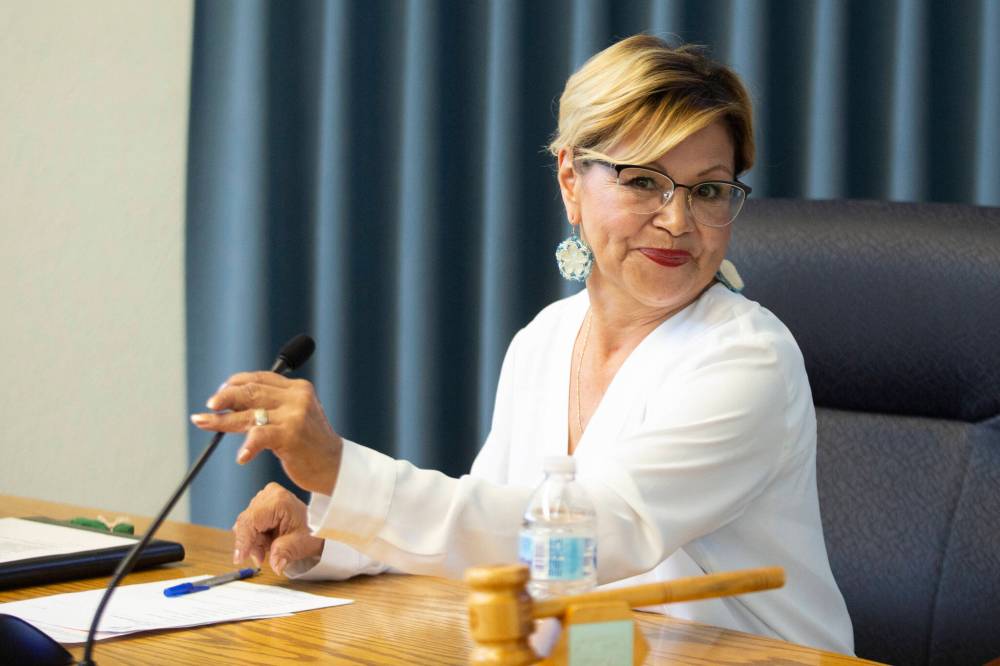
The loss of the facility’s Corrections Canada day parole means people can longer come to Brandon because they have no place to go.
“With individuals being released, we have to ensure that everything is put in place to ensure they don’t mistakes and go further back into prison,” Robinson said. “Not having housing is one of those critical pieces.”
The JHS expressed interest in collaborating with local advocates and stakeholders to address the loss of Meredith Place while supporting the entire community.
Plans are in place to address recidivism challenges, Robinson said, but the society is awaiting federal funding to move forward.
The major challenge remains access to resources to support housing initiatives, said Community Mobilization Westman co-ordinator Janis Irvine. She added there can be difficulties and a culture disconnect when those accessing affordable housing support are expected to live in isolation but they want to bring friends and family into their homes.
A date for future discussions will be set at a later date.
» ckemp@brandonsun.com
» Twitter: @The_ChelseaKemp