
Immigration policies put under microscope
Advertisement
Read this article for free:
or
Already have an account? Log in here »
We need your support!
Local journalism needs your support!
As we navigate through unprecedented times, our journalists are working harder than ever to bring you the latest local updates to keep you safe and informed.
Now, more than ever, we need your support.
Starting at $15.99 plus taxes every four weeks you can access your Brandon Sun online and full access to all content as it appears on our website.
Subscribe Nowor call circulation directly at (204) 727-0527.
Your pledge helps to ensure we provide the news that matters most to your community!
To continue reading, please subscribe:
Add Brandon Sun access to your Free Press subscription for only an additional
$1 for the first 4 weeks*
*Your next subscription payment will increase by $1.00 and you will be charged $20.00 plus GST for four weeks. After four weeks, your payment will increase to $24.00 plus GST every four weeks.
Read unlimited articles for free today:
or
Already have an account? Log in here »
Hey there, time traveller!
This article was published 11/07/2022 (1324 days ago), so information in it may no longer be current.
Though Manitoba’s provincial nominee program was a pioneer in its field, that doesn’t mean it doesn’t need some tweaking.
That’s what Advanced Education, Skills and Immigration Minister Jon Reyes told a packed room at Brandon’s Victoria Inn on Monday to kick off a consultation meeting on Manitoba’s immigration policies.
Moderated by Labour Minister and Brandon West Progressive Conservative MLA Reg Helwer and attended by representatives from the Brandon Chamber of Commerce, City of Brandon and more, so many people turned out for the session that hotel employees had to bring in extra chairs to accommodate everyone.
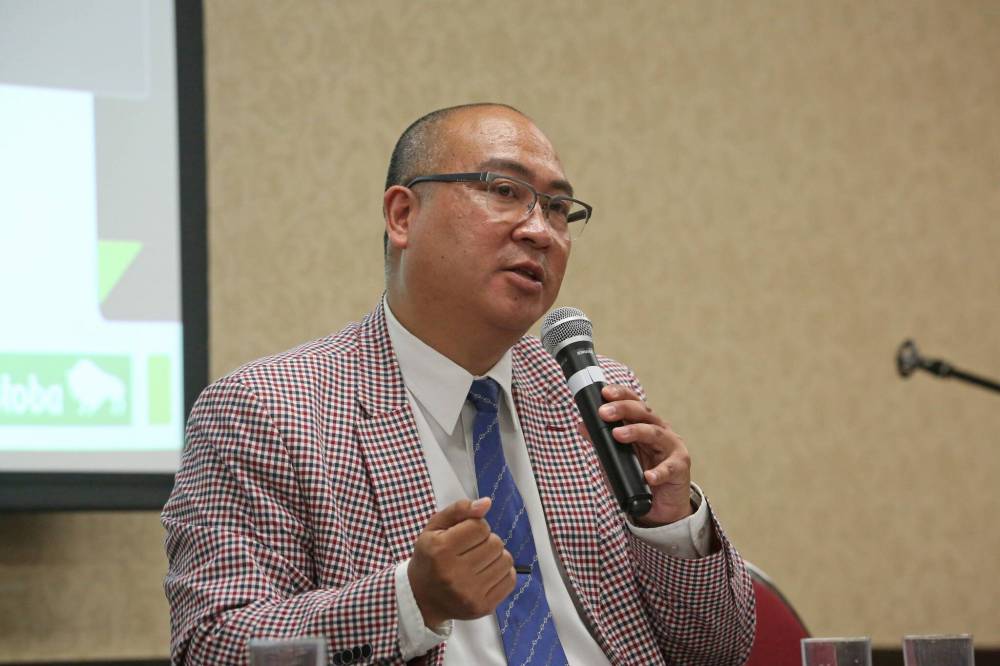
It was part of a series of hearings being held across Manitoba with the aim of refining immigration policies as businesses and politicians wonder if foreign workers can help with labour shortages being experienced across many sectors throughout the country.
According to Reyes, the Canada-Manitoba Immigration Agreement expired in 2003, but both parties are currently at the table renegotiating a new deal. He expects it to be signed later this year.
A request to Immigration, Refugees and Citizenship Canada for comment on the process was not returned by deadline.
Reyes said a few weeks ago he met with federal Immigration Minister Sean Fraser and talked to him about paperwork and bureaucratic delays in receiving permanent residency. The problem is being worked on, but Reyes said it will take some time.
In response, Helwer added that the province receives a lot of questions about the federal government and though they have a good relationship with their federal partners, there’s not much they can directly do to solve the issues outside of provincial programs.
Beyond the traditional streams available through the provincial nominee program, Reyes also discussed how refugees from Ukraine coming in with temporary visas and work permits fit into the current situation.
Representatives from organizations that work with immigrants also talked about their programs.
Hannah Holt and Joy Escalera from Westman Immigrant Services (WIS) outlined their work in helping immigrants and refugees and the importance of skilled workers moving to the area.
They said unemployment is a difficulty many newcomers face and WIS’ goal is to reduce barriers they experience.
To illustrate how they help newcomers, they played a video featuring WIS clients explaining what the organization has done for them. Many of the newcomers interviewed said they weren’t confident with speaking English and connecting with the larger community until they took classes with WIS.
Danielle Adriaansen, of Assiniboine Community College, discussed some of the challenges the institution has faced with immigration, including delays and roadblocks created by the COVID-19 pandemic, competing with other institutions in other countries and provinces and keeping graduates in Manitoba once they’ve finished their schooling.
Adriaansen said 75 per cent of international graduates in Canada expressed interest in receiving their permanent residency.
Addressing members of the immigration council present, Adriaansen said study permit denials are a large concern, especially since the given reason for many of these denials include a note that they believe the person in question won’t leave Canada once their studies are done.
That, she said, is philosophically opposed to immigration-related goals.
She praised the provincial nominee program for having an in-demand professions list, but said she wishes these lists were updated more frequently to appropriately address market gaps.
As a positive example of unions, companies and government working together to improve immigration, she brought up the construction of facilities and hiring of staff to educate workers coming to Brandon to work at the Maple Leaf pork processing plant.
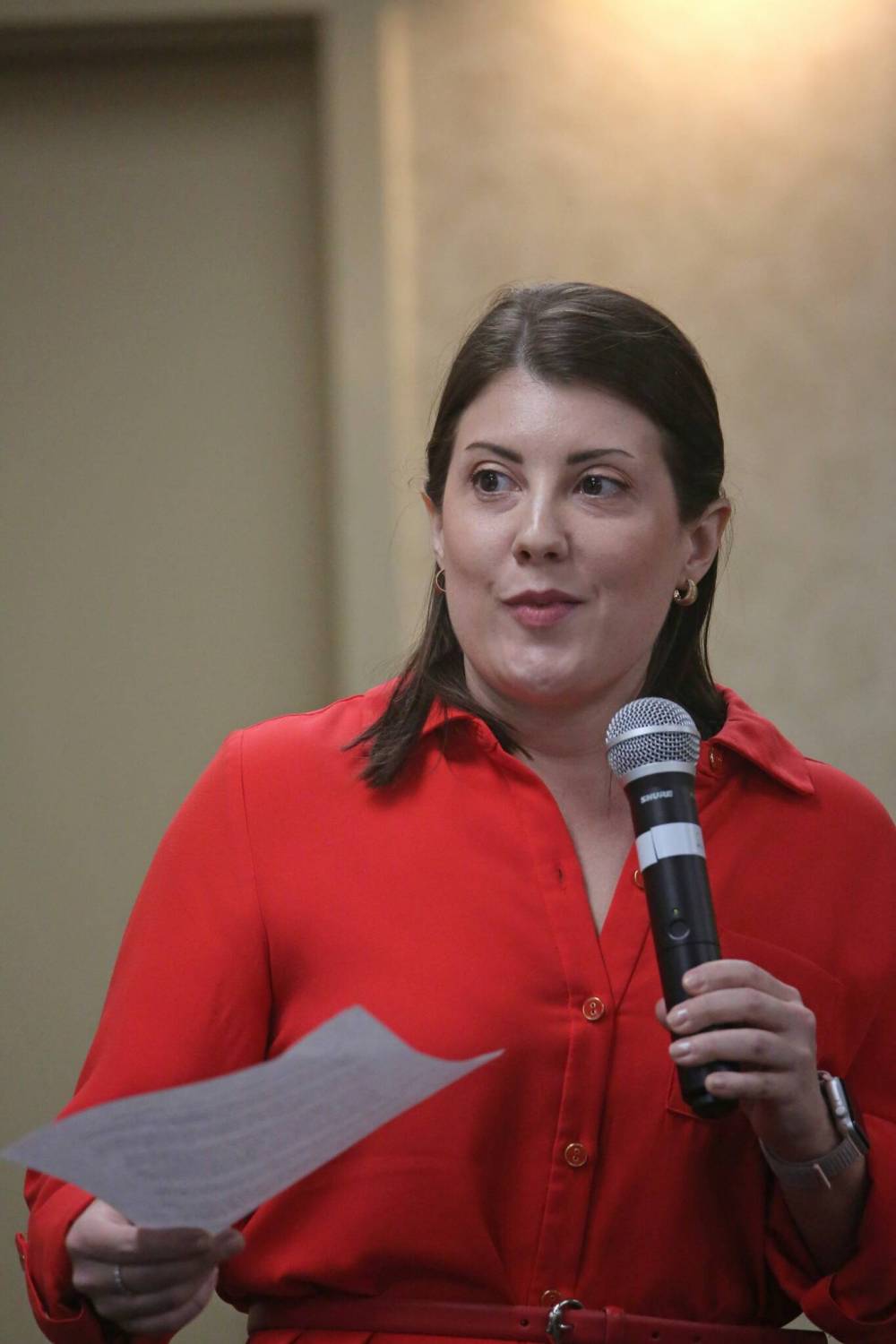
Eric Forster, the regional economic development officer for the Town of Melita and the Municipality of Two Borders, came to speak about the issues faced by smaller municipalities.
He said he believes rural Manitoba needs to be promoted as a desirable landing spot for foreign workers and even as a place where people can get their start before moving on.
“We’re not everything for everybody, but we can be that first spot,” he said.
Forster also said he thinks Manitoba needs to think outside of the box when coming up with incentives to move here, like paying for health care for international students or providing some kind of loan forgiveness program.
Up next, Brandon Chamber of Commerce president Tanya LaBuick explained what her organization’s members are experiencing due to the ongoing labour shortage.
“Case in point at my own personal business, an employee needed a work review and doctor’s note to return to work,” she said.
Because he couldn’t access a psychiatrist and didn’t have a family doctor, LaBuick said her company ultimately had to let him go. Local businesses are also having to shorten their hours and provide fewer services as a result of a lack of labour.
She requested the province distribute its real labour forecast number for the next two to five years, prioritize sectors most in need of labour, to expand licensed practical nursing seats at ACC and to eliminate roadblocks in the application, to work more closely on immigration with the federal government and monitoring system for workers, among other things.
Once the registered speakers concluded their thoughts, the floor opened to questions from the audience.
Someone who identified themselves as an immigration consultant asked if, on the health-care front, the province could meet with regulators to make it easier for people with health-care credentials to get certified to work in Canada.
She said while it’s easy for someone who comes from a country like the United Kingdom to transfer their credentials, it’s harder for health-care professionals from other countries to get certified.
Another audience member asked Reyes why qualified people coming to Canada must work at Walmart, for example, for four years while they wait to get the green light to work in a field desperate for labour.
In response, Reyes said the province needs to engage with the regulators for various professions to help with that process and he has a mandate to work on it.
“They don’t always see things the way we do, but the goal is to have people working safely in those professions,” Helwer said of regulators.
Emeka Egeson, who said he came to Canada through the provincial nominee program, asked if the minister’s immigration council could have more than one representative from Brandon on the board given it is the province’s second-largest community.

He also spoke of the challenge of having been approved for the program four years after applying, with labour market and economic challenges shifting in the meantime.
A representative from Maple Leaf Foods said while the company’s plant in Winnipeg is short by approximately 100 workers, the Brandon facility is missing 300.
Having travelled with the province for recruitment missions to the Philippines, she wanted to know if the government was open to more strategic opportunities and reducing immigration red tape.
After the Brandon meeting, another consultation was scheduled to take place in Neepawa on Monday afternoon.
Both Helwer and Reyes said a lot of recent efforts have been focused on bringing in Ukrainians fleeing the ongoing war. Helwer said as minister of labour, the first question he is often asked is how companies can recruit Ukrainians to work for them.
Someone who identified themselves as both an employee and international student at Assiniboine Community College said the way health care is set up for international students — where students don’t get Manitoba Health cards and must get private insurance — is dissuading people from getting the checkups and tests they need.
A hog farmer named William said he was glad to hear from Maple Leaf and ACC given their roles in his sector, but said he hopes the province could institute a trusted employer program to help businesses like his streamline the hiring of foreign labour and reduce recruitment costs.
Reyes — who also handles the advanced education portfolio — said while students receive private health care when they enrol, there have been talks about changing the system.
No further consultations are scheduled for Westman, though sessions will be taking place in Altona, Steinbach, Winkler and Winnipeg in August.
According to Reyes, the Immigration Advisory Council will issue a report on its findings by the end of the year.
» cslark@brandonsun.com
» Twitter: @ColinSlark