
‘No cookie-cutter solutions’ to health woes, Duclos says
Ottawa announces $37M for Manitoba long-term care
Advertisement
Read this article for free:
or
Already have an account? Log in here »
We need your support!
Local journalism needs your support!
As we navigate through unprecedented times, our journalists are working harder than ever to bring you the latest local updates to keep you safe and informed.
Now, more than ever, we need your support.
Starting at $15.99 plus taxes every four weeks you can access your Brandon Sun online and full access to all content as it appears on our website.
Subscribe Nowor call circulation directly at (204) 727-0527.
Your pledge helps to ensure we provide the news that matters most to your community!
To continue reading, please subscribe:
Add Brandon Sun access to your Free Press subscription for only an additional
$1 for the first 4 weeks*
*Your next subscription payment will increase by $1.00 and you will be charged $20.00 plus GST for four weeks. After four weeks, your payment will increase to $24.00 plus GST every four weeks.
Read unlimited articles for free today:
or
Already have an account? Log in here »
Hey there, time traveller!
This article was published 25/08/2022 (1275 days ago), so information in it may no longer be current.
Ottawa is funnelling millions of dollars into long-term care in Manitoba, but the provincial health minister says that’s not enough — she wants to see greater ongoing investments from her federal counterparts.
Federal Health Minister Jean-Yves Duclos said Thursday his government is committing $37 million to help the long-term care system in the province, specifically for infection prevention and control of COVID-19 and future outbreaks of disease.
The money is coming from a newly signed $1-billion agreement called the Safe Long-Term Care Fund.
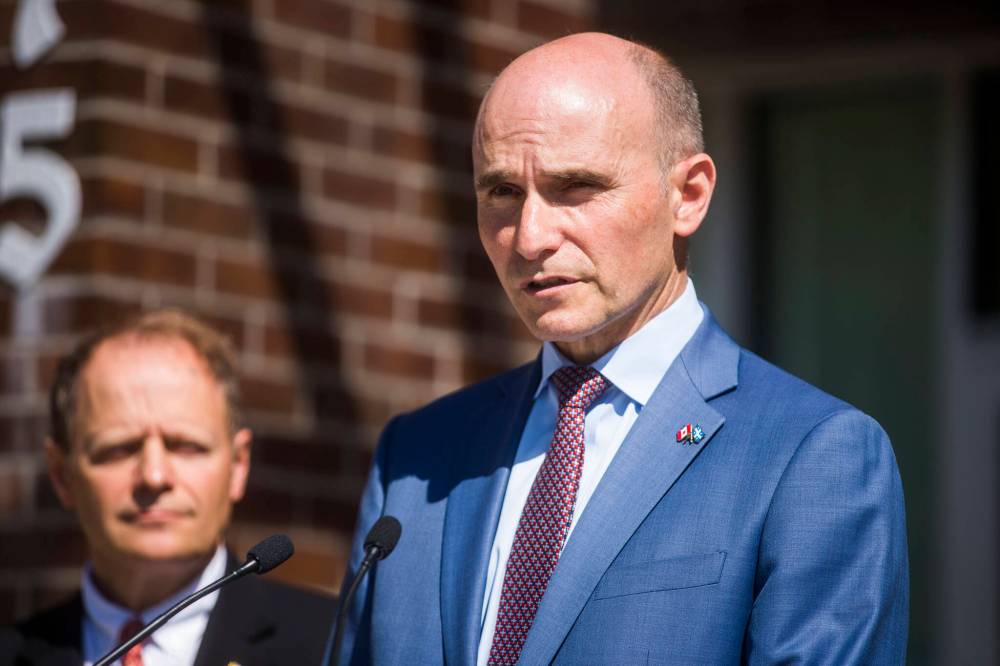
Federal Health Minister Jean-Yves Duclos announces $37 million in funding for Manitoba long-term care in Winnipeg Thursday. (Winnipeg Free Press)
The pandemic showed long-term care was vulnerable to major outbreaks with multiple issues such as staffing shortages and inadequate equipment exacerbating the problem, Duclos said.
The funding will cover the cost of operating and maintaining pandemic-era visitation shelters at facilities so residents can have a low-risk area to meet with visitors.
Demand for these shelters was noted in a COVID-related online survey by the province asking for feedback on how to make visiting loved ones in personal care homes safer.
There will also be strengthened infection prevention and control measures, including enhanced screening protocols for staff, and significantly increased cleaning and janitorial services.
A one-site staffing model across LTC homes will also be implemented, including incremental staffing costs incurred because of additional staff sick time.
In order to obtain the funding, the province was required to develop an action plan outlining its intentions. That included financial support for staff retention, ensuring a good supply of personal protective equipment for staff and visitors, renovation and upgrades of ventilation systems within facilities and strengthening infection and control measures, as well as training.
“Today’s agreement with Manitoba has helped address the challenges affecting long-term care homes to ensure that all seniors are treated with dignity and receive appropriate care,” said Duclos. “By working with all provinces and territories to strengthen our health-care system, our government will continue to be there for seniors in Manitoba, and everywhere in Canada.”
The funding is already being used for the stated purposes, said Manitoba Health Minister Audrey Gordon.
“Our government is committed to supporting and protecting the people who continue to be most at risk from COVID-19, while we work to restore our health-care system,” said Gordon.
“This includes ongoing investments at personal care homes as well as additional funding to our health authorities to help address the increased costs of providing care caused by the COVID-19 response.”
Even with a multimillion-dollar investment, Gordon said what her government really wants is a meeting with the prime minister to talk about increasing Canada Health Transfer payments once again.
Federal transfer payments are a series of payments made by the Government of Canada to provinces and territories under the Federal-Provincial Arrangements Act to create long-term and predictable funding for provinces.
Currently, the federal government is paying 22 per cent of a province’s health-care funding, with the province having to make up the rest. Gordon wants that amount increased to 35 per cent. The quality of health care in Manitoba depends on the federal government’s co-operation, she added.
With all the medical investments Ottawa has made, Duclos said, it already comes out to around 35 per cent. That includes a $2-billion investment to help provinces address their surgical backlogs.
“Looking at percentages is a futile debate. What we need to talk about is the fight for health-care workers,” said Duclos. “Making sure they have the supports they need to do their jobs is what matters most. There are no cookie-cutter solutions for the provinces.”
The announcement comes a day after the Manitoba government signed deals with Big Thunder Orthopedics in northwestern Ontario, Sanford Health in Fargo, N.D., and Cleveland Clinic in Ohio for hip and knee replacements. The $110-million agreement could see up to 750 people travel out-of-province for surgery, depending on demand.
The transfer agreements will start with a pilot phase, a provincial spokesperson said in an email. Northwestern Ontario would start with around 10 to 20 patients a month, then increase to 20 to 30 per month. For Sanford, the province could see up to 250 procedures per year, and for Cleveland Clinic approximately 200 procedures per year.
Gordon said this has nothing to do with optics over sending people away from home — it’s about getting people the surgery they need to ease their pain and get them back to their lives.
“We are offering a suite of options for people, and we’ve had agreements like this for years,” she said. “These jurisdictions have a high level of competency and quality of care they can offer those who choose to go ahead with this option.”
» kmckinley@brandonsun.com, with files from The Brandon Sun
» Twitter: @karenleighmcki1