
What’s in a name? King Charles III’s name has loaded history
Advertisement
Read this article for free:
or
Already have an account? Log in here »
We need your support!
Local journalism needs your support!
As we navigate through unprecedented times, our journalists are working harder than ever to bring you the latest local updates to keep you safe and informed.
Now, more than ever, we need your support.
Starting at $15.99 plus taxes every four weeks you can access your Brandon Sun online and full access to all content as it appears on our website.
Subscribe Nowor call circulation directly at (204) 727-0527.
Your pledge helps to ensure we provide the news that matters most to your community!
To continue reading, please subscribe:
Add Brandon Sun access to your Free Press subscription for only an additional
$1 for the first 4 weeks*
*Your next subscription payment will increase by $1.00 and you will be charged $20.00 plus GST for four weeks. After four weeks, your payment will increase to $24.00 plus GST every four weeks.
Read unlimited articles for free today:
or
Already have an account? Log in here »
Hey there, time traveller!
This article was published 10/09/2022 (1259 days ago), so information in it may no longer be current.
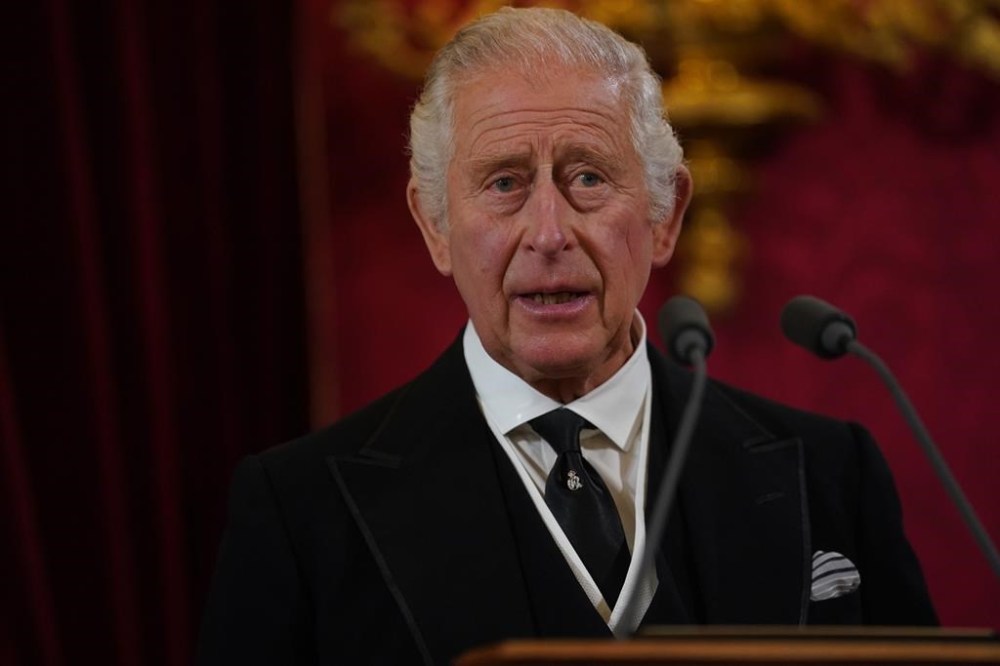
LONDON (AP) — Britain’s new monarch is named King Charles III — but that was not inevitable.
Charles Philip Arthur George could have chosen another royal name when he took the throne after the death of his mother Queen Elizabeth II on Thursday. While the queen used her first given name, her father, King George VI, was named Albert Frederick Arthur George and called Bertie by friends and family.
Some observers thought the new king might prefer a different name because of the historical baggage associated with the two previous British monarchs called Charles.
KING CHARLES I
King Charles I is the only British sovereign whose rule led to revolution and the temporary abolition of the monarchy.
He took the throne in 1625, and his reign saw a growing power struggle between the crown and Parliament, which sought to limit the king’s powers.
After the king attempted to arrest lawmakers in the House of Commons in 1642, hostilities erupted into the English Civil War, which ended with victory for the parliamentary forces of Oliver Cromwell. Charles was convicted of high treason and beheaded in 1649 outside the Banqueting House in London, just up the street from Parliament.
KING CHARLES II
The son of Charles I spent his youth abroad during Britain’s 11 years of rule under Cromwell. He took the throne when the monarchy was restored in 1660.
He had considerably less power than his father had enjoyed. The monarch was stripped of the power to make law without the consent of Parliament. Further reforms in the following decades established that the Crown must accept the will of the democratically elected Parliament, the basis of Britain’s constitutional monarchy.
Charles II’s 25-year reign saw the return of public entertainment after the austere years under the Puritan Cromwell, when theaters were shut and Christmas celebrations were banned.
Charles II was nicknamed the “merry monarch” because of his hedonism and many romances. The King Charles Spaniel is named after the dog-loving monarch.
___
Follow all AP stories on British royalty at https://apnews.com/hub/russia-ukraine.