
Feds back away from timeline for law to make First Nations policing essential service
Advertisement
Read this article for free:
or
Already have an account? Log in here »
We need your support!
Local journalism needs your support!
As we navigate through unprecedented times, our journalists are working harder than ever to bring you the latest local updates to keep you safe and informed.
Now, more than ever, we need your support.
Starting at $15.99 plus taxes every four weeks you can access your Brandon Sun online and full access to all content as it appears on our website.
Subscribe Nowor call circulation directly at (204) 727-0527.
Your pledge helps to ensure we provide the news that matters most to your community!
To continue reading, please subscribe:
Add Brandon Sun access to your Free Press subscription for only an additional
$1 for the first 4 weeks*
*Your next subscription payment will increase by $1.00 and you will be charged $20.00 plus GST for four weeks. After four weeks, your payment will increase to $24.00 plus GST every four weeks.
Read unlimited articles for free today:
or
Already have an account? Log in here »
Hey there, time traveller!
This article was published 05/04/2023 (1094 days ago), so information in it may no longer be current.
OTTAWA – The federal government is backing awayfrom setting a timelineto introduce legislation that would declare First Nations policing an essential service, but at least one regional chief hopes to see it this spring.
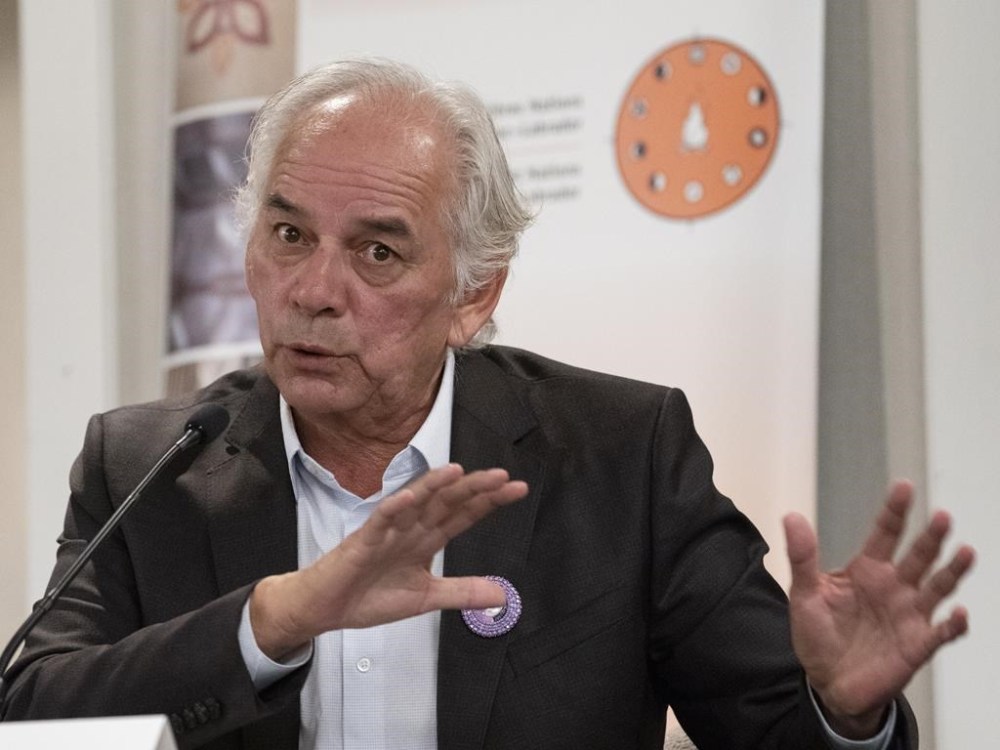
Ghislain Picard, a member of the Assembly of First Nations executive, says it has been fighting for improvements to First Nations policing on two fronts: securing better funding for existing services and helping to draft new legislation.
“We’ve been talking about this for years,” said Picard, one of the leads on justice and policing issues for the national advocacy organization that represents more than 600 First Nations.
Public Safety Minister Marco Mendicino told The Canadian Press last December that the government hoped to table a bill in 2023.
This week, however, a press secretary for the minister backed away from any timeline, saying “It is too early to say when the legislation will be tabled.”
In September 2022, Mendicino told reporters he would “work around the clock” to table a bill that fall.
That came two years after Prime Minister Justin Trudeau promised to “accelerate work on First Nations policing, including legislating it as an essential service.”
Picard said he and others working on the issue remain “very much committed to see legislation hopefully before the House rises in June.”
“We’re still very much on that target, from our end.”
Mendicino’s director of communications said Tuesday that the legislation is a “major element” of its efforts to expand policing on First Nations.
“This work is well underway and includes several unique elements that make it difficult to provide an exact time frame. Most significantly, this bill is being co-developed (with) the Assembly of First Nations as an equal partner,” Alexander Cohen said in a written statement.
“Furthermore, it involves an area of shared federal-provincial jurisdiction, and as such requires more co-ordination between orders of government. That said, we are not waiting for legislation to take action.”
Cohen pointed to millions of dollars dedicated in previous budgets for First Nations policing, and ongoing work with individual communities and tribal councils on efforts to bolster community safety.
The funding of First Nations police services is the subject of a human rights complaint recently launched by nine police services in Ontario.
At the heart of the complaint is an allegation that the 1991 program Ottawa uses to provide the funding is inadequate, leaving police services strapped for staff, equipment and other resources. The program is cost-shared with provinces.
The complaint alleges that “deliberate and wilful” underfunding amounts to discrimination on the part of the federal government.
It has garnered the support of the association advocating for all 36 First Nations police services in Canada.
Picard said such a complaint was foreseeable given the long-standing concerns from chiefs.
“They’ve been complaining about this program and its shortcomings from Day 1.”
An internal review of the program released last year by the Public Safety Department found that its”finite amount” dedicated in its budget leads to an underfunding of policing agreements, which creates ongoing challenges for services.
The federal government is still trying to determine the scope of the essential service legislation.
Asked Tuesday whether he has seen any drafts or wording, Picard said: “We’re not there yet.”
“This is where the issue of co-development is key,” he said, adding that it is a complex process.
“We’re there, we have the federal government, and then where are the other jurisdictions, where is their role in all of this?”
Picard was attending a special assembly meeting in Ottawa, where chiefs were to discuss the federal government’s implementation of the United Nations Declaration on the Rights of Indigenous Peoples.
He said the spirit of that declaration is informing work on the policing bill.
This report by The Canadian Press was first published April 5, 2023.