
Alberta regulator confirms potential oilsands toxins in small fish-bearing waterbody
Advertisement
Read this article for free:
or
Already have an account? Log in here »
We need your support!
Local journalism needs your support!
As we navigate through unprecedented times, our journalists are working harder than ever to bring you the latest local updates to keep you safe and informed.
Now, more than ever, we need your support.
Starting at $15.99 plus taxes every four weeks you can access your Brandon Sun online and full access to all content as it appears on our website.
Subscribe Nowor call circulation directly at (204) 727-0527.
Your pledge helps to ensure we provide the news that matters most to your community!
To continue reading, please subscribe:
Add Brandon Sun access to your Free Press subscription for only an additional
$1 for the first 4 weeks*
- Enjoy unlimited reading on brandonsun.com
- Read the Brandon Sun E-Edition, our digital replica newspaper
*Your next Free Press subscription payment will increase by $1.00 and you will be charged $20.95 plus GST for four weeks. After four weeks, your payment will increase to $24.95 plus GST every four weeks.
Read unlimited articles for free today:
or
Already have an account? Log in here »
Hey there, time traveller!
This article was published 05/04/2023 (1325 days ago), so information in it may no longer be current.
Alberta’s energy regulator has confirmed hazardous chemicals are present in a small waterbody after two releases of tailings-contaminated wastewater from Imperial Oil’s Kearl oilsands mine.
In an update released Tuesday, the agency said hydrocarbons and naphthenic acids have been found in an unnamed fish-bearing lake located almost entirely within Imperial’s lease about 70 kilometres north of Fort McMurray.
“Test results on April 3 identified the presence of F2 hydrocarbons and naphthenic acids at the two sampling sites closest to the seep location,” said a statement from the regulator. “These components are potential indicators of industrial wastewater within … a fish-bearing waterbody on the northeastern edge of Imperial’s Kearl lease.”
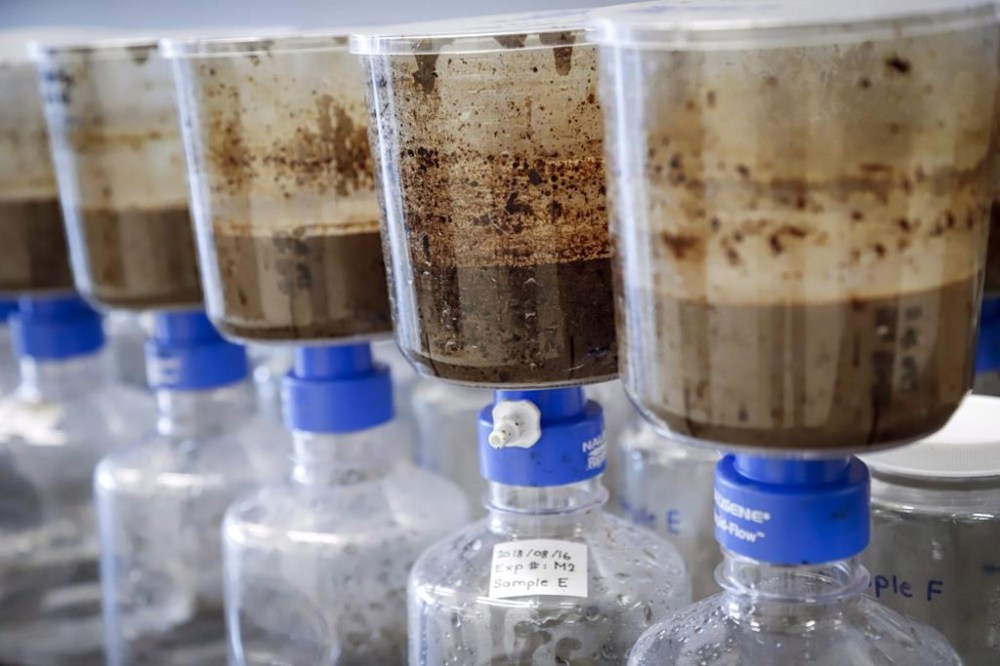
F2 hydrocarbons are lighter petrochemicals. Naphthenic acids are formed from the breakdown of petrochemicals and are typically found in oilsands tailings.
The lake, near where the releases occurred, is less than a quarter of a square kilometre in size.
The regulator said the levels of those toxins remain below guidelines for the protection of aquatic life.
“There is no indication of a change in drinking water quality at this time and no adverse impacts to fish or wildlife have been observed,” the regulator said. “It is premature to make any conclusions based on these test results and further testing is being done.”
An Imperial Oil spokeswoman said those chemicals haven’t been found at the lake’s outlet to a tributary of the Firebag River.
The news follows an earlier warning from Environment Canada that Imperial must take action to prevent the chemicals from entering fish-bearing waters, which would violate the Fisheries Act. That act prohibits any discharge of harmful material into fish-bearing water.
Marti Olszynski, a professor of resource law at the University of Calgary, said the regulator’s finding could have a bearing on whether Imperial faces charges under the act.
“They very clearly talk about industrial wastewater,” he said. “Not just bitumen-influenced, but industrial wastewater.”
The levels of contaminants found in the fish-bearing water aren’t a consideration, he said.
“It doesn’t matter the quantities that are being detected.”
Olszynski said the regulator refers to “potential” indicators of wastewater, suggesting the chemicals haven’t been conclusively linked to the Imperial release.
“It’s hard to know how much heavy lifting that word is doing,” he said.
Imperial first found discoloured water seeping from one of its tailings ponds in May that has since been confirmed to be groundwater contaminated with oilsands tailings.
In February, another 5.3 million litres of tailings-contaminated wastewater escaped from a catchment pond.
The seepage continues, although Imperial has constructed new trenches and installed pumps to prevent it from spreading.
This report by The Canadian Press was first published April 5, 2023.