
Hockey rebounds from pandemic
Advertisement
Read this article for free:
or
Already have an account? Log in here »
We need your support!
Local journalism needs your support!
As we navigate through unprecedented times, our journalists are working harder than ever to bring you the latest local updates to keep you safe and informed.
Now, more than ever, we need your support.
Starting at $15.99 plus taxes every four weeks you can access your Brandon Sun online and full access to all content as it appears on our website.
Subscribe Nowor call circulation directly at (204) 727-0527.
Your pledge helps to ensure we provide the news that matters most to your community!
To continue reading, please subscribe:
Add Brandon Sun access to your Free Press subscription for only an additional
$1 for the first 4 weeks*
*Your next subscription payment will increase by $1.00 and you will be charged $20.00 plus GST for four weeks. After four weeks, your payment will increase to $24.00 plus GST every four weeks.
Read unlimited articles for free today:
or
Already have an account? Log in here »
Hey there, time traveller!
This article was published 18/04/2023 (1066 days ago), so information in it may no longer be current.
Even in the wake of a pandemic and Hockey Canada scandals that rocked the foundation of the sport across the country, the game is on the rebound.
After dramatic drops in registration in most sports during the COVID-induced shutdown, Hockey Brandon president Tim Lang said things are in a much better place now.
Hockey Brandon had about 750 players this year, up from around 700 a year ago.
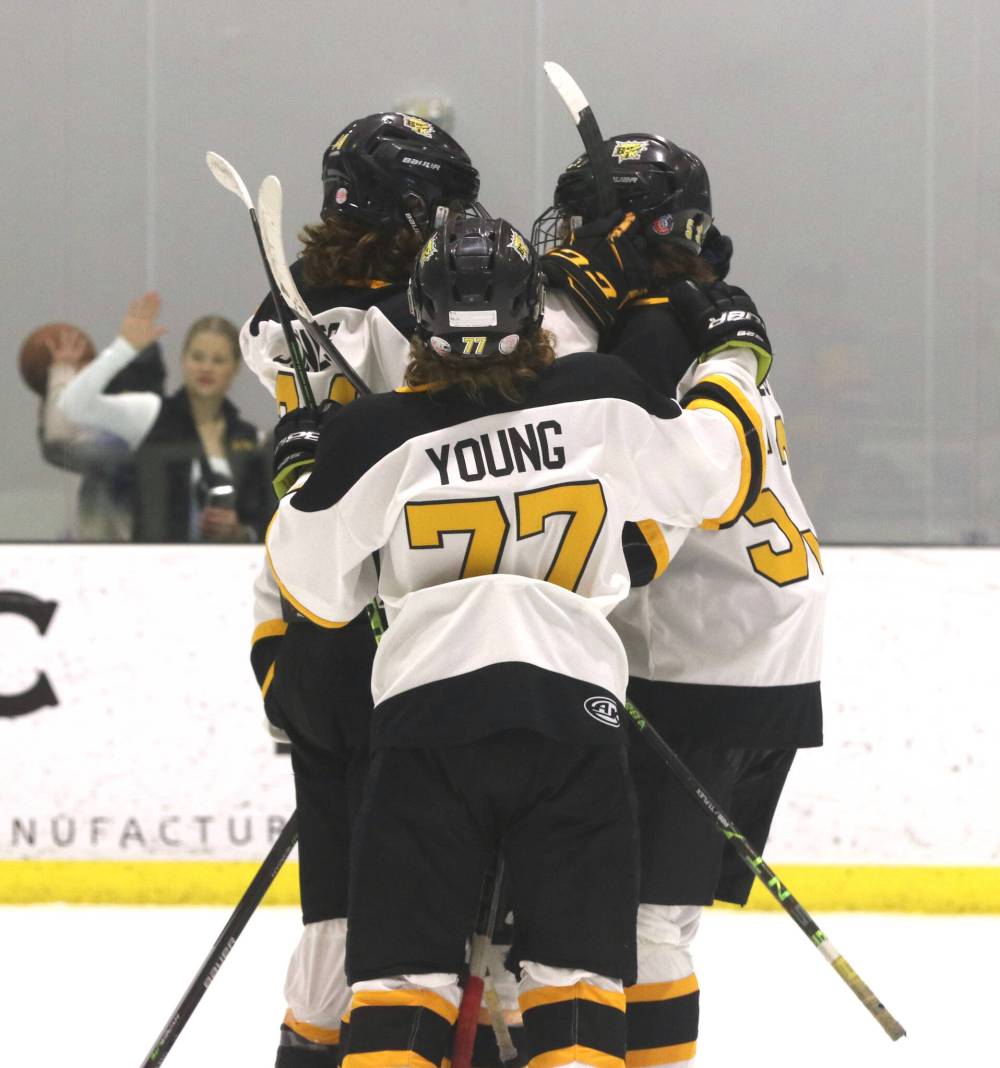
It was another solid winter for Brandon's young players — including Drew Young of the under-15 AAA Wheat Kings — as Hockey Brandon and Hockey Manitoba watched registration numbers edge closer to their pre-pandemic numbers. (Perry Bergson/The Brandon Sun)
“I think we’re starting to see a return to more historic numbers,” said Lang, who took over in the top job in April 2022. “Since I’ve taken over as president, that’s been my main focus. I would like to grow the number of players in Brandon and I think that’s how our board should be measured, by the number of players we have.
“It is fairly normal now and we’re getting back to tournaments and hosting tournaments in Brandon and teams are travelling around. It’s been a good year that way. We’ve seen a lot of positive things happening, and with the restrictions being lifted, kids are able to be kids again.”
Hockey Manitoba executive director Peter Woods said it’s a similar story across the province.
Woods said sports registrations in general have rebounded from the COVID lull, with hockey also riding the wave. He suggested hockey is back to about 95 per cent of its previous registrations.
“We’re not at the numbers but we’re not far off the numbers we were at prior to the onset of COVID but that can be a number of factors,” Woods said. “There could be less youth in that demographic. There are certainly some kids who probably found some other things to do outside of playing hockey.”
Hockey Canada’s issues started last summer with news of a settlement they reached with a young woman, who in 2018 was allegedly sexually assaulted in Ontario by eight Canadian Hockey League hockey players, including members of the world junior team.
Hockey Canada executives also told a House of Commons committee they’ve paid 21 complainants a total of $8.9 million for sexual abuse settlements since 1989, and took $7.6 million out of its National Equity Fund, which is in part funded by the organization’s share of registration fees paid by minor hockey players.
“Some of the things that came to light were pretty disappointing and frustrated and upset a lot of people,” Lang said. “From our standpoint, we pay our fee to Hockey Manitoba, who then sends it to Hockey Canada. We had a couple of parents who asked for their fees back but I don’t think it was as many as I thought it would be. Especially when it comes to kids and the sport of hockey, there is a lot of passion there and any time we get a black eye in a situation like this, it is tough for a lot of people to swallow.
“As a hockey player growing up and who coaches kids now, it was definitely disappointing to hear.”
Aside from the way the scandal tarnished the game, it also made parents aware that some of the money they pay for their child to play minor hockey heads outside the city. Woods said it’s important to understand the economics.
“There seems to be a lot of confusion out there about that $1,000 or $2,000 or $5,000, whatever you end up paying, that the bulk of that goes to Hockey Manitoba or Hockey Canada,” Woods said. “We see little of that. An average of about $50 would come to Hockey Manitoba, and of that $50, that’s split almost down the middle between us and Hockey Canada.
“And of that Hockey Canada portion, there is about $21 of that which goes to cover insurance. I think Hockey Canada has done a good job of that and we can have pride in that we have one of the best insurance packages out there.”
Hockey Manitoba’s share of the money helps offset the organization’s operational costs, which include everything from arranging provincial competitions and forming provincial teams to the training of coaches and officials. Fewer than a dozen staff run the programs for about 30,000 people who are involved in the game at some level in Manitoba.
“Everyone seems to think Hockey Manitoba or Hockey Canada are doing a cash grab,” Woods said. “We run a fairly tight ship and we’re not getting rich from the money that we get from our members for them to register to play hockey.”
Perhaps the biggest issue for hockey — and one that seems impossible to solve — is that the sport simply faces higher fixed costs before a parent purchases equipment. Even at the youngest and least competitive age groups it’s expensive, in large part because of the cost of ice and, to a lesser extent, officials. For instance, non-profits such as Hockey Brandon are charged around $200 per hour for ice, and officials might cost another $50 or $60 per game.
“With the cost of ice, it’s something that’s kind of out of our control,” Lang said. “When you look at a practice, the older kids would have one team on the ice and you’re separating that (cost) between 15 kids. When you actually do that breakdown, it gets fairly costly for sure, especially with the amount of practice times teams have.
“It’s a bit of a concern every year because it’s the bulk of what people pay for fees for sure.”
Lang said the teams in the more competitive streams book and pay for their own ice, which is completely separate from house league. Hockey Brandon runs everything that is U15 AAA and below, both in the male and female games. The amount the players on those squads pay is contingent on how much they are on the ice.
“The AAA fees are paid by the AAA teams,” Lang said. “For instance, if a kid played house league, he would be paying for his own ice time. His particular fees, if they were in a separate league, the insurance, etc. Anything that’s associated with AAA or AA or even A1 in U11, they pay an additional fee that would cover those additional costs.”
“There shouldn’t be anybody supplementing AAA fees out of house league fees, that’s for sure,” Lang added.
The U18 AAA boys team has its own board and runs its own ice times, completely independent of Hockey Brandon.
Ultimately, the high performance and house league streams need to co-exist.
“We have to provide opportunities and options for kids at all levels within the system, whether that’s an entry-level player or someone who is participating in a high performance program,” Woods said. “There has to be a balance there. Certainly at the high performance level, there is a lot more of a user-pay contribution that’s made.”
Woods said hockey has done what it can to try to cut costs, including a move several years ago when Manitoba became one of the first provinces to go cross ice in the younger age groups, allowing more players to skate at one time and reducing the expense for everyone.
The key spending by Hockey Manitoba has to be on the volunteers who make it all possible, Woods said, because they ultimately have a massive influence.
“The important investment you have to make is in your coaches,” Woods said. “I’ve always said the coaches are probably the most important volunteer in our system. If he or she does a good job at the front end of the program and kids decide to come back and play the next year, that’s reflective of the job and the role that coach has done. They got that player to learn to enjoy and love the sport and get a positive experience out of it.”
And that’s why one of the other issues the sport is facing is so vexing. Woods noted a handful of people can undo a lot of the good that hockey creates.
“There are some challenges all sports are going through with the level of disrespect to people who are associated with the game, whether that’s a volunteer or players or against officials,” Woods said. “Those are the challenges within the sport, but it’s the small minority that seems to make the noise and what you hear about, more than all the good things that go on.”
And that’s the disappointing part. Woods noted the experience is what matters for the overwhelming majority, and that’s why hockey should really matter.
“It’s the opportunity to create life-long memories and positive experiences and socializing with their friends and making life-long friends,” Woods said. “Those are the things that you should be getting out of the sport because I don’t think too many players are on the fast track to go to the National Hockey League and make a living out of the game. You have to get other things out of the sport, which is something I think the sport has always provided.”
» pbergson@brandonsun.com
» Twitter: @PerryBergson