
Burnout persists among Manitoba nurses, doctors
Advertisement
Read this article for free:
or
Already have an account? Log in here »
We need your support!
Local journalism needs your support!
As we navigate through unprecedented times, our journalists are working harder than ever to bring you the latest local updates to keep you safe and informed.
Now, more than ever, we need your support.
Starting at $15.99 plus taxes every four weeks you can access your Brandon Sun online and full access to all content as it appears on our website.
Subscribe Nowor call circulation directly at (204) 727-0527.
Your pledge helps to ensure we provide the news that matters most to your community!
To continue reading, please subscribe:
Add Brandon Sun access to your Free Press subscription for only an additional
$1 for the first 4 weeks*
- Enjoy unlimited reading on brandonsun.com
- Read the Brandon Sun E-Edition, our digital replica newspaper
*Your next Free Press subscription payment will increase by $1.00 and you will be charged $20.95 plus GST for four weeks. After four weeks, your payment will increase to $24.95 plus GST every four weeks.
Read unlimited articles for free today:
or
Already have an account? Log in here »
Hey there, time traveller!
This article was published 27/04/2023 (1278 days ago), so information in it may no longer be current.
Burnout is something registered nurse Allison McKenzie says she knows all too well after working in the health-care system for 27 years.
“I would sit in my car trying to muster up the courage to go in and would think about quitting every day,” McKenzie said. “Nurses talk, so I know I’m not the only one.”
McKenzie is right — she’s not the only one who has experienced burnout, which is higher among Manitoba’s health-care workers than anywhere else in Canada, and more than half of all employees, including nurses and doctors, have seriously considered looking for a new job.
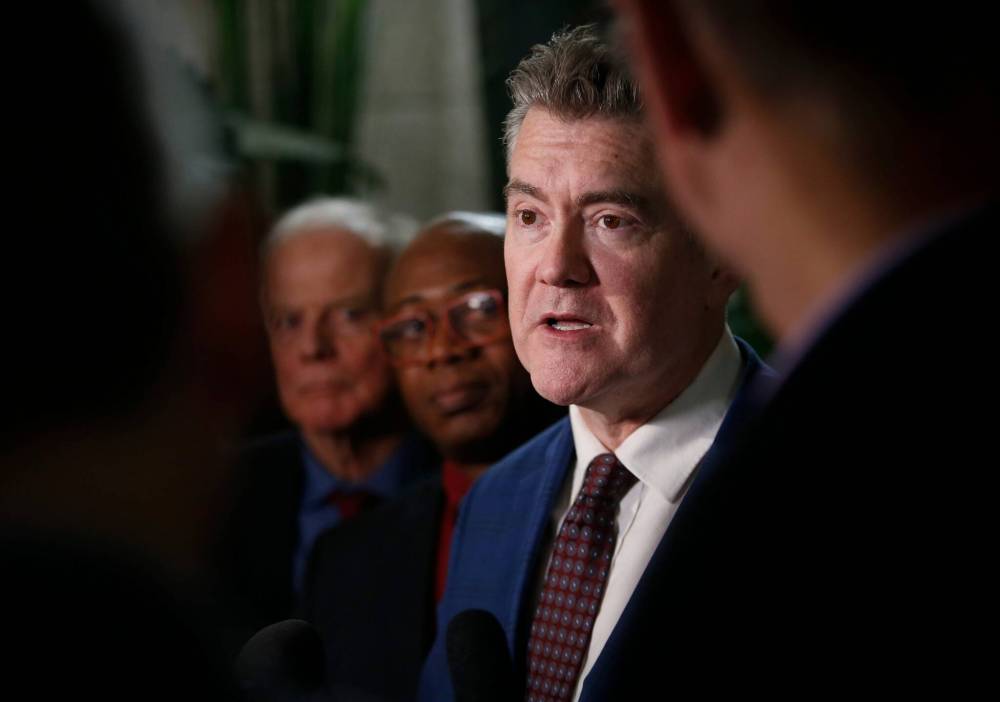
Manitoba Liberal Party Leader Dougald Lamont. (Winnipeg Free Press)
More than 68 per cent of employees reported burnout and nearly 30 per cent say they have missed work in the past year because of it.
That data is compiled in a report from a consulting company that was hired a year ago by the Manitoba government to assess resilience and well-being of health-care workers.
The report was completed last April and contains information on employee issues, where the problems originate and recommendations for quick wins, or strategies the government can implement, to make changes.
But the report was never made public until a whistleblower sent it to Dougald Lamont, Manitoba’s Liberal party leader.
“So you have a situation where two-thirds of nurses and half of doctors in the previous year had considered quitting. That is an absolutely horrifying number,” Lamont told the Sun.
“And the report had recommendations, like making sure that people aren’t overworked, that they had time to eat properly, get wage increases and mental health breaks, and those were ignored.”
The cost of hiring the consulting firm has not been publicized, but Manitoba NDP Leader Wab Kinew said money could have been saved by talking and listening to health-care workers directly.
“That would have been a smarter, more effective use of public resources, because that would have meant we’d have more to invest in the front lines of our health-care system where the need is the greatest,” said Kinew.
Through questionnaires and focus groups, the consultants found that staff issues were driven by factors out of their control like workload, shifts and support from managers.
Listed under key challenges and opportunities, the report stated, “the situation is unlikely to improve without focused and targeted interventions.”
To see the recommendations and know they weren’t followed by the provincial government is “disheartening,” said Jason Linklater, president of the Manitoba Association of Health Care Professionals (MAHCP), whose 7,000 members of health professionals have been without a contract for more than five years.
Linklater said his union has solutions, and the very first step would be to negotiate a competitive contract with the government, which he said was identified in the report.
“I find it mind-boggling, to be honest. When you see the exact opposite happening of what the employees have been telling you, for years and years, and what a consultant is telling you, and then to see nothing being implemented, I think goes to say that clearly, they have their own agenda that’s not in alignment with the rest of the system.
“It seems like it’s the same old story of letting the public system fail and then come in with the solution, a private solution. And, actually, that’s a dishonest way to deal with public money.”
Linklater is not alone in his thinking that the government has an ulterior motive. Thomas Linner, president of the Manitoba Health Coalition, a non-profit, non-partisan health-care advocacy organization, agreed.
Linner said the Manitoba government has a clear agenda with a focus on cuts and privatization in health care, including moving contracts to the private sector, which he added will be bad for rural Manitoba.
“There are some real concerns for rural Manitoba if the government can’t fix the relationship with allied health professionals,” said Linner. “When you see this dilemma of a health-care staffing crisis, the first places to get hurt are the smaller facilities. And that’s going to impact rural Manitoba really badly.”
Health Minister Audrey Gordon’s office didn’t immediately respond to a request for comment Wednesday.
McKenzie, once employed in Prairie Mountain Health, now works in another health region and wonders what else the government needs to hear to spur changes that benefit employees.
“We work in what’s like a vacuum, no one ever asks how we are doing,” McKenzie said. “We feel unappreciated and lost, and even though sometimes I feel like quitting, the love of the job keeps me in it.”
Earlier this month, PMH released its five-year strategic plan, which included feedback from employees about weaknesses they identified on the job.
Shortage of staff, lack of consistency or efficiency in some processes and high workload were included as weaknesses, while burnout, staff turnover and shortage of staff were seen as challenges for PMH over the next five years.
“Health-care staff have been asked to go above and beyond their normal responsibilities, which has left them feeling overwhelmed, exhausted and at times uncertain,” said Brian Schoonbaert, chief executive officer of PMH, which has 7,500 employees.
He said PMH staff can access its employee assistance program for free through Manitoba Blue Cross. Employees can call 1-800-590-5553 or 204-786-8880 to book an appointment.
» mmcdougall@brandonsun.com
» Twitter: @enviromichele