
Review: A gutsy memoir by child of an Andy Warhol superstar
Advertisement
Read this article for free:
or
Already have an account? Log in here »
We need your support!
Local journalism needs your support!
As we navigate through unprecedented times, our journalists are working harder than ever to bring you the latest local updates to keep you safe and informed.
Now, more than ever, we need your support.
Starting at $15.99 plus taxes every four weeks you can access your Brandon Sun online and full access to all content as it appears on our website.
Subscribe Nowor call circulation directly at (204) 727-0527.
Your pledge helps to ensure we provide the news that matters most to your community!
To continue reading, please subscribe:
Add Brandon Sun access to your Free Press subscription for only an additional
$1 for the first 4 weeks*
- Enjoy unlimited reading on brandonsun.com
- Read the Brandon Sun E-Edition, our digital replica newspaper
*Your next Free Press subscription payment will increase by $1.00 and you will be charged $20.95 plus GST for four weeks. After four weeks, your payment will increase to $24.95 plus GST every four weeks.
Read unlimited articles for free today:
or
Already have an account? Log in here »
Hey there, time traveller!
This article was published 01/05/2023 (1267 days ago), so information in it may no longer be current.
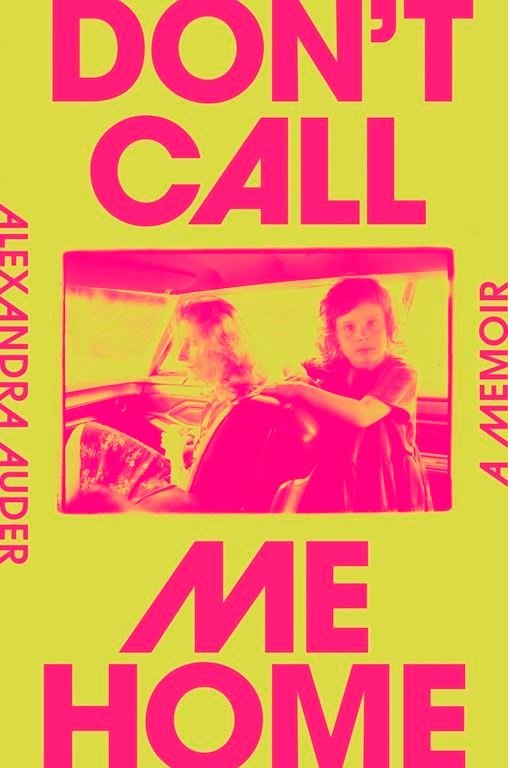
“Don’t Call Me Home,” by Alexandra Auder (Viking)
It takes guts and a sense of humor to kick off your debut memoir with an insult from Andy Warhol. “Seeing Alexandra was sad — a big rug-rat hanging off Viva — she’ll probably turn out a mess.” But Alexandra Auder uses it as the epigraph for her impossible-to-put-down memoir, “Don’t Call Me Home,” a must-read for children of narcissistic parents.
The book recounts Auder’s childhood growing up in the 1970s and ’80s in the grungy glory of Manhattan’s Chelsea Hotel, where she shared a tiny apartment with her mother, Viva, the Warhol underground film star, and her half-sister, Gaby Hoffmann, an actor. The earliest moments of Alexandra’s life, including Viva going into labor in the hotel lobby, were captured on video by her father, Michel Auder, an experimental filmmaker.
As you might expect, a lot of art world luminaries make cameos in the book, including Michel Auder’s second wife, the photographer Cindy Sherman. But the heart of the story is Alexandra’s intense, enmeshed, love/hate relationship with her immature, impulsive and arguably insane mother, whom she describes at one point as “my true love.”
The story toggles back and forth between Auder’s captivating memories of her bohemian upbringing and the present day, as she prepares to host a Christmas celebration with the aging diva at the Philadelphia home she shares with her husband and two children. Auder tells herself to be nice to Viva, reminds herself she was lucky for all the years she was nursed and cuddled, her imagination nurtured. But to no avail. “Why is it that rather than wanting to thank my mother by anointing her crepey-thin skin… I want to smother her?”
In the acknowledgments, Auder, an actor and yoga instructor, says she has been writing versions of this story for over 25 years. You can tell. Her childhood memories sparkle, especially the summers spent with Viva’s conservative, devoutly Catholic family on the St. Lawrence River. Her aunts — “long, thin, and bony” — flock to her “like birds flying in formation,” showering her with affection, but all too often the reunions devolve into violence when Viva does something outrageous.
Early on, after her parents split and her father moved out, Auder came to realize that she had to be the wiser, more mature one in her relationship with her mother. She was, but it’s clear it took an unspecified toll. Still, nothing can dim her ardor for the larger-than-life Viva. Indeed, the dedication of the book reads: “For Mom, thanks for paving the way.”