
‘The ship sank all over again’: Families of victims in wreck recall Gordon Lightfoot
Advertisement
Read this article for free:
or
Already have an account? Log in here »
We need your support!
Local journalism needs your support!
As we navigate through unprecedented times, our journalists are working harder than ever to bring you the latest local updates to keep you safe and informed.
Now, more than ever, we need your support.
Starting at $15.99 plus taxes every four weeks you can access your Brandon Sun online and full access to all content as it appears on our website.
Subscribe Nowor call circulation directly at (204) 727-0527.
Your pledge helps to ensure we provide the news that matters most to your community!
To continue reading, please subscribe:
Add Brandon Sun access to your Free Press subscription for only an additional
$1 for the first 4 weeks*
- Enjoy unlimited reading on brandonsun.com
- Read the Brandon Sun E-Edition, our digital replica newspaper
*Your next Free Press subscription payment will increase by $1.00 and you will be charged $20.95 plus GST for four weeks. After four weeks, your payment will increase to $24.95 plus GST every four weeks.
Read unlimited articles for free today:
or
Already have an account? Log in here »
Hey there, time traveller!
This article was published 05/05/2023 (1224 days ago), so information in it may no longer be current.
Darren Muljo was in elementary school when his teacher asked the students in his class to pick a song they wanted to learn to play.
Muljo, now 52, chose the 1976 song “The Wreck of the Edmund Fitzgerald” by legendary Canadian folk musician Gordon Lightfoot.
Muljo’s mother, Cheryl Rozman, first introduced him to the six-minute-long folk ballad, which chronicles the demise of the Edmund Fitzgerald.
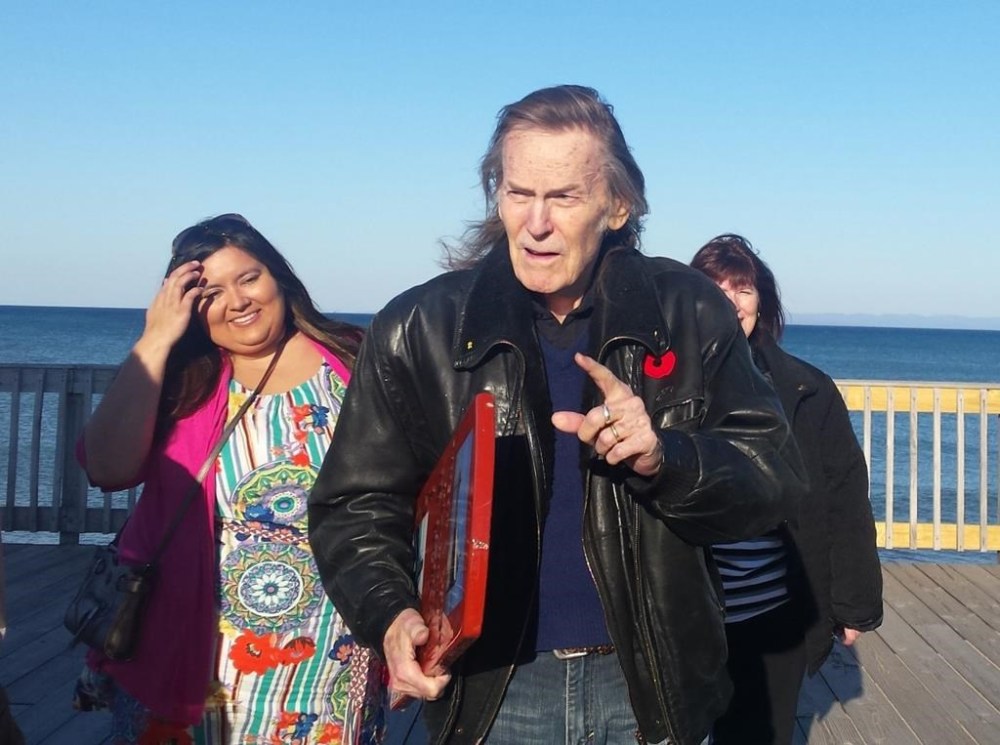
The ship sank in Lake Superior near Whitefish Point, Mich., during a storm on Nov. 10, 1975. All 29 crewmen on board died.
One of those men was Muljo’s grandfather, Ransom Cundy, a watchman on the ship.
At the time, Muljo was too young to fully understand the significance of the song for the families. But in the years since, it has cemented a bond between them that has lasted decades.
“Gordon Lightfoot’s imprint on the healing process for the families cannot be (overstated), especially when he made it a point to develop a personal connection with many of them,” Muljo said in a phone interview from Melbourne, Fla.
As word got out of Lightfoot’s death Monday, relatives of the ship’s crew began reaching out by phone and social media to share stories of the singer-songwriter, whom many referred to as an honorary family member.
“When I first heard the news, it went through me like the ship sank all over again,” Deborah Champeau said by phone from Nashotah, Wis.
“Gordon is a part of our family. I really respected what he stood for and that he took the time and the effort to spend time with us.”
Champeau was 17 when her father died. Oliver (Buck) Champeau was a third assistant engineer on the Great Lakes ore freighter.
Lightfoot sent a letter to Deborah Champeau offering his sympathies and explained that he wrote the song to shed light on the lack of safety measures in place for vessels at that time and the consequences that can come from that.
“It was very hard in the beginning to listen to the words,” said Champeau, 65.
“Through the years I have embraced it, and I’m glad he did write it and took the time to bring that awareness.”
Lightfoot would often read newspapers and watch newscasts, which provided fodder for his deeply autobiographical storytelling.
He was inspired to write “The Wreck of the Edmund Fitzgerald” after reading a Newsweek article.
Though some elements of the song deviated from the disaster, Lightfoot was adamant in writing lyrics as accurate as could be.
It was also important to him to speak with surviving family members.
Muljo’s mother was initially upset when she first caught wind about the song. This changed after she listened to it and came to understand the respect and honour in which Lightfoot portrayed the men and that perilous night, said Muljo.
Lightfoot would go on to form a personal connection with the families that resulted in a number of visits over the last half-century and unlimited access to backstage passes at his concerts.
Pam Johnson, 71, met Lightfoot about 10 times.
Johnson reached out to the singer shortly after the song came out. She was living in Germany when her mom called to say Lightfoot had written a song about the wreck. Her father, Robert Rafferty, was a cook on the ship.
Johnson was at a club with her husband when she first heard the track.
“It was emotional for me,” she said. “It’s a privilege and an honour for a man of his talent to speak of my dad. I’ve always been proud of that.”
In 2015, Lightfoot joined families at the Great Lakes Shipwreck Museum in Whitefish Point for the 40th anniversary of the shipwreck.
Corey Adkins, content director for the museum, recalled Lightfoot arriving a day early to enjoy some quiet time with the families.
The museum is home to the ship’s 90-kilogram bronze bell, which was recovered in 1995. Lightfoot’s song can be heard as visitors take in the exhibit.
Adkins said the song opened the door for other stories to be told.
“That song did a lot for the maritime community, as far as shipwrecks and remembering people who perished on shipwrecks go.”
Champeau is preparing for a more sombre anniversary at Whitefish Point this year but said the legend lives on — referencing the first line of the song that immortalized the crew.
“Boy, there’s a hell of a concert going on up in heaven. The men are waiting to embrace him.”
This report by The Canadian Press was first published May 5, 2023.