
Two northern spotted owls found dead in B.C. forest, in blow to release program
Advertisement
Read this article for free:
or
Already have an account? Log in here »
We need your support!
Local journalism needs your support!
As we navigate through unprecedented times, our journalists are working harder than ever to bring you the latest local updates to keep you safe and informed.
Now, more than ever, we need your support.
Starting at $15.99 plus taxes every four weeks you can access your Brandon Sun online and full access to all content as it appears on our website.
Subscribe Nowor call circulation directly at (204) 727-0527.
Your pledge helps to ensure we provide the news that matters most to your community!
To continue reading, please subscribe:
Add Brandon Sun access to your Free Press subscription for only an additional
$1 for the first 4 weeks*
- Enjoy unlimited reading on brandonsun.com
- Read the Brandon Sun E-Edition, our digital replica newspaper
*Your next Free Press subscription payment will increase by $1.00 and you will be charged $20.95 plus GST for four weeks. After four weeks, your payment will increase to $24.95 plus GST every four weeks.
Read unlimited articles for free today:
or
Already have an account? Log in here »
Hey there, time traveller!
This article was published 12/05/2023 (1232 days ago), so information in it may no longer be current.
SPUZZUM, B.C. – Two northern spotted owls that had been released into a British Columbia forest last year have been found dead, potentially reducing the known wild population in the province to a single female.
Spuzzum First Nation Chief James Hobart says in a joint statement issued with the government and Jasmine McCulligh, facility co-ordinator for the Northern Spotted Owl Breeding Program, that the two male birds’ remains were found with their GPS trackers in early May.
Nathan Cullen, minister of water, land and resource stewardship, says the cause of the released birds’ death is unknown, but could include physical injury, predation, disease or starvation.
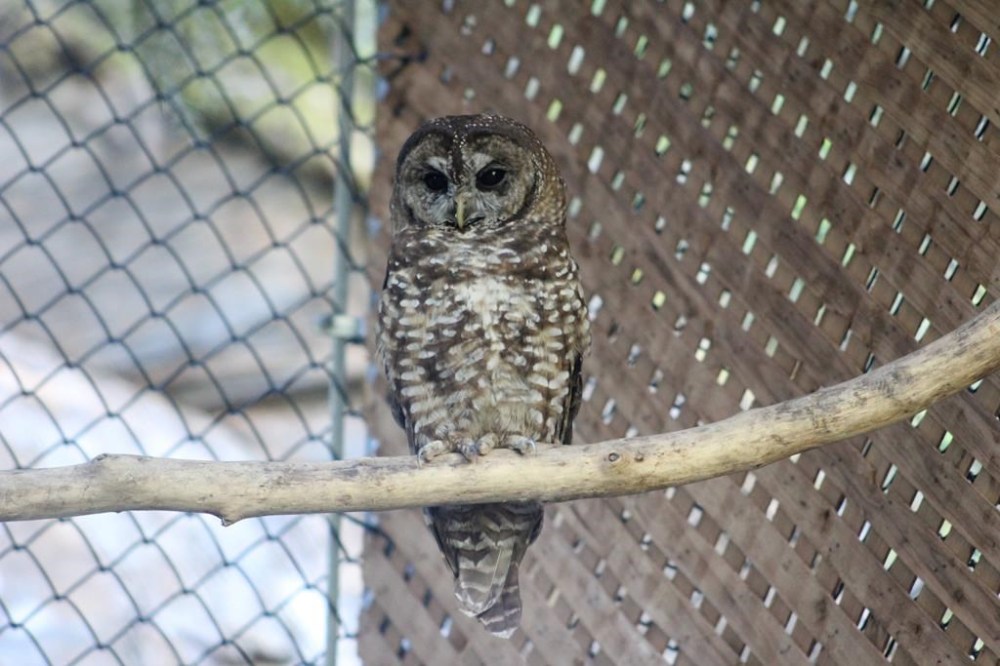
Hobart calls the deaths “devastating,” and says efforts will be made to retrace the birds’ final days to work out what could have been done differently.
A third male owl that had been released with the others last August was found injured near train tracks in October after potentially colliding with a train.
It has since recovered but remains in the breeding program’s facility in Langley.
McCulligh says that despite the birds’ deaths, her team would use the experience to help move the breeding and release program forward.
She says “countless hours” had been spent nurturing the owls, as she recalled the “exciting and rewarding moment” of their release near the Spuzzum First Nation, about 200 kilometres northeast of Vancouver.
“Although this is clearly not the result we had wished for, we are committed to learning as much as we can from this experience,” she says in the statement issued Friday.
McCulligh had said in February that the release of the male trio had brought the confirmed wild population to four, with a single female known to exist.
Cullen says in Friday’s statement that the government and its partners were doing everything they could to help spotted owls recover, supporting the world’s only captive breeding and release program.
Protection of spotted owls has fuelled decades-long disputes between environmental groups and the forest industry as their future is often tied to saving old-growth forests where the birds live.
When the birds were released last year, the Ministry of Land, Water and Resource Stewardship said it was a “historic milestone,” crediting a partnership between the breeding program and the Spuzzum First Nation.
This report by The Canadian Press was first published May 12, 2023.