
Indigenous leaders split on new bill
Advertisement
Read this article for free:
or
Already have an account? Log in here »
We need your support!
Local journalism needs your support!
As we navigate through unprecedented times, our journalists are working harder than ever to bring you the latest local updates to keep you safe and informed.
Now, more than ever, we need your support.
Starting at $15.99 plus taxes every four weeks you can access your Brandon Sun online and full access to all content as it appears on our website.
Subscribe Nowor call circulation directly at (204) 727-0527.
Your pledge helps to ensure we provide the news that matters most to your community!
To continue reading, please subscribe:
Add Brandon Sun access to your Free Press subscription for only an additional
$1 for the first 4 weeks*
- Enjoy unlimited reading on brandonsun.com
- Read the Brandon Sun E-Edition, our digital replica newspaper
*Your next Free Press subscription payment will increase by $1.00 and you will be charged $20.95 plus GST for four weeks. After four weeks, your payment will increase to $24.95 plus GST every four weeks.
Read unlimited articles for free today:
or
Already have an account? Log in here »
Hey there, time traveller!
This article was published 05/06/2023 (1232 days ago), so information in it may no longer be current.
A new bill that Manitoba Justice Minister Kelvin Goertzen touted would give First Nations communities more power to enforce laws and collect fines has ignited a debate among some southwestern Manitoba First Nations leaders and community members who say the bill will instead chip away at Indigenous self-governance.
Bill 43, which was recently announced by Goertzen and received Royal Assent on Tuesday, will enable First Nations communities to choose to opt into a system to fine people who break bylaws on reserve and have these fines dealt with through provincial court under the Provincial Offences Act, just like municipal bylaws. While some First Nations welcome the proposed amendment, some see it as an act of encroachment by the province.
“You start giving away your jurisdiction, then you might as well be a municipality,” said Vince Tacan, former chief of Sioux Valley Dakota Nation.
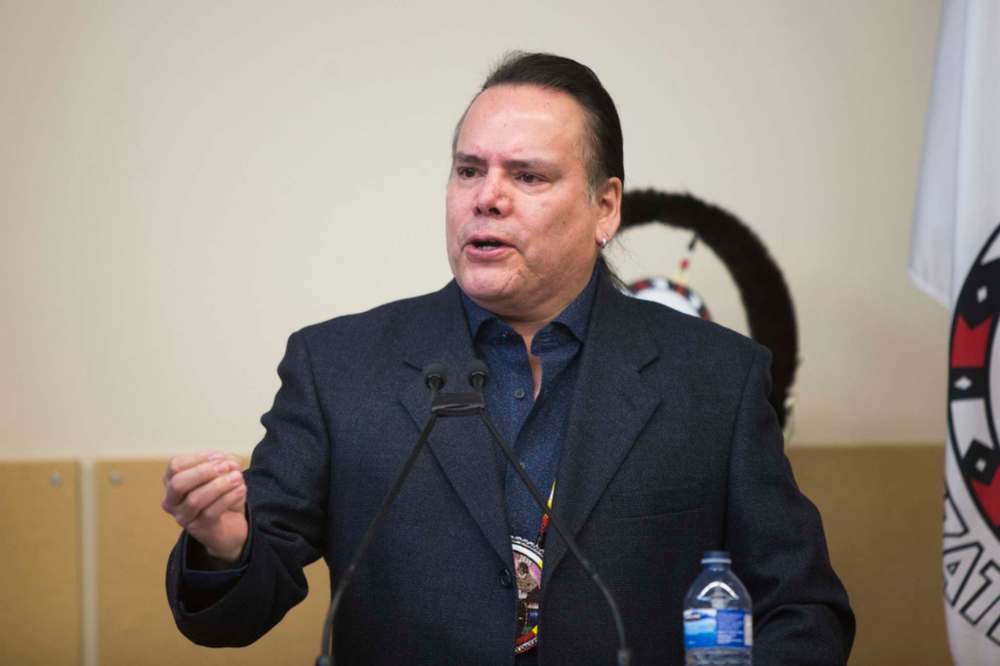
The Sun did not receive a response after reaching out to the Chief of Sioux Valley Dakota Nation, Jennifer Bone.
Tacan, who has a background as a police officer, a probations officer, and a correctional officer, said that issuing fines and tickets won’t address the justice concerns that many First Nations communities are facing. He said these issues would be better solved with investment in policing and addictions treatment centres.
Currently, laws in First Nations have to be enforced under the federal Indian Act, rather than the Provincial Offences Act. The change will allow any policing agency in a First Nation’s community to enforce the bylaws through provincial court, just like municipalities. The revenue from the fines will go to the First Nation community.
But for Tacan, opting into a provincial legal system doesn’t make sense for a community like Sioux Valley, which has a self-government agreement that allows it to pass laws that are equal to federal and provincial laws.
“If you have that lawmaking authority, why would you opt into someone else’s system?” Tacan said.
National Vice Chief of the Congress of Aboriginal Peoples, Kim Beaudin, echoed Tacan’s concerns about First Nations communities further relying on the structure of municipalities rather than their own systems of justice or ways of holding community members accountable.
“It’s going down the path of having bands that are really acting like municipalities,” Beaudin said.
He sees the amendment as a “slippery slope” that chips away at Indigenous treaty rights.
“Treaties are signed with the Crown, they weren’t signed with the municipalities, they weren’t signed with the provinces,” he said.
Still, Manitoba Keewatinowi Okimakanak, an organization that represents 26 First Nations communities, has worked with the province for more than a year to develop the amendments to the Provincial Offences Act, according to a press release.
MKO Grand Chief Garrison Settee told the Sun in an interview that the pandemic highlighted the issues that First Nations had with enforcing bylaws. COVID-19 emergency bylaws were being passed, but Settee said that First Nations leaders were frustrated that the laws were not being enforced by authorities.
“This is a really positive step forward and also to be able to be part of a process where we’re amending legislation that affects and impacts First Nations,” Settee said, “This is a win for First Nation leaders. This is a win for First Nations.”
Jerry Daniels, Grand Chief of the Southern Chiefs’ Organization, which represents 34 Anishnaabe and Dakota communities in southern Manitoba told the Sun that the amendments were welcome news for SCO’s communities. He said the organization was lobbying for these types of changes and pushing for enforcement of community bylaws.
“We’re always working towards the full recognition of our self-government laws, and that will continue perpetually,” Daniels said.
Swan Lake Chief Jason Daniels said the bill is good news for First Nations that have a difficult time enforcing community laws. The chief says he has reached out to the Crown’s office to discuss how the community could work with the provincial court system to process some of its bylaw offences and sentencing options.
“Bill 43 gives us a little bit more of an ability to collect fines to ensure that crimes can be prosecuted within the community,” he said.
While Daniels acknowledges the concerns about using municipalities’ structure for First Nations laws, he says community leaders have been frustrated with the criminal activity within communities that are not being dealt with because of lack of enforcement (RCMP and Manitoba First Nation Police carry out policing duties in First Nations communities). He also noted that the money from the fines will stay within the respective First Nation.
“Hopefully we do have those tools that can enable us to be just like any other municipality where crimes [have] consequences,” Daniels told the Sun. “We just can’t have lawlessness in our communities.”
According to the press release, Bill 43 also gives expanded scope and authority to enforce provincial statutes and bylaws for community safety officers, which work to respond to “lower risk” enforcement situations.
Daniels said that the community safety officers in First Nations communities are underfunded as a lot of communities don’t have their own source of revenue. Swan Lake has a community safety officer and Daniels said that he hopes that the community can add more.
Thompson MLA Eric Redhead told the Sun that the bill does fall short in addressing other justice issues in First Nations communities, such as addictions and mental health, however he said the option for communities to decide whether they want to participate in the new legislation by opting in, gives them the power to choose what is in their best interest.
“Indigenous people know, their community leaders know their communities best. And it’s going to be up to the leadership whether or not this approach is appropriate,” Redhead said.
But Tacan emphasized that self-government communities like Sioux Valley should create their own police force, and not farm out the judicial arm of their community to municipalities.
“Our people have been conditioned to be reliant or conditioned to be dependent. We were never given authority or permission to think for ourselves,” Tacan said. “It wasn’t that long ago that the Indian agent made all the decisions for us. There’s still some carryover from that.”
Still, Settee said that the concerns about self-governance are part of a broader conversation.
“Until we come to a place where First nations have their own judges or courts and their own policing, then we can have those conversations of sovereignty, but right now, this is a tool for us to use until we get there,” he said.
The Sun reached out to Goertzen’s office about concerns about self-governance but did not receive a direct response to emailed questions.
» gmortfield@brandonsun.com
» Twitter: @geena_mortfield