
B.C.’s Eby says Asia trade mission that omitted China helps prepare for ‘the worst’
Advertisement
Read this article for free:
or
Already have an account? Log in here »
We need your support!
Local journalism needs your support!
As we navigate through unprecedented times, our journalists are working harder than ever to bring you the latest local updates to keep you safe and informed.
Now, more than ever, we need your support.
Starting at $15.99 plus taxes every four weeks you can access your Brandon Sun online and full access to all content as it appears on our website.
Subscribe Nowor call circulation directly at (204) 727-0527.
Your pledge helps to ensure we provide the news that matters most to your community!
To continue reading, please subscribe:
Add Brandon Sun access to your Free Press subscription for only an additional
$1 for the first 4 weeks*
- Enjoy unlimited reading on brandonsun.com
- Read the Brandon Sun E-Edition, our digital replica newspaper
*Your next Free Press subscription payment will increase by $1.00 and you will be charged $20.95 plus GST for four weeks. After four weeks, your payment will increase to $24.95 plus GST every four weeks.
Read unlimited articles for free today:
or
Already have an account? Log in here »
Hey there, time traveller!
This article was published 05/06/2023 (1201 days ago), so information in it may no longer be current.
British Columbia Premier David Eby is wrapping up an Asian trade mission that omitted China and instead focused on Japan, South Korea and Singapore, a move Eby said was to guard against “the worst” happening in the region.
Eby said the trip is part of an effort to grow trade and reduce the risks that come with international uncertainties, including those surrounding China, B.C.’s second-largest trade partner.
The premier and his delegation have met, so far, with a range of businesses including a large Japanese rental housing company looking to break into the Canadian market.
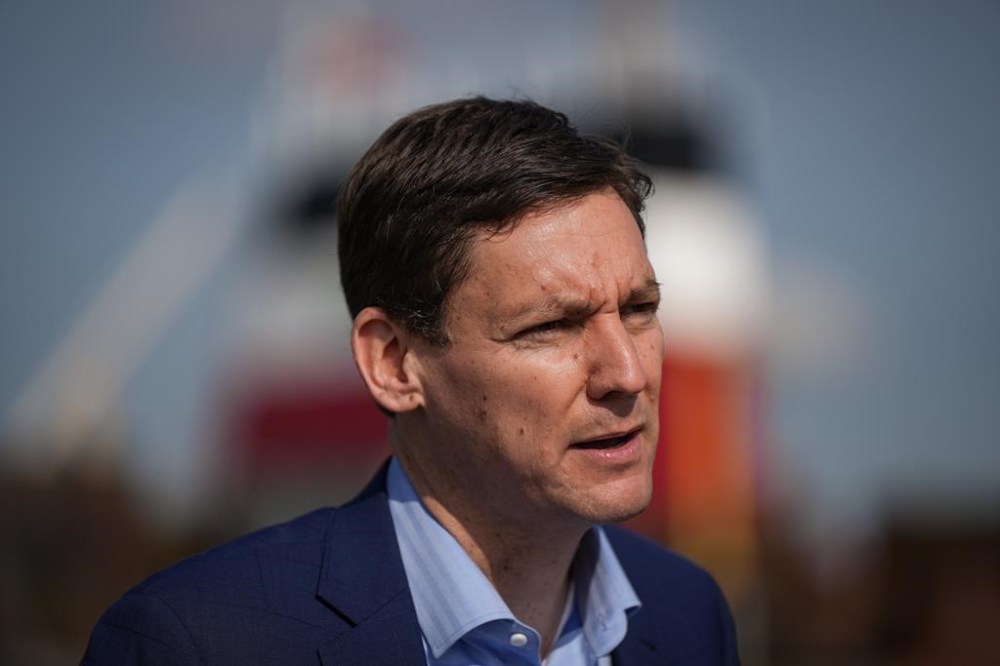
“Right now we see the tensions caused by the war in Ukraine, and sanctions on Russia, the relationship between the U.S. and China, Canada and China, and the volatility of international relationships,” Eby said in a phone interview from Singapore.
“And it’s very obvious to me and to many British Columbians that being dependent on one or two major trading partners disproportionately is going to really affect us if the worst happens.”
Tensions between China and Canada have been growing amid accusations of foreign interference and election meddling.
Last week, B.C. member of Parliament Jenny Kwan became the latest politician to report that Canada’s spy agency confirmed her long-held belief that she is being targeted by the Chinese government.
Kwan said the Canadian Security Intelligence Service told her she had been a focus of China since before the 2019 federal election.
B.C. exports to mainland China totalled $8.48 billion last year, according to government statistics. That’s second only to the United States with more than $37 billion.
Japan and South Korea place third and fourth with about $6 billion and $4 billion respectively.
During the trip, Eby said he met with dozens of companies including Mitsubishi about possible investment in a nickel project, and a number of firms interested in hydrogen production.
In Tokyo, a meeting with one of Japan’s largest users of B.C. wood turned into a conversation about potentially breaking in to the province’s tough and expensive rental market.
Eby said the company, Daito, which already manages rentals in Tokyo, is proposing offering agreements to B.C. landowners to build and run rental properties on their land and then lease that housing back from the landowner for a 30-year term, paying a set fee.
“In this way, that housing and the property stays with British Columbians, and the company facilitates investments in rental housing that wouldn’t otherwise happen, that people who own land would never think of building or running rental housing,” Eby said.
It’s a project the premier said he would support.
“We’re desperate for rental housing and if they can encourage landowners to use their land for rental housing by taking away a lot of the headaches that they would face in building and operating that housing, I think is a huge potential win for us,” he said.
“So, those discussions will be carrying on as well.”
Eby is scheduled to be back in British Columbia June 7.
This report by The Canadian Press was first published June 5, 2023.