
Greek island temple complex reveals ‘countless’ offerings left by ancient worshippers
Advertisement
Read this article for free:
or
Already have an account? Log in here »
We need your support!
Local journalism needs your support!
As we navigate through unprecedented times, our journalists are working harder than ever to bring you the latest local updates to keep you safe and informed.
Now, more than ever, we need your support.
Starting at $15.99 plus taxes every four weeks you can access your Brandon Sun online and full access to all content as it appears on our website.
Subscribe Nowor call circulation directly at (204) 727-0527.
Your pledge helps to ensure we provide the news that matters most to your community!
To continue reading, please subscribe:
Add Brandon Sun access to your Free Press subscription for only an additional
$1 for the first 4 weeks*
- Enjoy unlimited reading on brandonsun.com
- Read the Brandon Sun E-Edition, our digital replica newspaper
*Your next Free Press subscription payment will increase by $1.00 and you will be charged $20.95 plus GST for four weeks. After four weeks, your payment will increase to $24.95 plus GST every four weeks.
Read unlimited articles for free today:
or
Already have an account? Log in here »
Hey there, time traveller!
This article was published 07/06/2023 (1223 days ago), so information in it may no longer be current.
ATHENS, Greece (AP) — Archaeologists excavating a hilltop sanctuary on the Aegean Sea island of Kythnos have discovered “countless” pottery offerings left by ancient worshippers over the centuries, Greece’s Culture Ministry said Wednesday.
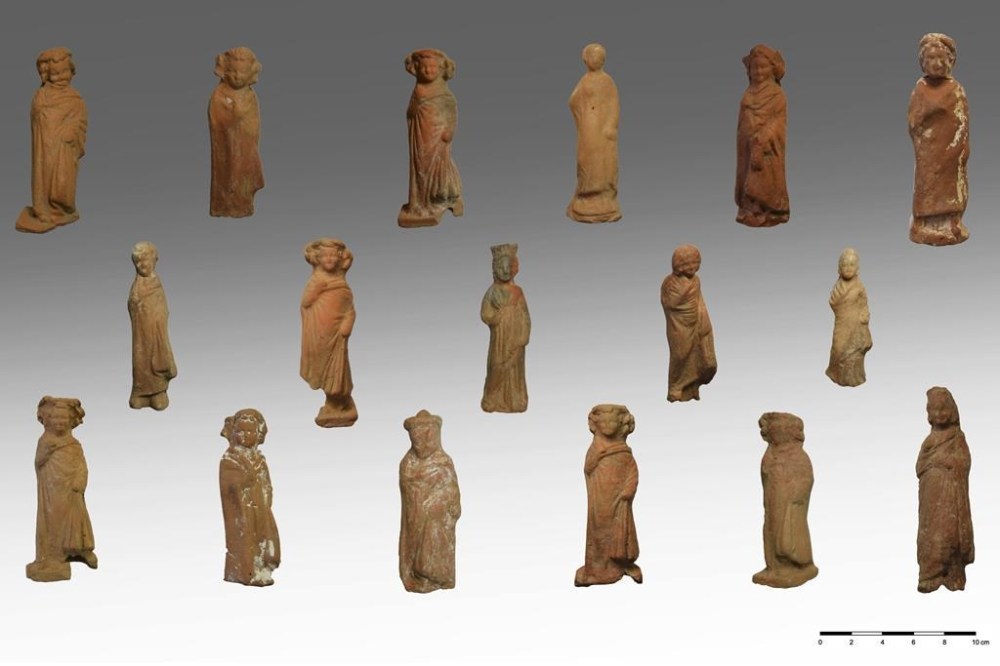
A ministry statement said the finds from work this year included more than 2,000 intact or almost complete clay figurines, mostly of women and children but also some of male actors, as well as of tortoises, lions, pigs and birds.
Several ceremonial pottery vessels that were unearthed are linked with the worship of Demeter, the ancient Greek goddess of agriculture, and her daughter Persephone, to whom the excavated sanctuary complex was dedicated.
The seaside site of Vryokastro on Kythnos was the ancient capital of the island, inhabited without break between the 12th century B.C. and the 7th A.D., when it was abandoned for a stronger position during a period of pirate raids.
The artifacts came from the scant ruins of the two small temples, a long building close by that may have served as a temple storeroom and a nearby pit where older offerings were buried to make space for new ones. The sanctuary was in use for about a thousand years, starting from the 7th century B.C.
The excavation by Greece’s University of Thessaly and the Culture Ministry also found luxury pottery imported from other parts of Greece, ornate lamps and fragments of ritual vases used in the worship of Demeter and Persephone at Eleusis, an ancient Athens suburb.
It is unclear to what extent the site on Kythnos was associated with Eleusis — one of the most important religious centers in ancient Greece, where the goddesses were worshipped during secret rites that were only open to initiates forbidden to speak of what they saw. The sanctuary at Eleusis is known to have owned land on the island.
Kythnos, in the Cyclades island group, was first inhabited about 10,000 years ago. Its copper deposits were mined from the 3rd millennium B.C., and in Roman times it was a place of political exile.
The excavations are set to continue through 2025.