
Warmer weather requires solutions
Advertisement
Read this article for free:
or
Already have an account? Log in here »
We need your support!
Local journalism needs your support!
As we navigate through unprecedented times, our journalists are working harder than ever to bring you the latest local updates to keep you safe and informed.
Now, more than ever, we need your support.
Starting at $15.99 plus taxes every four weeks you can access your Brandon Sun online and full access to all content as it appears on our website.
Subscribe Nowor call circulation directly at (204) 727-0527.
Your pledge helps to ensure we provide the news that matters most to your community!
To continue reading, please subscribe:
Add Brandon Sun access to your Free Press subscription for only an additional
$1 for the first 4 weeks*
- Enjoy unlimited reading on brandonsun.com
- Read the Brandon Sun E-Edition, our digital replica newspaper
*Your next Free Press subscription payment will increase by $1.00 and you will be charged $20.95 plus GST for four weeks. After four weeks, your payment will increase to $24.95 plus GST every four weeks.
Read unlimited articles for free today:
or
Already have an account? Log in here »
Hey there, time traveller!
This article was published 09/06/2023 (1226 days ago), so information in it may no longer be current.
In what I can only assume was an experience shared by several Brandon parents, I received a note from my kids’ teacher earlier this week that relayed her concerns over the high daytime temperatures in their classroom, and how it was impacting students’ ability to focus and learn effectively.
With room temperatures climbing to 27 C by mid-morning during the worst of the recent heat wave earlier this week, the teacher was trying to mitigate the impact on their studies by keeping activities “short, quiet and engaging” to keep up their stamina.
As we reported yesterday, of the 24 schools in the Brandon School Division, eight have air conditioning, eight have none, and the other eight have air conditioning in their additions and all portable classrooms have it installed, according to Supt. Mathew Gustafson.
We can understand the division’s reluctance to close schools due to heat conditions — kids have already lost too much school during the pandemic years as it is. However, it’s not only the hit to a child’s education that causes parents anxiety. It’s also the fact that having kids home can impact their own ability to get to work — or their pocketbook as they look for child care.
No doubt calls from angry parents are difficult to handle. But when the heat and humidity is sapping the energy of both students and teachers alike, there’s only so much learning that can presumably get done in that kind of sweatshop environment.
In fact, the situation became so difficult for at least a few students, some Brandon parents pulled their kids from classes this week to escape the classroom swelter in those schools without air conditioning. Of the four parents who spoke with the Sun this week, two had received calls to pick up their kids after having experienced heat-related issues, one had voluntarily pulled her child out of school, and yet another was considering doing the same.
“To have my child come home, so exhausted from the heat in her school, being hotter in her classroom than it is outside — that’s hard on a young person,” said Leanne Vandenbosch, mother of an eight-year-old daughter who attends École New Era School.
Brandon parents are not alone — not by a long shot. The Winnipeg School Division told the CBC that 27 of their facilities have no air conditioning, 42 do, and 16 only partially. A representative from Louis Riel School Division in Winnipeg also told CBC they have 11 schools that have no air conditioning. Manitoba School Boards Association president Sandy Nemeth, who is also chair of the Louis Riel School Division’s board of trustees, said the early onset of extreme and prolonged heat in Manitoba has been challenging for schools across Manitoba.
Several parents in Regina, which is also battling high June temperatures, kept their kids home this week as well. And earlier this month, early heat waves shut down schools in Detroit, Pittsburgh and Grand Rapids, Mich., as school districts are faced with aging infrastructure that often lack central air conditioning.
One year ago, the Washington Post reported that climate change was forcing schools to close early for “heat days” in Philadelphia and Baltimore.
“Regions where extreme heat was once rare — from the Northeast to the Pacific Northwest — now periodically find their buildings unbearably hot as spring turns to summer and again when classes resume in August or September,” the newspaper reported.
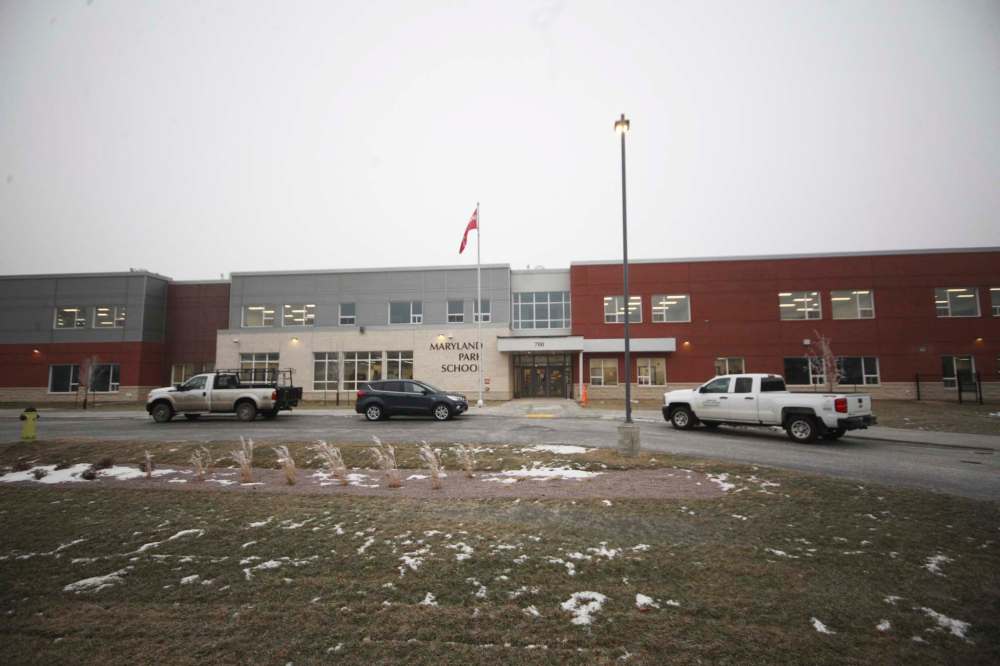
Many of our school buildings in Canada and the United States were built for temperatures of 60 to 100 years ago. And while new schools, such as Maryland Park here in Brandon, have the latest air filtration and cooling systems installed, this is clearly not the case for many older structures. Our temperatures are changing, with warmer temperatures starting earlier and ending later, and it’s affecting our kids education.
Yet the necessary upgrades to ventilation, HVAC and air-conditioning systems in our schools does not come cheap.
If you listen to Education and Early Childhood Learning Minister Wayne Ewasko tell it, the province has already increased funding for K-12 schools in Manitoba by $100 million to improve their infrastructure needs. But for so many school divisions, this money barely met the outstanding financial need to keep programs and schools operating — in some cases simply enough to offset inflationary cost increases and staff salaries.
As Gustafson told the Sun this week, while there are some structural problems with fitting older schools with air conditioning, the school division also faces a lack of funding from the province to address these concerns. This is a problem, particularly as hot temperatures apparently become more normalized in spring and fall.
We learned during the pandemic how important school ventilation systems are to circulate air in our classrooms, and the Pallister/Stefanson government has had three years to deal with this situation.
While we agree with Vandenbosch, who said she wants the province to create a plan to put hot weather protocols in place for schools, a slightly better solution would be to address the dearth of funding in school infrastructure and air circulation.
» Matt Goerzen, editor
History
Updated on Friday, June 23, 2023 12:00 AM CDT: 2