
Montreal police chief rejects street check moratorium despite racial profiling data
Advertisement
Read this article for free:
or
Already have an account? Log in here »
We need your support!
Local journalism needs your support!
As we navigate through unprecedented times, our journalists are working harder than ever to bring you the latest local updates to keep you safe and informed.
Now, more than ever, we need your support.
Starting at $15.99 plus taxes every four weeks you can access your Brandon Sun online and full access to all content as it appears on our website.
Subscribe Nowor call circulation directly at (204) 727-0527.
Your pledge helps to ensure we provide the news that matters most to your community!
To continue reading, please subscribe:
Add Brandon Sun access to your Free Press subscription for only an additional
$1 for the first 4 weeks*
- Enjoy unlimited reading on brandonsun.com
- Read the Brandon Sun E-Edition, our digital replica newspaper
*Your next Free Press subscription payment will increase by $1.00 and you will be charged $20.95 plus GST for four weeks. After four weeks, your payment will increase to $24.95 plus GST every four weeks.
Read unlimited articles for free today:
or
Already have an account? Log in here »
Hey there, time traveller!
This article was published 22/06/2023 (1243 days ago), so information in it may no longer be current.
Montreal’s police chief is refusing to impose a moratorium on street checks despite a second independent report concluding that racialized people are disproportionately targeted by the practice.
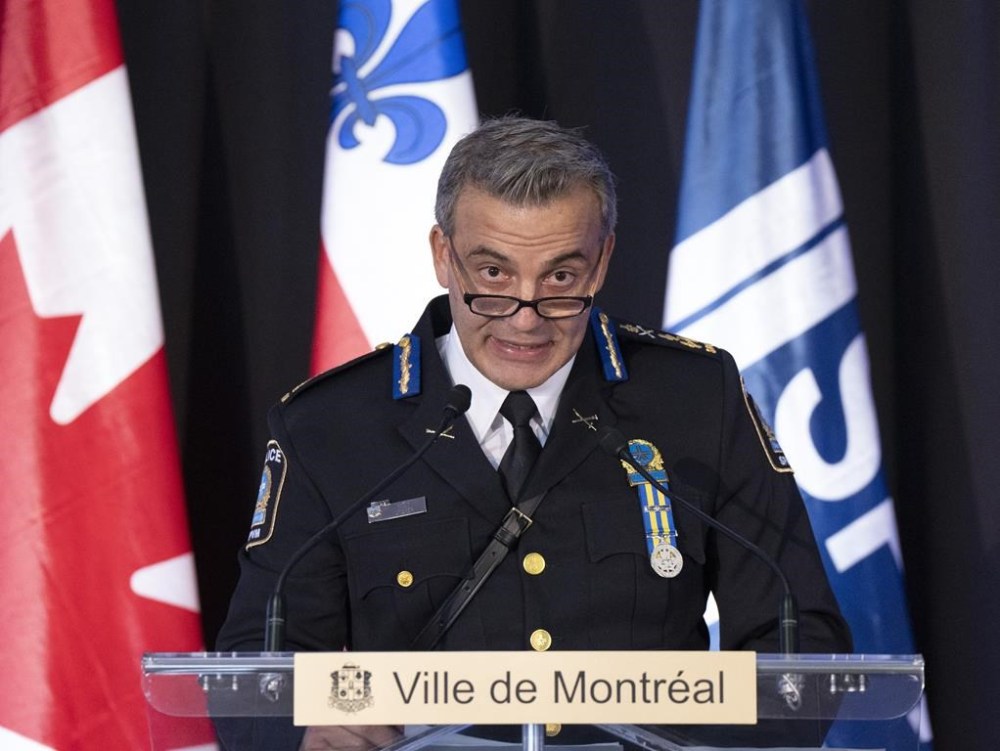
Fady Dagher made the comments Thursday after he released an independent report by researchers from several Quebec universities who recommended he temporarily suspend random police stops. A moratorium would be purely symbolic, he said, adding that he preferred “constant small steps” to address racial profiling and ensure police street checks respect residents’ rights.
“I know I’m going to create some disappointment,” the police chief said of his decision to reject the moratorium. “But I don’t want to announce a symbolic measure. I want to solve the deep problem at the roots.”
Researchers looked at 2021 data and found that Indigenous Montrealers were six times more likely to be stopped than were white people in the city. The data showed that Black people were three-and-a-half times more likely to be stopped than were white people, and Arabs were two-and-a-half times more likely to be stopped by police compared with white people.
A 2019 report by the same researchers, looking at data between 2014 and 2017, identified similar inequalities, which they said pointed to the existence of “systemic biases” in the police force.
In response, the Montreal police developed a new policy in 2020 that banned street checks “based on discriminatory criteria” and required officers to explain their reasons for stopping citizens, among other measures aimed at reducing racial disparities.
The researchers, who were mandated by Montreal police to conduct the two studies, concluded in Tuesday’s report that the policy did not have the intended effect. The four researchers are from Université du Québec à Montréal, McGill University, Université de Montréal, and Université TÉLUQ.
Dagher said it was worrying there was no real change in statistics since 2014 and recognized the existence of systemic racism within the force. He committed to what he called the “long and difficult task” of addressing it and to implementing the recommendations in Thursday’s report to reduce the risk of racial profiling during police stops.
Reacting to the latest report, Fo Niemi, director of the Center for Research-Action on Race Relations, called the persistent racial disparities in police stops “worrying” and said the data proves there are shortcomings in the Montreal police street check policy. He encouraged the city to continue to work with affected communities to “develop more effective ways of achieving the collective objectives of preventing crime and protecting public safety without discrimination.”
The non-profit Quebec Native Women praised Dagher for recognizing systemic racism. Its president, Marjolaine Étienne, said she hopes his remarks will “pave the way for other decision-makers and institutions to finally take the step and recognize the existence of systemic racism and discrimination in Quebec.”
Quebec Public Security Minister François Bonnardel introduced a bill in March to address racial profiling during police checks.
This report by The Canadian Press was first published June 22, 2023.
—
This story was produced with the financial assistance of the Meta and Canadian Press News Fellowship.