
Indigenous groups react to Canada’s UNDRIP plan
Advertisement
Read this article for free:
or
Already have an account? Log in here »
We need your support!
Local journalism needs your support!
As we navigate through unprecedented times, our journalists are working harder than ever to bring you the latest local updates to keep you safe and informed.
Now, more than ever, we need your support.
Starting at $15.99 plus taxes every four weeks you can access your Brandon Sun online and full access to all content as it appears on our website.
Subscribe Nowor call circulation directly at (204) 727-0527.
Your pledge helps to ensure we provide the news that matters most to your community!
To continue reading, please subscribe:
Add Brandon Sun access to your Free Press subscription for only an additional
$1 for the first 4 weeks*
- Enjoy unlimited reading on brandonsun.com
- Read the Brandon Sun E-Edition, our digital replica newspaper
*Your next Free Press subscription payment will increase by $1.00 and you will be charged $20.95 plus GST for four weeks. After four weeks, your payment will increase to $24.95 plus GST every four weeks.
Read unlimited articles for free today:
or
Already have an account? Log in here »
Hey there, time traveller!
This article was published 24/06/2023 (1206 days ago), so information in it may no longer be current.
Indigenous groups across the country have mixed feelings over the United Nations Declaration on the Rights of Indigenous Peoples Act that the federal government says will help build a better, more equitable future for Indigenous people in Canada.
Ottawa’s action plan to implement UNDRIP, which was released on Wednesday, affirms a range of collective and individual Indigenous rights, which the UN says constitutes minimum standards that contribute to the survival, dignity and well-being of Indigenous peoples.
First Nations, Inuit and Métis leaders from the Assembly of First Nations, Inuit Tapiriit Kanatami and the Métis National Council, with federal Justice Minister David Lametti, Crown-Indigenous Relations Minister Marc Miller and Northern Affairs Minister Dan Vandal were on hand for the formal announcement.
The UN Declaration Act is a “lasting and action-oriented” framework to advance Canada’s implementation of the UN Declaration that ensures Canada’s laws are consistent with the declaration, according to a press release sent out by the government on Wednesday.
The action plan includes 181 specific measures to uphold and advance the human rights of Indigenous peoples, address injustices, prejudice, violence, systemic racism and discrimination, and monitor implementation of the plan. It also includes measures to advance self-determination and self-government, advance the implementation of treaties, ensure meaningful participation of Indigenous peoples in decision-making over lands, territories, resources and inclusive economic development, and measures to revitalize Indigenous languages, cultures, and legal systems.
In an open letter to Lametti sent on Wednesday, the Congress of Aboriginal Peoples (CAP), a national organization that represents Indigenous people who live off reserves in urban or rural areas across Canada, said the UN Declaration Act wholly omits content the group has provided.
“CAP has been an Indigenous partner and agreement holder with your department throughout the process of developing Canada’s plan to implement [the act],” read the letter, signed by CAP’s executives. “The plan released is void of our content.”
The plan also further cements colonial and assimilationist policies of the federal government that it is meant to combat, the letter states.
“The exclusion of CAP and its recommendations are just another way to attempt to further colonize and assimilate our communities, who represent all Aboriginal [sic] distinctions, including off-reserve status and non-status Indians, Métis and southern Inuit Indigenous peoples.”
Some of CAP’s recommendations include giving Indigenous people the option to choose their own representatives in accordance with their own procedures and allowing them to maintain and develop their own Indigenous decision-making institutions.
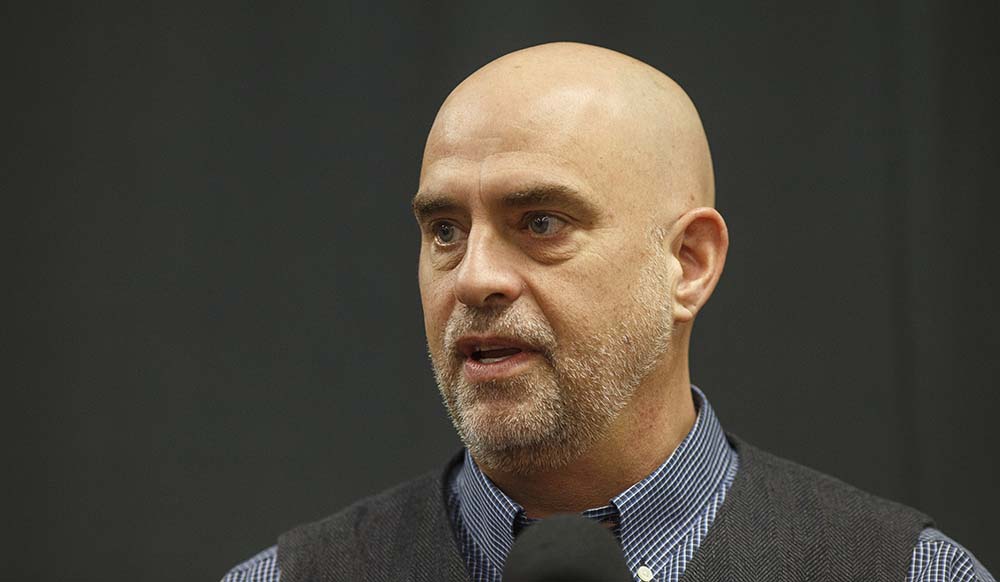
The biggest issue CAP vice-president Kim Beaudin takes with Canada’s action plan is that he believes it ignores the needs of Indigenous Canadians living off-reserve who are not Métis citizens.
“There are thousands of people who don’t have a voice — they don’t have a voice with their band, or they’ve actually been ignored by their First Nation band,” Beaudin told the Sun. “We’ve been fighting tooth and nail to make sure nobody is forgotten about — it doesn’t matter if you’re on- or off-reserve.”
Will Goodon, the Manitoba Métis Federation’s minister of housing and property management, has been working with the UN on advancing the rights of Indigenous peoples since 1999, when he travelled to Geneva, Switzerland.
In this and all international negotiations, there’s always a certain “give-and-take” process, Goodon told the Sun.
“There’s a lot of wrangling about really small details, getting down to a comma, or a word,” he said. “So, it’s not 100 per cent perfect, but it does have some incredible recognition in there.”
Canada’s recognition of UNDRIP is a signal that the country has entered a new era in its relationship with Indigenous peoples, Goodon said.
“[It] actually put some legislation [that] puts some teeth into what’s really an aspirational document.”
However, the declaration and Canada’s adherence to it means that in some places where Indigenous people live in Canada, some very “egregious” violations of the principles of the declaration are happening, Goodon said, pointing to Indigenous communities that still lack running water and whose residents suffer from crowded and unsafe conditions.
As of February, Manitoba had three remaining long-term boil water advisories in Mathias Colomb Cree Nation, Shamattawa First Nation, and Tataskweyak Cree Nation.
The federal government has said that water treatment plant upgrades are underway in those three communities.
Other issues facing Indigenous people in Canada that are decried in the act include unequal economic opportunities, Goodon said.
“It’s a reality, but at the same time, these steps, in my opinion, keep moving us forward,” he said. “The government needs to continue to talk to us.”
The introduction of the plan is an important milestone in Canada’s collective journey toward reconciliation, Lametti stated in the release.
“Progress has been made, but more work is still needed,” he said.
“We remain committed to advancing the transformational and collaborative work needed to achieve the objectives of the UN Declaration.”
» mleybourne@brandonsun.com
» Twitter: @miraleybourne