
Canada bans testing of cosmetics on animals, in line with dozens of other countries
Advertisement
Read this article for free:
or
Already have an account? Log in here »
We need your support!
Local journalism needs your support!
As we navigate through unprecedented times, our journalists are working harder than ever to bring you the latest local updates to keep you safe and informed.
Now, more than ever, we need your support.
Starting at $15.99 plus taxes every four weeks you can access your Brandon Sun online and full access to all content as it appears on our website.
Subscribe Nowor call circulation directly at (204) 727-0527.
Your pledge helps to ensure we provide the news that matters most to your community!
To continue reading, please subscribe:
Add Brandon Sun access to your Free Press subscription for only an additional
$1 for the first 4 weeks*
*Your next subscription payment will increase by $1.00 and you will be charged $20.00 plus GST for four weeks. After four weeks, your payment will increase to $24.00 plus GST every four weeks.
Read unlimited articles for free today:
or
Already have an account? Log in here »
Hey there, time traveller!
This article was published 27/06/2023 (917 days ago), so information in it may no longer be current.
TORONTO – Canada has banned testing cosmetic products on animals, a largely symbolic move that brings the policy in line with dozens of other countries.
The amendments to the Food and Drug Act were included in this year’s budget, and will come into effect in December, Health Minister Jean-Yves Duclos said at a press conference in Toronto on Tuesday celebrating the change.
“Today, Canada joins 43 other countries who have taken measures to ban cosmetic animal testing. Indeed our government has now passed legislation banning the testing of cosmetic products on animals.”
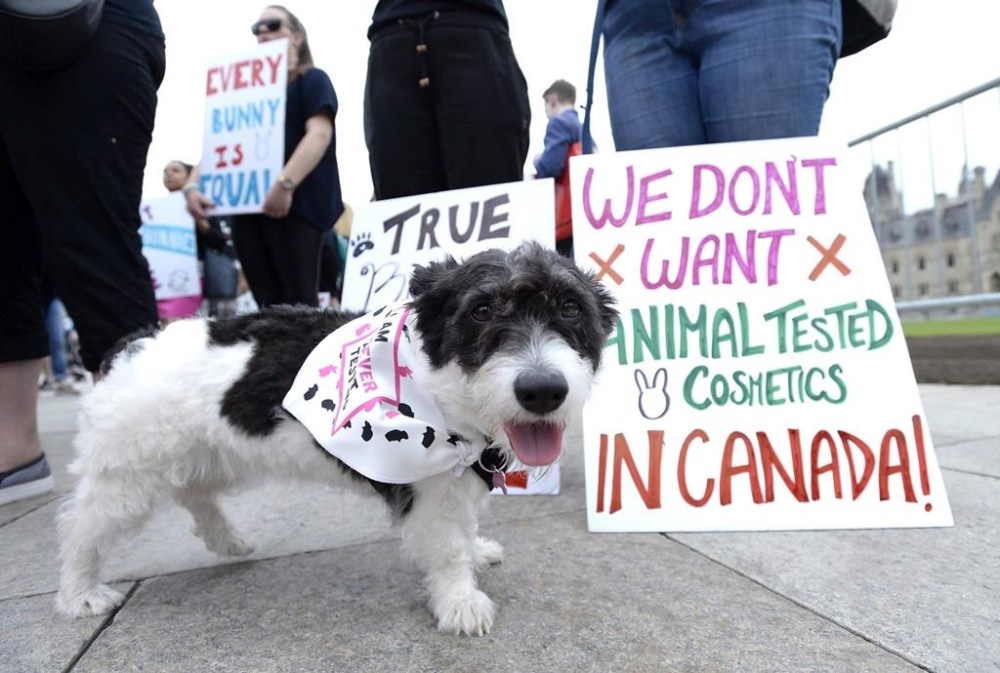
In addition to barring companies from testing their cosmetic products on animals in Canada, the regulations prevent new products that rely on animal testing data to establish product safety from being sold in this country.
“Rarely do we see policy changes where everyone is on board, where activists, industry, politicians and Canadians all agree. Today is one of those rare days and it is worth celebrating,” Duclos said, referencing a poll that found 90 per cent of Canadians were in favour of the measure.
Animal testing has fallen out of vogue in the cosmetics industry in recent years, as a result of similar legislation in the European Union that was introduced two decades ago.
The regulations shouldn’t result in any additional costs to the brands that sell the affected products, such as creams, lotions and makeup, said Darren Praznik, president and CEO of Cosmetics Alliance Canada.
“The reality is that animal testing is by and large no longer used by our industry and that has been the case for some time,” he said in an interview this spring when the legislation was tabled.
When the E.U. introduced its ban in 2004, it invested millions of euros into research to develop alternatives to animal testing.
Even so, Praznik said, there were hurdles to getting Canada’s legislation passed. In 2015, for example, there was a private member’s bill to the same effect, but the cosmetics industry opposed it because of overly broad language.
“It was so badly crafted that if you made a pet shampoo for a dog or a cat, you wouldn’t have been able to actually try it on a dog or a cat to see if they liked it,” Praznik said.
But once the industry group began collaborating with animal rights’ groups, he said, they were able to come up with a list of principles that worked for them both. From there, he said, Health Canada drafted the bill.
“The lesson is that if you can get stakeholders from different sides of an issue together and you have some good will, you can usually work out a way to move it forward,” he said.
Still, there are some areas where animal advocates see room for improvement.
For example, the rules are not retroactive; products already on the market that originally used animal testing to establish their safety won’t be pulled from shelves.
Hilary Jones, ethical director at Lush Cosmetics, said the company would rather regulators throw out that old data and start anew, retesting existing products using cruelty-free methods. The company has been a vocal opponent of animal testing since its founding.
“We believe it’s unscientific to test on animals. It’s a very blunt, old-fashioned tool. So we’d like to see all cosmetics pass through new methods.” she said. “But are we happy with this legislation? Absolutely.”
This report by The Canadian Press was first published June 27, 2023.