
Saskatchewan government posts $1.5-billion surplus at year end
Advertisement
Read this article for free:
or
Already have an account? Log in here »
We need your support!
Local journalism needs your support!
As we navigate through unprecedented times, our journalists are working harder than ever to bring you the latest local updates to keep you safe and informed.
Now, more than ever, we need your support.
Starting at $15.99 plus taxes every four weeks you can access your Brandon Sun online and full access to all content as it appears on our website.
Subscribe Nowor call circulation directly at (204) 727-0527.
Your pledge helps to ensure we provide the news that matters most to your community!
To continue reading, please subscribe:
Add Brandon Sun access to your Free Press subscription for only an additional
$1 for the first 4 weeks*
- Enjoy unlimited reading on brandonsun.com
- Read the Brandon Sun E-Edition, our digital replica newspaper
*Your next Free Press subscription payment will increase by $1.00 and you will be charged $20.95 plus GST for four weeks. After four weeks, your payment will increase to $24.95 plus GST every four weeks.
Read unlimited articles for free today:
or
Already have an account? Log in here »
Hey there, time traveller!
This article was published 29/06/2023 (1183 days ago), so information in it may no longer be current.
REGINA – The Saskatchewan government has posted a surplus of more than $1.5 billion for the 2022-23 fiscal year.
The province says the surplus let the government pay $1.5 billion on the operating debt, saving $66 million per year in future interest costs.
Public account documents show high oil and potash prices as well as increased taxation revenue funnelled more cash into provincial coffers.
Total revenue is reported to be more than $20 billion, a 20 per cent increase from what was budgeted.
Revenues from non-renewable resources were $4.6 billion and revenues from taxes were $9.8 billion.
The remainder of revenues are reported to have come from fees, investments and federal government transfers.
Total expenses are $19 billion, an eight per cent increase from the budget.
The province says the increase in expenses are due to higher crop insurance payouts, as drought had affected more farms than projected.
The province also spent $422 million on $500-cheques it sent to residents dealing with inflationary pressures.
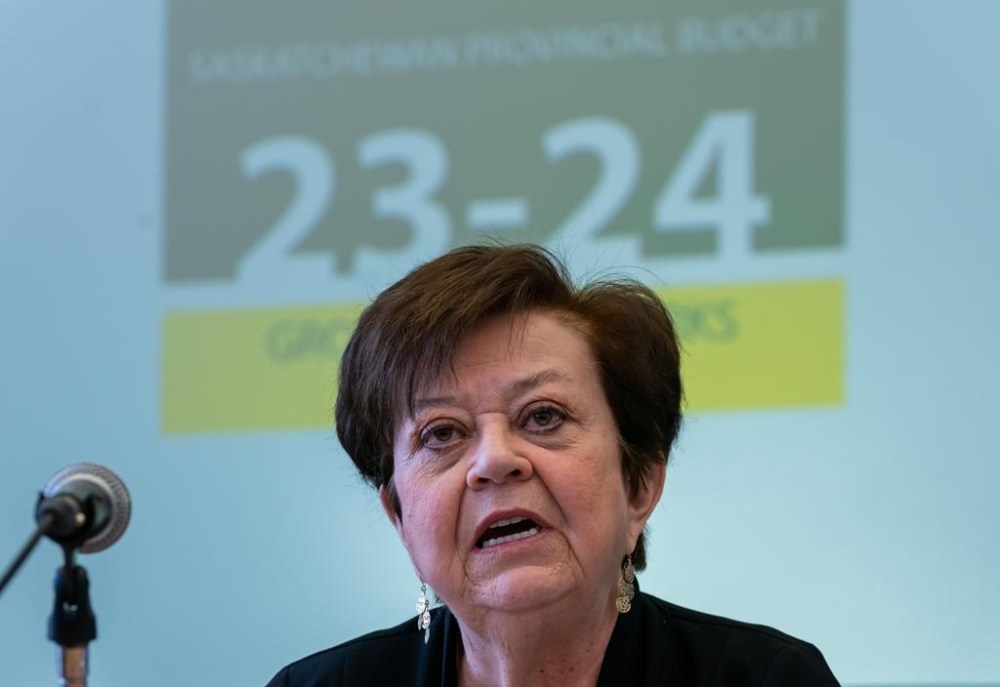
Finance minister Donna Harpauer says the province is managing its expenses carefully while also investing in some programs.
In addressing affordability, she says the province has kept gym memberships PST-free and extended tax exemptions for small businesses.
This report by The Canadian Press was first published on June 29, 2023.