
Alberta energy minister told to design incentives for industry to clean up oil wells
Advertisement
Read this article for free:
or
Already have an account? Log in here »
We need your support!
Local journalism needs your support!
As we navigate through unprecedented times, our journalists are working harder than ever to bring you the latest local updates to keep you safe and informed.
Now, more than ever, we need your support.
Starting at $15.99 plus taxes every four weeks you can access your Brandon Sun online and full access to all content as it appears on our website.
Subscribe Nowor call circulation directly at (204) 727-0527.
Your pledge helps to ensure we provide the news that matters most to your community!
To continue reading, please subscribe:
Add Brandon Sun access to your Free Press subscription for only an additional
$1 for the first 4 weeks*
- Enjoy unlimited reading on brandonsun.com
- Read the Brandon Sun E-Edition, our digital replica newspaper
*Your next Free Press subscription payment will increase by $1.00 and you will be charged $20.95 plus GST for four weeks. After four weeks, your payment will increase to $24.95 plus GST every four weeks.
Read unlimited articles for free today:
or
Already have an account? Log in here »
Hey there, time traveller!
This article was published 13/07/2023 (1168 days ago), so information in it may no longer be current.
EDMONTON – Direction from Alberta Premier Danielle Smith to her new energy minister suggests the United Conservative government hasn’t given up on a controversial program that would see taxpayers backstop the cleanup of old oil and gas wells that companies are already legally required to do.
In her mandate letter to Brian Jean, Smith charges him with “developing a strategy to effectively incentivize reclamation of inactive legacy oil and natural gas sites and to enable future drilling while respecting the principle of polluter pay.”
That language echoes the old RStar and Liability Management and Incentive Program proposals, under which companies would have received royalty breaks on production from new wells corresponding to how much money they spent cleaning up their old ones. That tax benefit would come despite site remediation being a condition of licence for every operator in the province.
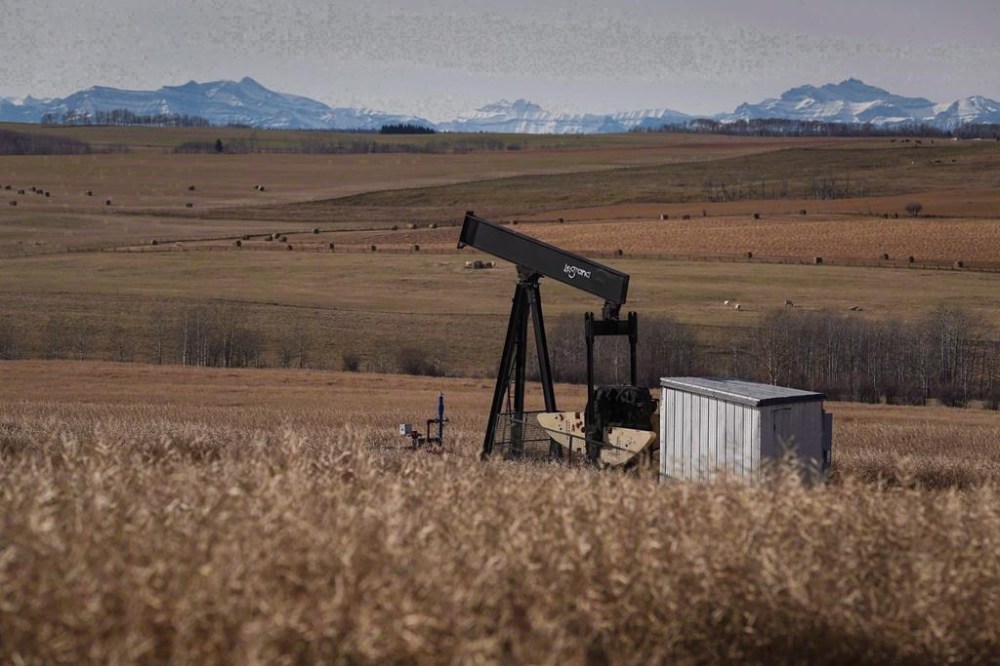
It was condemned by landowners, rural municipalities, energy analysts and even experts within Alberta Energy. Critics said it would reward companies for not obeying the terms of their licences, offer an unnecessary tax break during high oil prices and violate a key tenet of environmental legislation — the principle that polluters pay for their own cleanup.
Before the last election, the government had planned a $100-million pilot project on the idea. After the outcry, the pilot was shelved.
Now, after the vote, it’s back.
“The UCP didn’t want to talk about the program during the election but it looks to me like they’re still going to do it,” said Kathleen Ganley, New Democrat Opposition energy critic.
Ganley puts little stock in the clause about respecting polluter pay. The whole idea violates polluter pay, she said.
“It seems self-contradictory,” she said. “The whole program is designed to have government pay to clean up (old) sites.
“It makes no sense. It seems (like) a communications exercise.”
Martin Olszynski, a University of Calgary resource law professor and RStar critic, called the wording in Jean’s letter “clever marketing.”
“They realize this is a marketing problem,” he said. “They have to sell this to Albertans.”
There’s no way an RStar-type program could respect polluter pay, Olszynski said.
“You can’t square that circle.”
In an emailed statement, Jean insisted that he can.
“We will absolutely stand behind the polluter pay principle,” he said. “Many of these sites have been left by actors that are no longer in existence – but for the ones owned by companies still in operation, I will explore every tool in my disposal to ensure the sites are cleaned up by these operators.”
Incentives can take different forms, he said.
“It could look like anything from easing regulatory burdens, speeding up permitting processes, or creating rules that favour new permits for companies that excel at cleaning up old sites. Those decisions are yet to be made.”
Offering incentives for energy companies to fulfil their legal requirements has been a goal of Smith’s since before she re-entered politics.
She promoted it as a business lobbyist. After she became premier, she put it on the to-do list of her first energy minister and placed a prominent booster of the program on the public payroll as “manager of special projects.”
Kris Kinnear remains on the staff list of Smith’s Calgary office.
Well cleanup is a major issue in Alberta.
As of December, the province’s energy regulator said there were 172,236 wells that were either abandoned or inactive. That doesn’t include unremediated pipelines, buildings or other industry infrastructure.
The stock of such wells is growing. A 2021 University of Calgary study found the number of inactive wells increased by more than 50 per cent between 2015 and 2020.
Estimates for the cost of cleanup vary widely.
The Alberta Energy Regulator puts the price tag at $18.5 billion. The Alberta Liabilities Disclosure Project, a coalition of landowners and academic experts, has put it at $70 billion. One internal estimate from the regulator, officially disavowed, went as high as $260 billion.
This report by The Canadian Press was first published July 13, 2023.