
Archaeologists in Louisiana save artifacts 12,000 years old from natural disasters and looters
Advertisement
Read this article for free:
or
Already have an account? Log in here »
We need your support!
Local journalism needs your support!
As we navigate through unprecedented times, our journalists are working harder than ever to bring you the latest local updates to keep you safe and informed.
Now, more than ever, we need your support.
Starting at $15.99 plus taxes every four weeks you can access your Brandon Sun online and full access to all content as it appears on our website.
Subscribe Nowor call circulation directly at (204) 727-0527.
Your pledge helps to ensure we provide the news that matters most to your community!
To continue reading, please subscribe:
Add Brandon Sun access to your Free Press subscription for only an additional
$1 for the first 4 weeks*
- Enjoy unlimited reading on brandonsun.com
- Read the Brandon Sun E-Edition, our digital replica newspaper
*Your next Free Press subscription payment will increase by $1.00 and you will be charged $20.95 plus GST for four weeks. After four weeks, your payment will increase to $24.95 plus GST every four weeks.
Read unlimited articles for free today:
or
Already have an account? Log in here »
Hey there, time traveller!
This article was published 17/07/2023 (1182 days ago), so information in it may no longer be current.
VERNON PARISH, La. (AP) — Long buried under the woods of west central Louisiana, stone tools, spearpoints and other evidence of people living in the area as long as 12,000 years ago have become more exposed and vulnerable, due to hurricanes, flooding and looters.
This summer, archaeologists have been gingerly digging up the ground at the Vernon Parish site in the Kisatchie National Forest. They have been sifting through dirt to unearth and preserve the evidence of prehistoric occupation of the area.
“The site appears to have been continuously occupied throughout prehistory, as evidenced by a wide range of stone tools and pottery dating to each Native American cultural era up to European contact,” the U.S. Forest Service said in an news release.
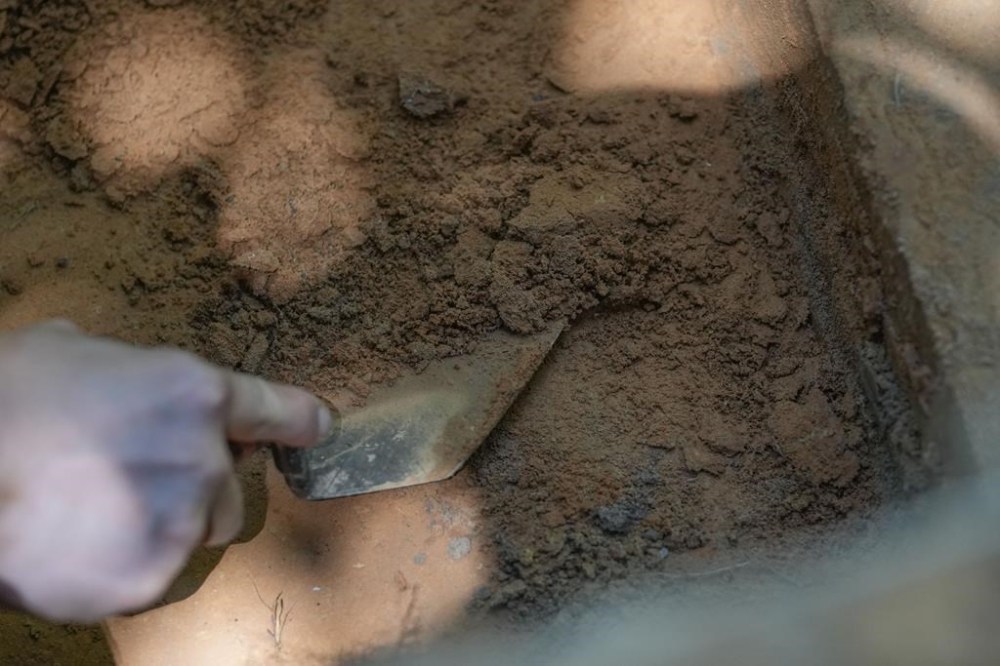
The site was found by surveyors in 2003, according to the Forest Service. After hurricanes Laura and Delta uprooted trees, disturbing and exposing some of the artifacts, Kisatchie National Forest officials used hurricane relief money to begin salvage excavations to learn more about the site, and to preserve it.
“Between the looting and the hurricane damage we were really in danger of losing this site over time,” Forest Service archaeologist Matthew Helmer said during a media tour of the site in June.
Helmer, walked amid areas already excavated, pointing to changes in soil color and texture that, like the crude artifacts being excavated, can give clues as researchers work to determine facts about the people who occupied the area at different times over the millennia.
“We’re really writing the history of these peoples that lived prior to 1492, all the way back 10,000-plus years,” said Helmer.
It’s a welcome opportunity for Mark Rees, a professor of archaeology at the University of Louisiana at Lafayette and director of the Louisiana Public Archaeology Lab.
Still, Rees laments that the work is hampered by people who have made unauthorized digs and made off with material from the site.
“It’s like walking into the archive and finding a book that’s so rare it’s one of a kind and it predates writing itself, it’s like tearing a page out of that book and walking off with it,” said Rees.
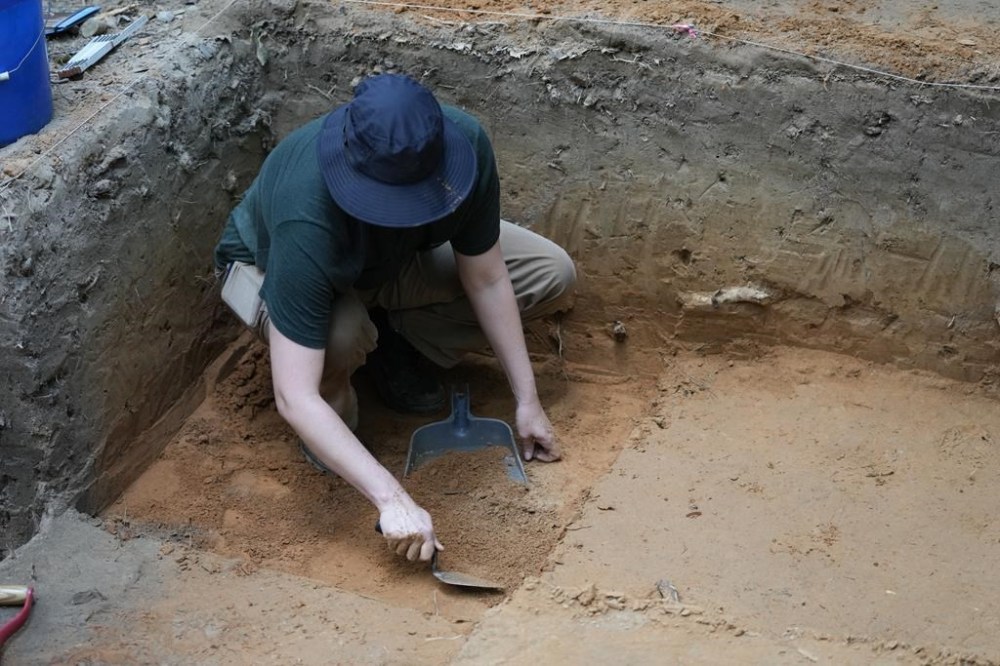
The salvaged artifacts will be sorted, catalogued and examined as researchers at the archaeology lab seek to make determinations about past cultures at the site.
___
McGill reported from New Orleans.