
Ontario, Quebec to see more tornado ‘fuel,’ but more data needed
Advertisement
Read this article for free:
or
Already have an account? Log in here »
We need your support!
Local journalism needs your support!
As we navigate through unprecedented times, our journalists are working harder than ever to bring you the latest local updates to keep you safe and informed.
Now, more than ever, we need your support.
Starting at $15.99 plus taxes every four weeks you can access your Brandon Sun online and full access to all content as it appears on our website.
Subscribe Nowor call circulation directly at (204) 727-0527.
Your pledge helps to ensure we provide the news that matters most to your community!
To continue reading, please subscribe:
Add Brandon Sun access to your Free Press subscription for only an additional
$1 for the first 4 weeks*
- Enjoy unlimited reading on brandonsun.com
- Read the Brandon Sun E-Edition, our digital replica newspaper
*Your next Free Press subscription payment will increase by $1.00 and you will be charged $20.95 plus GST for four weeks. After four weeks, your payment will increase to $24.95 plus GST every four weeks.
Read unlimited articles for free today:
or
Already have an account? Log in here »
Hey there, time traveller!
This article was published 18/07/2023 (1218 days ago), so information in it may no longer be current.
MONTREAL – Climate change will likely bring more weather conditions to Ontario and Quebec that are favourable to the development of tornadoes, but it’s still unclear whether Central Canada will actually be hit by more of them, experts say.
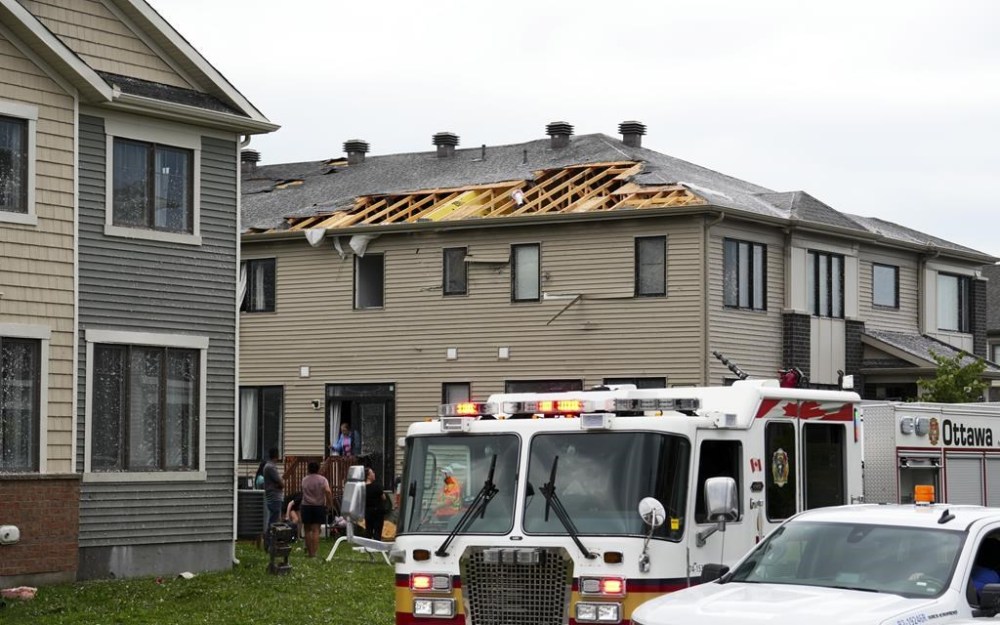
Severe thunderstorms — and at least two tornadoes — damaged homes, knocked down power lines and overwhelmed sewers in eastern Ontario and Quebec last week. Steven Flisfeder, Environment Canada warning preparedness meteorologist, says that as Ontario and Quebec get warmer and more humid because of climate change, the potential for extreme storms could increase.
“Those two things combined are fuel for those severe thunderstorms and potential tornadoes,” he said in a recent interview.
But whether Ontario and Quebec are seeing more tornadoes is so far unclear. Flisfeder explained that a lack of historical data and the propagation of cellphone videos and social media reports make it difficult to tell whether severe thunderstorms and tornadoes are actually becoming more frequent or simply more visible.
David Sills, executive director of the Northern Tornadoes Project, also says a rise in citizen reports has led to an increase in the number of recorded incidents of tornadoes. Project researchers are using archive satellite imagery to fill in some of those historical data gaps and leveraging social media to document storms in lesser populated areas of the country.
Sills said the number of known tornadoes in Canada has nearly doubled since the launch of the NTP: from 70 in 2017 to 117 in 2022, thanks to his team’s recording efforts.
NTP researchers counted more tornadoes in Ontario and Quebec in recent years than they expected. In 2021, they recorded a total of 45 tornadoes in both provinces during the period of highest activity, from mid-June to mid-August, compared to two in the Prairies.
“We were surprised by the number of tornadoes that are happening in eastern Ontario and southern Quebec,” he said. “We were expecting the maximum tornado activity to be in the central part of the country,” he said. That area sees the most tornado activity in Canada, on average, according to the NTP. “But … there’s been a couple of years now where, there’s there’s been really very little activity in the Prairies.”
Some recent studies suggest tornado activity could increase in the east as climate change progresses, but it’s still too early to determine if that forecast is manifesting in Canada, Sills said.
“Looking at the long-term trends is certainly something that we aim to do as part of this project,” he continued, “but we have to really get good quality data sets first and that’s where we’re spending most of our effort right now.”
“There is some change that’s happening,” he added, referring to the lower number of tornadoes in the Prairies in recent years.
“Whether that’s due to climate change, we’re not certain at this point.”
A similar trend is unfolding in the United States, where Jana Houser, a professor at The Ohio State University who studies tornadoes, says there’s already evidence that the domain of tornado activity has crept eastward.
The general areas that are conducive for producing tornadoes — typically in the central plains — “tend to be shifting a little bit towards particularly the south and the east of the United States,” she said. Prolonged periods of drought in the middle of the U.S., she added, is one explanation for a recent decrease in the number of tornadoes in the region.
Houser says she expects the geography of tornado activity to expand as climate change warms the atmosphere and pushes the jet stream — a key element in tornado formation — further north. But she says the storms may become more intense and less frequent as a result.
This report by The Canadian Press was first published July 18, 2023.
—
This story was produced with the financial assistance of the Meta and Canadian Press News Fellowship.