
Border Patrol fails to assess medical needs for children with preexisting conditions, report says
Advertisement
Read this article for free:
or
Already have an account? Log in here »
We need your support!
Local journalism needs your support!
As we navigate through unprecedented times, our journalists are working harder than ever to bring you the latest local updates to keep you safe and informed.
Now, more than ever, we need your support.
Starting at $15.99 plus taxes every four weeks you can access your Brandon Sun online and full access to all content as it appears on our website.
Subscribe Nowor call circulation directly at (204) 727-0527.
Your pledge helps to ensure we provide the news that matters most to your community!
To continue reading, please subscribe:
Add Brandon Sun access to your Free Press subscription for only an additional
$1 for the first 4 weeks*
*Your next subscription payment will increase by $1.00 and you will be charged $20.00 plus GST for four weeks. After four weeks, your payment will increase to $24.00 plus GST every four weeks.
Read unlimited articles for free today:
or
Already have an account? Log in here »
Hey there, time traveller!
This article was published 18/07/2023 (989 days ago), so information in it may no longer be current.
Border Patrol does not have protocols for assessing medical needs of children with preexisting conditions, according to an independent report made public Tuesday on the death of an 8-year-old girl from Panama who was in federal custody.
The girl’s death was “a preventable tragedy that resulted from” failures in “medical and custodial systems for children” within U.S. Customs and Border Protection, the agency that includes the Border Patrol, the report found.
It’s the latest damning finding in the May 17 death of Anadith Danay Reyes Alvarez, who was on her ninth day in custody with family in Harlingen, Texas, in the Rio Grande Valley, one of the busiest corridors for migrant crossings. She had a chronic heart condition and sickle cell anemia.
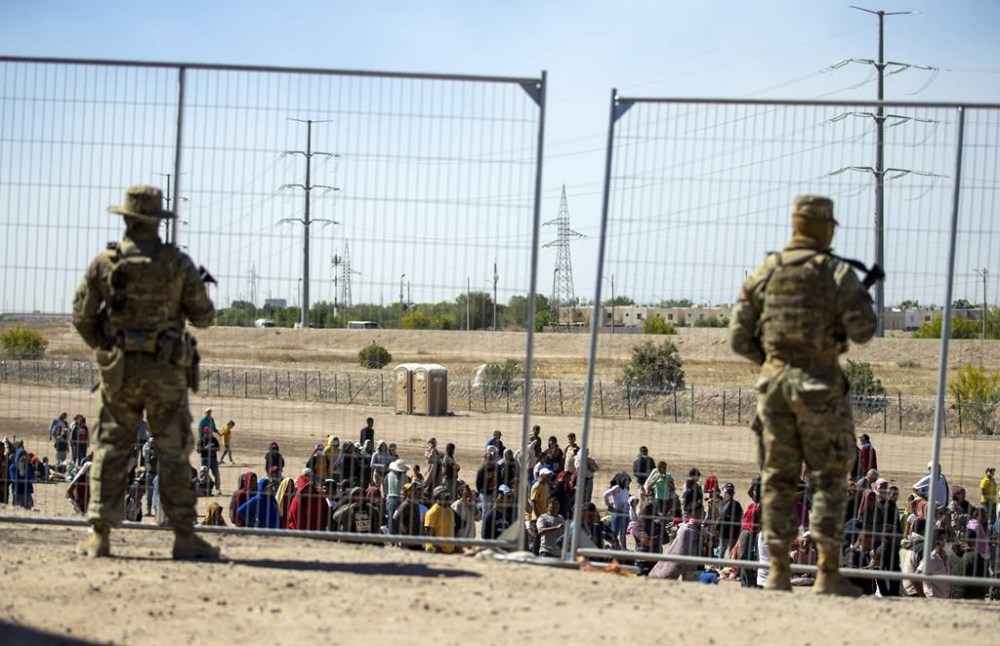
An internal investigation found Border Patrol medical staff declined to review the girl’s file.
The report made public Tuesday was conducted by an independent monitor working to enforce compliance with the latest terms of the Flores settlement agreement, a measure created to bring child welfare protections to children in immigration custody.
“The failure to consult a physician or a local health facility for more extensive testing raises fundamental concerns regarding the ability of the CBP medical system to care appropriately for children at elevated medical risk,” the report says.
CBP did not respond to requests for comment Tuesday.
Mabel Alvarez Benedicks, the girl’s mother, told The Associated Press she reported her daughter’s condition to officials when she and her family were being processed at the border, but officials failed to notify other staff at the time the family was taken to a second facility designated for families, a problem the monitor highlighted in a previous report to the court.
Six days later, the girl tested positive for influenza and had a temperature of 101.8 F (38.78 C), according to the report. She was given medication, put into isolation with her family but three days later, the girl and her mother made numerous visits to the medical unit, the report said.
Anadith reported vomiting and then a stomachache to the health provider, who failed to contact an on-call physician, the report showed. There is no protocol that highlights when an on-call physician should be contacted.
Alvarez begged officials to call an ambulance in order to hospitalize Anadith as her daughter felt pain in her bones, struggled to breathe and was unable to walk, but the health provider did not consider transferring the girl to a hospital, according to the report.
After Alvarez carried her daughter to the medical unit as she seized and became unresponsive, the girl was then taken to a hospital where she was pronounced dead, the report said.
The “poor clinical decision-making by the health providers” is responsible in Anadith’s death, the report said.
“These inexcusable systemic failures were exacerbated by just a sheer disregard for her life,” said Melissa Adamson, an attorney at the National Center for Youth Law.
Three other children have died in Border Patrol custody this year.
An unaccompanied 15-year-old girl from Guatemala died July 10 from an underlying disease while in federal custody. The girl had been hospitalized at El Paso Children’s Hospital for a significant, preexisting illness when she was referred from the U.S. Department of Homeland Security to the Office of Refugee Resettlement in May, the U.S. Department of Health and Human Services said in a statement July 11.
In May, a 17-year-old boy from Honduras died in U.S. custody. Ángel Eduardo Maradiaga Espinoza died at a holding center in Safety Harbor, Florida. His mother said her son had epilepsy but showed no signs of being seriously ill before he left for the United States.
In March, a 4-year-old “medically fragile unaccompanied child from Honduras” died at a hospital in Michigan, according to a Health and Human Services statement at the time.