
LETTER — Don’t let Manitoba fall behind
Advertisement
Read this article for free:
or
Already have an account? Log in here »
We need your support!
Local journalism needs your support!
As we navigate through unprecedented times, our journalists are working harder than ever to bring you the latest local updates to keep you safe and informed.
Now, more than ever, we need your support.
Starting at $15.99 plus taxes every four weeks you can access your Brandon Sun online and full access to all content as it appears on our website.
Subscribe Nowor call circulation directly at (204) 727-0527.
Your pledge helps to ensure we provide the news that matters most to your community!
To continue reading, please subscribe:
Add Brandon Sun access to your Free Press subscription for only an additional
$1 for the first 4 weeks*
- Enjoy unlimited reading on brandonsun.com
- Read the Brandon Sun E-Edition, our digital replica newspaper
*Your next Free Press subscription payment will increase by $1.00 and you will be charged $20.95 plus GST for four weeks. After four weeks, your payment will increase to $24.95 plus GST every four weeks.
Read unlimited articles for free today:
or
Already have an account? Log in here »
Hey there, time traveller!
This article was published 22/07/2023 (1146 days ago), so information in it may no longer be current.
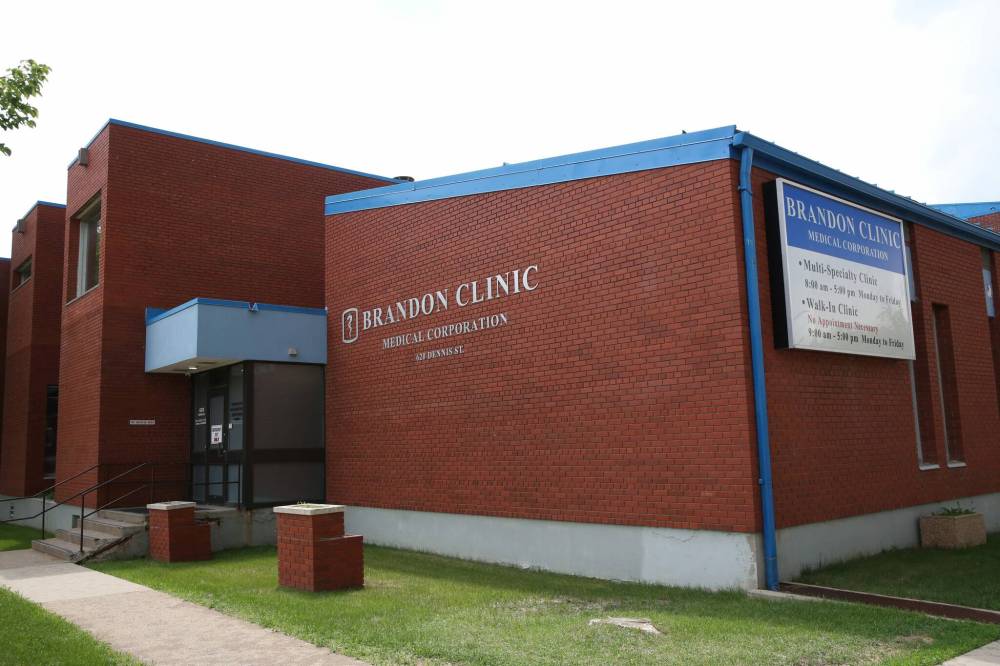
As a resident of Brandon, it was concerning to see Brandon Clinic Medical Corporation’s decision to suspend walk-in services to the general public. Sadly, however, as a health-care professional within the province, this decision did not surprise me.
Since the pandemic, Canada has been struggling to meet the health-care needs of Canadians and unfortunately, Manitoba seems to be falling even more behind the pack.
One factor is the catastrophic shortage of doctors and nurses within Manitoba. The province has made some minor gains with regards to recruitment of nursing staff, but this is only part of the solution. There is great potential within this province if government would look at using ALL health-care professionals to their full scope of practice — not just doctors and nurses.
Since 2014, Manitoba pharmacists have had the ability to prescribe for 12 minor ailments (self-limiting conditions). Most recently, prescribing for the treatment of uncomplicated urinary tract infections (UTI) was also included.
Provinces across Canada have been expanding the list of these minor ailments, therefore allowing pharmacists to bridge a gap in the health-care system.
The number of minor ailments varies per province ranges from approximately 12 to 50, with Alberta being the leader. After almost 10 years of pharmacists being able to prescribe in the province of Manitoba, why are we lagging so far behind?
There is a fundamental discrepancy in the funding for these services between provinces. In Manitoba, only one of these services is publicly funded, meaning if a Manitoban would like to access care from a pharmacist for the treatment of a minor ailment other than uncomplicated UTI, they must pay out of pocket.
For comparison, in Saskatchewan, pharmacist assessment of 24 minor ailments is funded by the province, in addition to other services such as medication reviews.
Pharmacists have long been thought of as one of the most accessible health-care professionals by patients. Other provinces have looked to their pharmacists to make health-care services more accessible to their populations. Prince Edward Island has had success with its Pharmacy Plus Program, introduced by the P.E.I. government in an effort to “rebuild and modernize” its health-care system.
Ontario, which began offering pharmacist prescribing in January of this year, has just added another six minor ailments to the list of which pharmacists may assess, bringing the total to 19.
As a practising pharmacist, I have long seen the benefits pharmacists can provide to their patients while working in collaboration with other health-care professionals. And, in this situation, pharmacists are uniquely positioned to take on an even greater role in providing equitable and accessible publicly funded health care to Manitobans.
On the eve of a potential provincial election, I ask all of you to consider what access to publicly funded health care means to you. Have discussions with the candidates and reinforce why Manitobans should have access to the same quality health care as other Canadians.
JENNIFER LUDWIG,
B.Sc.(Pharm)
President, Super Thrifty
Drugs Canada Ltd.