
Jiri Cerny, a leading Czech music critic and a voice of the 1989 Velvet Revolution, dies at 87
Advertisement
Read this article for free:
or
Already have an account? Log in here »
We need your support!
Local journalism needs your support!
As we navigate through unprecedented times, our journalists are working harder than ever to bring you the latest local updates to keep you safe and informed.
Now, more than ever, we need your support.
Starting at $15.99 plus taxes every four weeks you can access your Brandon Sun online and full access to all content as it appears on our website.
Subscribe Nowor call circulation directly at (204) 727-0527.
Your pledge helps to ensure we provide the news that matters most to your community!
To continue reading, please subscribe:
Add Brandon Sun access to your Free Press subscription for only an additional
$1 for the first 4 weeks*
- Enjoy unlimited reading on brandonsun.com
- Read the Brandon Sun E-Edition, our digital replica newspaper
*Your next Free Press subscription payment will increase by $1.00 and you will be charged $20.95 plus GST for four weeks. After four weeks, your payment will increase to $24.95 plus GST every four weeks.
Read unlimited articles for free today:
or
Already have an account? Log in here »
Hey there, time traveller!
This article was published 18/08/2023 (1127 days ago), so information in it may no longer be current.
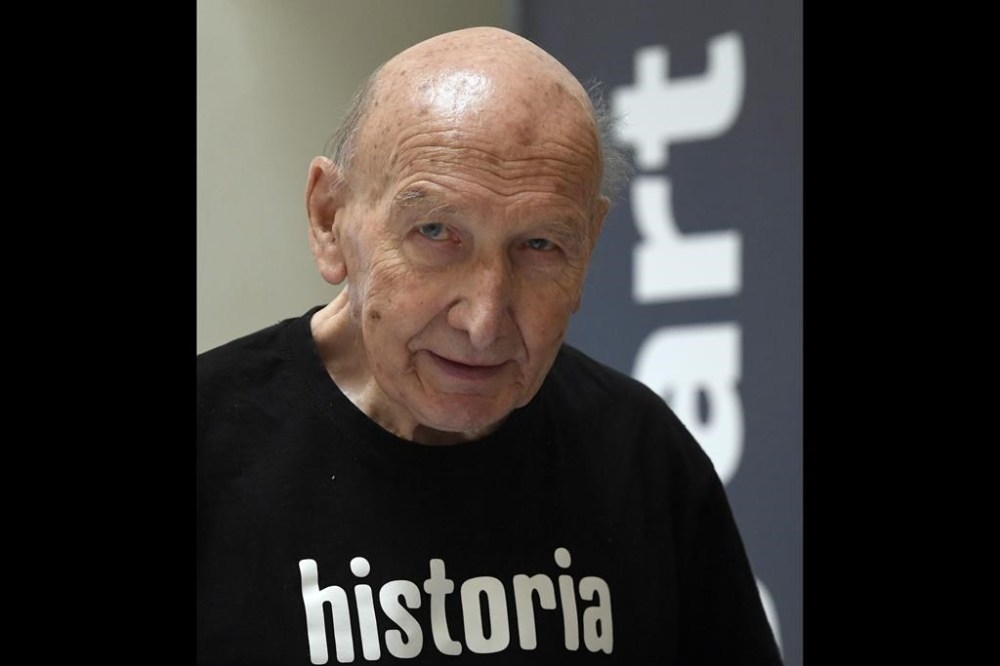
PRAGUE (AP) — Jiri Cerny, a legendary Czech music critic who introduced Western music to generations of listeners behind the Iron Curtain and became one of the voices of the 1989 anti-communist Velvet Revolution, has died. He was 87.
Cerny died on Thursday in a hospital in Prague, his colleague Jan Rejzek announced on Czech public television. No details were given.
Born Feb. 25, 1936 in Prague, Cerny started writing about rock’n’roll in a weekly magazine for young people in the early 1960s in Czechoslovakia, where such a novelty was viewed with suspicion by the communist authorities.
He was fired in 1965, a year after he introduced the first radio hit parade, “Twelve on a Swing,” in the country.
Cerny was in charge of the show with his first wife, Miroslava, until 1969. He was fired after he played a song ridiculing the Soviet troops who invaded Czechoslovakia in 1968 to crush the Prague Spring, the brief period of liberal reforms meant to lead to the democratization of the country.
Also with Miroslava, he published a book about the Beatles in 1966, a unique publication in the communist world at the time.
In 1971, lacking opportunities for work under the hard-line communist regime that took over after the invasion, he began to tour the country with a bag full of records, performing in a show known as an anti-discotheque.
As well as Western music, he played banned Czech musicians to audiences who at the time could hardly listen to them anywhere else, an activity he continued till 2022.
In 1989, he found himself at the center of political turmoil.
Cerny was one of the founding members of the Civic Forum, a newly created opposition group led by the late Vaclav Havel that was instrumental in the transition to democracy.
Cerny became its impromptu spokesperson.
He introduced Havel and other speakers to the massive rallies at Prague’s Wenceslas Square, where he read out the demands for political change that resulted in the end of the communist era.
Cerny declined an offer to become culture minister in the first post-communist Czech government and focused on what he knew the best, music. As editor-in-chef, he established the Rock & Pop magazine in 1990, returned to present music on the radio, and published numerous articles and books.
In 2013, he received a Czech Culture Ministry award for his contribution to music.