
Time for PM to take a walk in the snow?
Advertisement
Read this article for free:
or
Already have an account? Log in here »
We need your support!
Local journalism needs your support!
As we navigate through unprecedented times, our journalists are working harder than ever to bring you the latest local updates to keep you safe and informed.
Now, more than ever, we need your support.
Starting at $15.99 plus taxes every four weeks you can access your Brandon Sun online and full access to all content as it appears on our website.
Subscribe Nowor call circulation directly at (204) 727-0527.
Your pledge helps to ensure we provide the news that matters most to your community!
To continue reading, please subscribe:
Add Brandon Sun access to your Free Press subscription for only an additional
$1 for the first 4 weeks*
- Enjoy unlimited reading on brandonsun.com
- Read the Brandon Sun E-Edition, our digital replica newspaper
*Your next Free Press subscription payment will increase by $1.00 and you will be charged $20.95 plus GST for four weeks. After four weeks, your payment will increase to $24.95 plus GST every four weeks.
Read unlimited articles for free today:
or
Already have an account? Log in here »
Hey there, time traveller!
This article was published 28/08/2023 (1122 days ago), so information in it may no longer be current.
In 1968, following Lester Pearson’s resignation as Liberal Party of Canada leader, Pierre Trudeau went for a long walk in the snow. As the snowflakes descended, he decided he would run for the leadership of the party. Thus began what became known as “Trudeaumania” and his long tenure as prime minister.
On November 29, 1979, following his party’s loss to the Joe Clark’s Progressive Conservatives in that year’s federal election, Trudeau announced that he was stepping down as Liberal Party leader. Three weeks later, however, he again went for a walk in the snow and then announced he had changed his mind, and would stay on as party leader.
Days later, the Clark government’s budget was defeated in the House of Commons and an election was called for February 18, 1980. The Trudeau-led Liberals won a majority of seats in that election, beginning a momentous four years in government that resulted in several achievements, most notably the Charter of Rights and Freedoms.
By 1984, however, the popularity of the Trudeau government, and of Trudeau himself, had plunged dramatically. A mood for change, fueled by newly elected Progressive Conservative leader Brian Mulroney, was sweeping across the country. On February 28, 1984, Trudeau went for yet another walk in the snow to ponder his future, announcing the next day that was resigning as Liberal leader.
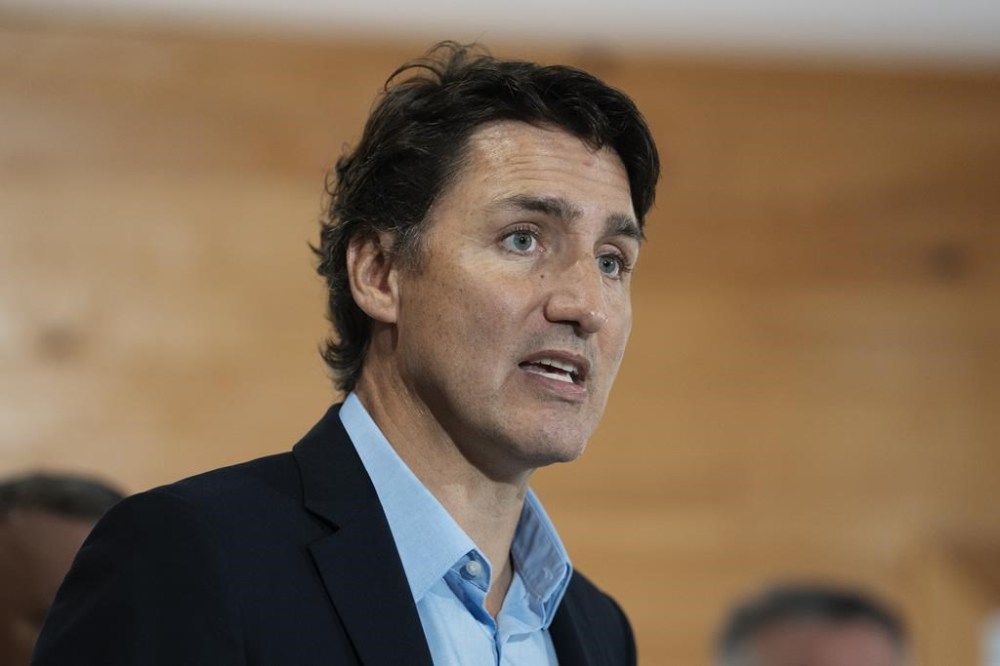
Almost four decades later, pressure is growing for Prime Minister Trudeau to step down, but this time it’s pressure for Justin Trudeau to resign as Liberal Party leader and make room for a new leader.
Support for the Liberals has sagged significantly over the past several months. This month alone, six large national polls have found that Pierre Poilievre’s Conservatives hold a substantial lead over the Liberals. Three weeks ago, the Leger polling company found the Tories had a huge 37-28 lead over the Liberals. Last week, Abacus Data determined that the Tory lead had grown to 38-26, while Mainstreet Research found that the Tory lead over the Liberals was even larger, at 41-28.
Based upon those numbers, the respected 338canada.com website projects that the Conservatives would win a strong majority government with 178 seats in the House of Commons if an election was held now, with the Liberals winning just 105 seats.
The situation appears bleak for Liberals, but the data is even worse for Justin Trudeau. Two weeks ago, Abacus asked respondents this question: “Should Prime Minister Trudeau run again or step down and let someone else become Liberal leader and Prime Minister?” The poll found that 56 per cent of Canadians think Trudeau should step down and let someone else become Liberal leader, while just 27 per cent feel he should run again. The rest were unsure.
In response to those numbers, Abacus CEO David Coletto says that “perhaps most striking, 1 in 4 of those who said they voted Liberal in 2021 want Trudeau to step down. Among this group, 46 per cent would vote Liberal again but 35 per cent would vote Conservative and 13 per cent would vote NDP.”
He adds that “At the same time, there’s evidence in this survey that Pierre Poilievre, the Conservative leader, has improved his standing with Canadians over the past few weeks, with his net favourable rating now almost neutral. This is in stark contrast to Trudeau’s rating.”
The numbers aren’t good for Trudeau and his Liberals, but time is on their side. The next federal election is not expected to occur until 2025, giving them plenty of time to regain the support of voters.
There are numerous examples of federal and provincial governments in Canada overcoming terrible polling numbers during their terms to win re-election – it may be happening in Manitoba right now – but such comebacks almost always require a significant change in leadership, policies and attitude.
Can the Liberals reverse their downward spiral with Justin Trudeau continuing as party leader? He has a year at most to produce polling numbers to reassure his party and caucus that he can accomplish that goal. If the numbers don’t improve – if he can’t regain the trust of more Canadians and restore a sense of confidence among Liberal supporters – it may well be time to follow his father’s example, by taking a long walk in the snow and making room for somebody else to lead the Liberal Party.