
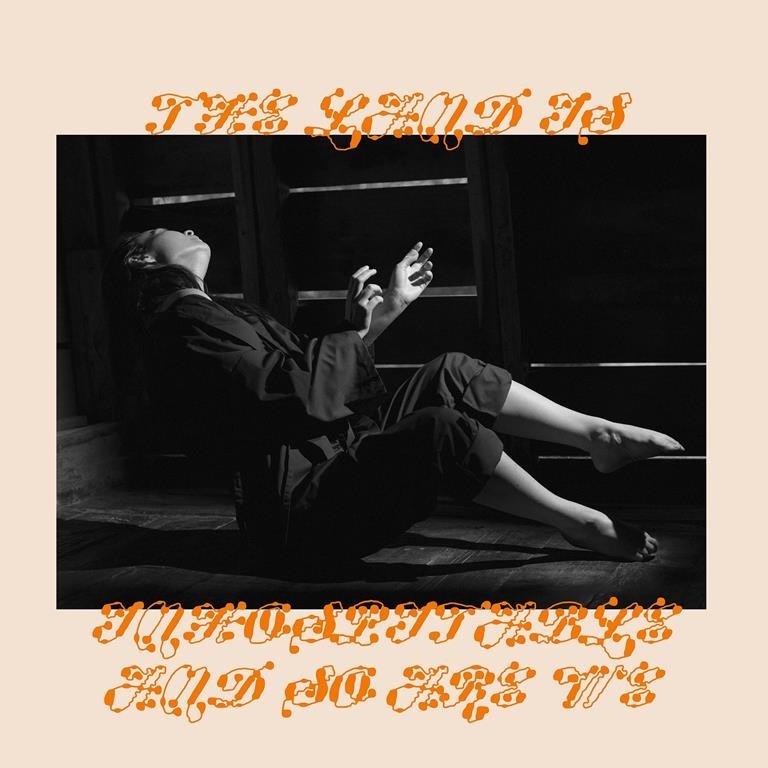
Music Review: Mitski dances with the devil and God on ‘The Land Is Inhospitable and So Are We’
Advertisement
Read this article for free:
or
Already have an account? Log in here »
We need your support!
Local journalism needs your support!
As we navigate through unprecedented times, our journalists are working harder than ever to bring you the latest local updates to keep you safe and informed.
Now, more than ever, we need your support.
Starting at $15.99 plus taxes every four weeks you can access your Brandon Sun online and full access to all content as it appears on our website.
Subscribe Nowor call circulation directly at (204) 727-0527.
Your pledge helps to ensure we provide the news that matters most to your community!
To continue reading, please subscribe:
Add Brandon Sun access to your Free Press subscription for only an additional
$1 for the first 4 weeks*
- Enjoy unlimited reading on brandonsun.com
- Read the Brandon Sun E-Edition, our digital replica newspaper
*Your next Free Press subscription payment will increase by $1.00 and you will be charged $20.95 plus GST for four weeks. After four weeks, your payment will increase to $24.95 plus GST every four weeks.
Read unlimited articles for free today:
or
Already have an account? Log in here »
Hey there, time traveller!
This article was published 12/09/2023 (1143 days ago), so information in it may no longer be current.
LOS ANGELES (AP) — In 2019, a year after the release of the critically acclaimed album “Be the Cowboy,” Mitski — one of the most idiosyncratic and devoted artists in indie rock — announced an indefinite hiatus. It wouldn’t last long.
She reevaluated her relationship with fame and released another album in 2022; she wrote on the Oscar-nominated song “This Is a Life” for the film “Everyone Everywhere All At Once.” Distance provided wisdom, as it tends to, and she’s returned with yet another work of incredible depth: “The Land Is Inhospitable and So Are We.”
In the opening lines on Mitski’s seventh album, an addict finds themselves facing their own mortality. In the lyrics of “Bug Like an Angel,” they lift their drink to find a bug splayed at the bottom of a glass and with the imagination of their drink, compare it to an angel; they find themselves unwilling to confront the cyclical nature of abuse. “I try to remember the wrath of the devil,” she sings, “was also given him by God.”
That’s a lot of weight to put on an insect. “Bug Like an Angel” is constructed around four flat major chords played on acoustic guitar — in music theory, a progression that should elicit a dreamy, optimistic feeling — interrupted by a choir. It is both hopeful and haunting. If the messaging wasn’t paradoxical, it wouldn’t be up for interpretation, and it certainly wouldn’t be a Mitski record. Few artists know how to masterfully unearth humanity’s most disappointing and frustrating characteristics, and fewer do so lovingly.
It is an ideal introduction to what the singer has labeled her “most American album,” and certainly her most world-weary. Throughout, there are mentions of freight trains, fireflies, mosquitos, murmuring brooks, willow trees and midnight walks; the gorgeous, melancholic glissando of pedal steel is used liberally.
Where allegories fail, Mitski gets explicit. On “I Don’t Like My Mind,” she sings, “I don’t like my mind / I don’t like being left alone in a room / With all its opinions about / The things that I’ve done,” offering profundity to mundane, worried behavior — the kind often described colloquially as “cringeworthy” — because expressing acute anxiety in the modern era is most commonly done with cute branding, instead of the head-on collision of a Mitski track.
Within her American musical identity is a preoccupation with the devil, God, and souls — like in the ominous sounds of dogs barking on “I’m Your Man.” They appear in the big orchestral sweeps of “Heaven”, in the haunted woodwinds and horns of “When Memories Snow,” in the drum fills that lead into the lines “You know I’d always been alone / Till you taught me / To live for somebody” on “Star.” (All three no doubt at least partially to the credit of orchestra conductor Drew Erickson, known for his work with Lana Del Rey ).
A few of the songs on “The Land Is Inhospitable and So Are We” began years ago and were given time to mature into their final forms — another benefit of taking time off. In that way, the album is a testament to allowing artists to operate on their own timelines, and in the ways that benefit their work the most.
Otherwise, who knows where those good songs that’ve never been realized go? To heaven, hell, America, or some other barren land?