
Experts weigh in on PC tax cut, energy promises
Advertisement
Read this article for free:
or
Already have an account? Log in here »
We need your support!
Local journalism needs your support!
As we navigate through unprecedented times, our journalists are working harder than ever to bring you the latest local updates to keep you safe and informed.
Now, more than ever, we need your support.
Starting at $15.99 plus taxes every four weeks you can access your Brandon Sun online and full access to all content as it appears on our website.
Subscribe Nowor call circulation directly at (204) 727-0527.
Your pledge helps to ensure we provide the news that matters most to your community!
To continue reading, please subscribe:
Add Brandon Sun access to your Free Press subscription for only an additional
$1 for the first 4 weeks*
- Enjoy unlimited reading on brandonsun.com
- Read the Brandon Sun E-Edition, our digital replica newspaper
*Your next Free Press subscription payment will increase by $1.00 and you will be charged $20.95 plus GST for four weeks. After four weeks, your payment will increase to $24.95 plus GST every four weeks.
Read unlimited articles for free today:
or
Already have an account? Log in here »
Hey there, time traveller!
This article was published 15/09/2023 (1129 days ago), so information in it may no longer be current.
A Progressive Conservative campaign promise to cut taxes, expand the critical mineral sector and promote clean energy would bring opportunities and challenges to the local economy and the region, according to economic and geology experts.
“To boost the critical minerals, we need to explore and find the minerals and that will have a direct impact on the number of students that get into our program,” Brandon University geology department chair Simon Pattison said. “There will be a lot of opportunity for students to get summer jobs and full-time employment with the ramp-up over the critical minerals.”
Pattison explained that indeed critical minerals play a pivotal role in numerous industries, including clean energy and technology, adding that Manitoba is poised to contribute significantly. He highlighted the importance of not only exploring these minerals but also addressing environmental and sustainability concerns associated with their extraction.
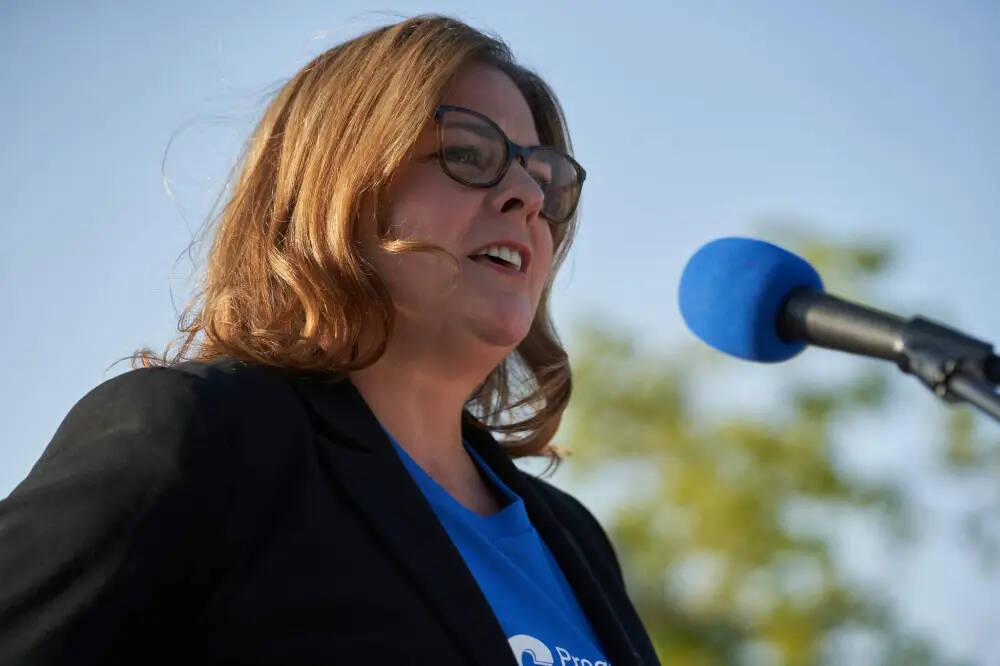
Experts weigh in on Progressive Conservative Party of Manitoba leader and Premier of Manitoba Heather Stefanson's election pledge to reduce taxes, expand the critical mineral sector and promote clean energy. (File)
“There are some opportunities in southwestern Manitoba, and they are tied to old petroleum wells, oil and gas wells,” he said. “We have high quantities of lithium, which is a very key mineral for electrifying society and converting our internal combustion engines into electric vehicles. Lithium-ion batteries are in huge demand right now.”
Pattison added that the PCs’ emphasis on critical minerals could potentially lead to increased employment opportunities, not only for students in Brandon but also for petroleum geologists.
“This diversification of the local workforce aligns with broader economic development goals, he said. “In southwestern Manitoba, the skill set of a petroleum geologist and engineer could come in very handy for finding the subsurface through old oil and gas wells.”
Regarding clean energy, Pattison acknowledged Manitoba’s unique advantage in attracting businesses due to its abundant hydroelectricity.
“Hydroelectricity is clean, and the cost is quite low compared to other jurisdictions in Canada that rely on other fuels for their electricity,” he said. “This competitive advantage in energy costs has already drawn industries to the region, such as the fertilizer plant.”
Moreover, the region’s potential for solar and wind power generation shouldn’t be overlooked.
Pattison said that sustainable energy transition could involve further investments in these renewable energy sources, aligning with global efforts to reduce greenhouse gas emissions and creating additional job opportunities in the renewable energy sector.
There are two concerns on the impact of tax cuts and the need for high-quality services in rural areas, according to BU Rural Development Institute director Wayne Kelly.
“The main concern is that cutting taxes is either going to be cutting services or increasing our deficits. In rural areas, there’s been quite a round of service cuts, and that is really challenging to make rural Manitoba more attractive and more competitive if you’re not able to offer adequate services,” he said.
Kelly underscored the significance of providing high-quality services, as well as addressing the potential challenges that tax cuts may pose to public services. Balancing economic stimulation with the preservation of essential services is essential for sustainable growth.
He explained that when the province aims to both retain local talent and attract newcomers to nearly double the population in less than seven years, it becomes imperative to welcome and retain residents.
“This holds true for both urban centres like Brandon and rural areas, where the focus should be on creating hospitable communities with access to top-notch services, education, and training — a fundamental requirement for achieving these goals,” he added.
In addition to his concerns, Kelly said that there is potential for solar and wind power generation in Manitoba. According to him, there have been some good investments made, and more will be needed from the provincial government.
“I also think that building a greener economy is an important part of that attraction and retention, particularly for the younger workforce and students.”
Speaking to the Manitoba Chambers of Commerce on Wednesday, PC Leader Heather Stefanson said Manitoba needs to be competitive on taxes to attract people. She didn’t directly say how the province can afford its tax cuts but referenced Manitoba’s “clean, green hydroelectric power” and a hydrogen, critical mineral and energy strategy in the works.
» aodutola@brandonsun.com, with Winnipeg Free Press files
» X: @AbiolaOdutola