
Quebec’s Anticosti Island recognized as a UNESCO World Heritage Site
Advertisement
Read this article for free:
or
Already have an account? Log in here »
We need your support!
Local journalism needs your support!
As we navigate through unprecedented times, our journalists are working harder than ever to bring you the latest local updates to keep you safe and informed.
Now, more than ever, we need your support.
Starting at $15.99 plus taxes every four weeks you can access your Brandon Sun online and full access to all content as it appears on our website.
Subscribe Nowor call circulation directly at (204) 727-0527.
Your pledge helps to ensure we provide the news that matters most to your community!
To continue reading, please subscribe:
Add Brandon Sun access to your Free Press subscription for only an additional
$1 for the first 4 weeks*
- Enjoy unlimited reading on brandonsun.com
- Read the Brandon Sun E-Edition, our digital replica newspaper
*Your next Free Press subscription payment will increase by $1.00 and you will be charged $20.95 plus GST for four weeks. After four weeks, your payment will increase to $24.95 plus GST every four weeks.
Read unlimited articles for free today:
or
Already have an account? Log in here »
Hey there, time traveller!
This article was published 19/09/2023 (1086 days ago), so information in it may no longer be current.
MONTREAL – Ten years after Quebec’s government wanted to launch oil and gas exploration on Anticosti Island, the picturesque territory in the Gulf of St. Lawrence has been added to the list of UNESCO World Heritage Sites.
The agency’s world heritage committee — which says fossil fuel exploration or exploitation is incompatible with heritage status — announced Tuesday that Anticosti Island is being formally recognized on the United Nations’s list of places with outstanding universal value to humanity.
According to UNESCO’s website, Quebec’s largest island is “the most complete and best preserved paleontological record of the first mass extinction of animal life, 447-437 million years ago.”
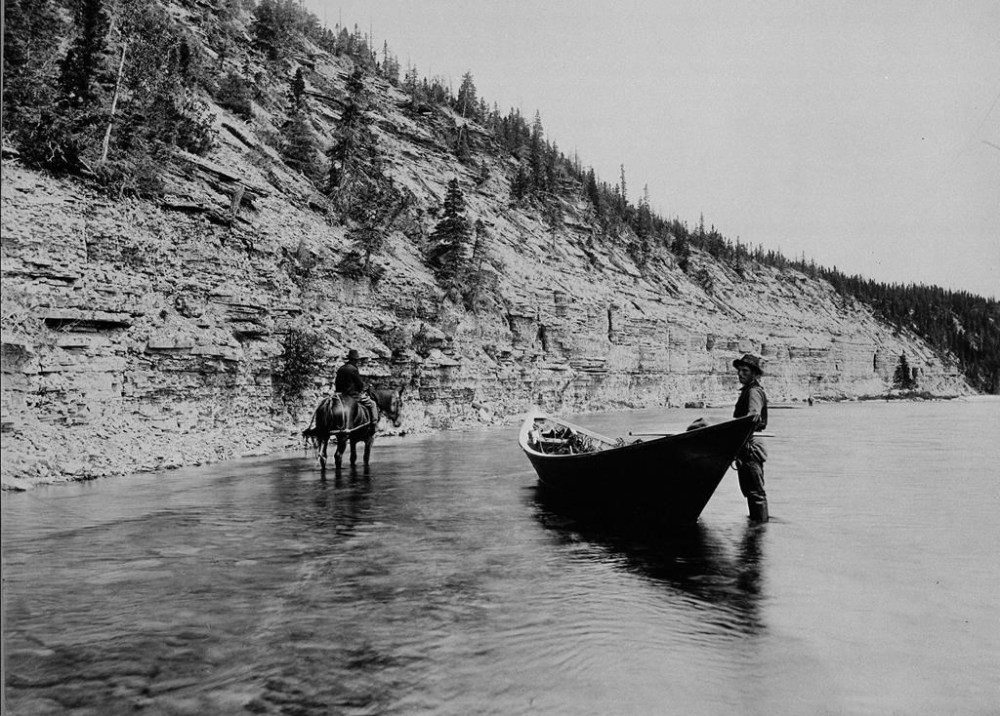
It says world-class scientists will be able to study what it describes as the “the best-preserved fossil record of marine life covering 10 million years of Earth history.”
The 9,200-square-kilometre island contains more than 550 kilometres of coastline, around 200 permanent residents and an abundance of deer. It is home to spectacular natural landscapes including deep canyons, waterfalls and numerous caves.
At one time, however, the territory was considered a potential site for oil and gas, after the former Parti Québécois government, in office between 2012 and 2014, gave its blessing for exploratory drilling on the island.
After backlash from residents and environmentalists, the next government, under then-premier Philippe Couillard, ended oil and gas exploration on Anticosti Island in 2017 to protect its natural character — and support the bid to make the territory a World Heritage Site. As a result, the province was forced to pay some $62 million to compensate the oil and gas companies, whose contracts were cancelled.
Federal Environment Minister Steven Guilbeault, who participated in the campaign for heritage designation before he entered politics, said the island helps scientists better understand how “climate change and rising sea levels at the time contributed to a decisive moment in history — the world’s first mass extinction of life on Earth.”
Hélène Boulanger, mayor of the municipality of Anticosti Island, describes the heritage designation as “the beginning of a new era” for the island, adding that its infrastructure needs to be improved to accommodate an expected influx of visitors.
Anticosti Island’s former mayor announced the bid for heritage status in early 2017, and the candidacy gained support from the province, the federal government and the Innu communities of Ekuanitshit and Nutashkuan.
“Anticosti Island is of great importance to our spiritual values, our identity and our culture,” said Jean-Charles Piétacho, the Innu Chief of Ekuanitshit, in a news release.
“The joining forces of our communities, municipal, regional, governmental and scientific, has allowed this recognition as a UNESCO World Heritage Site.”
For its part, the province announced in 2020 that it would create a large nature reserve on the island to protect its biodiversity and further boost the UNESCO candidacy.
Anticosti Island becomes the 22nd Canadian site on the UNESCO list, joining places such as Wood Buffalo National Park, Gros Morne National Park, the Rideau Canal National Historic Site and Yukon’s Tr’ondëk-Klondike. It’s the third UNESCO heritage site in Quebec, after Old Quebec City’s historic centre and the Miguasha National Park, on the Gaspé Peninsula.
This report by The Canadian Press was first published Sept. 19, 2023.