
Book Review: ‘Differ We Must’ illustrates Abraham Lincoln’s political skills
Advertisement
Read this article for free:
or
Already have an account? Log in here »
We need your support!
Local journalism needs your support!
As we navigate through unprecedented times, our journalists are working harder than ever to bring you the latest local updates to keep you safe and informed.
Now, more than ever, we need your support.
Starting at $15.99 plus taxes every four weeks you can access your Brandon Sun online and full access to all content as it appears on our website.
Subscribe Nowor call circulation directly at (204) 727-0527.
Your pledge helps to ensure we provide the news that matters most to your community!
To continue reading, please subscribe:
Add Brandon Sun access to your Free Press subscription for only an additional
$1 for the first 4 weeks*
- Enjoy unlimited reading on brandonsun.com
- Read the Brandon Sun E-Edition, our digital replica newspaper
*Your next Free Press subscription payment will increase by $1.00 and you will be charged $20.95 plus GST for four weeks. After four weeks, your payment will increase to $24.95 plus GST every four weeks.
Read unlimited articles for free today:
or
Already have an account? Log in here »
Hey there, time traveller!
This article was published 03/10/2023 (1080 days ago), so information in it may no longer be current.
In “Differ We Must: How Lincoln Succeeded In a Divided America,” Steve Inskeep is taking on one of the most challenging tasks for a biographer by profiling the nation’s 16th president.
There’s little new to be said or explored about Lincoln that’s not already covered in the massive pile of biographies already out there. But Inskeep, co-host of NPR’s “Morning Edition,” tries an approach that illuminates Lincoln’s political skill.
From the opening pages of the biography, Inskeep details how much Lincoln’s political skill was a part of the late president’s legacy and character. As Inskeep puts it, “Lincoln preserved the country and took part in a social revolution because he engaged in politics.”
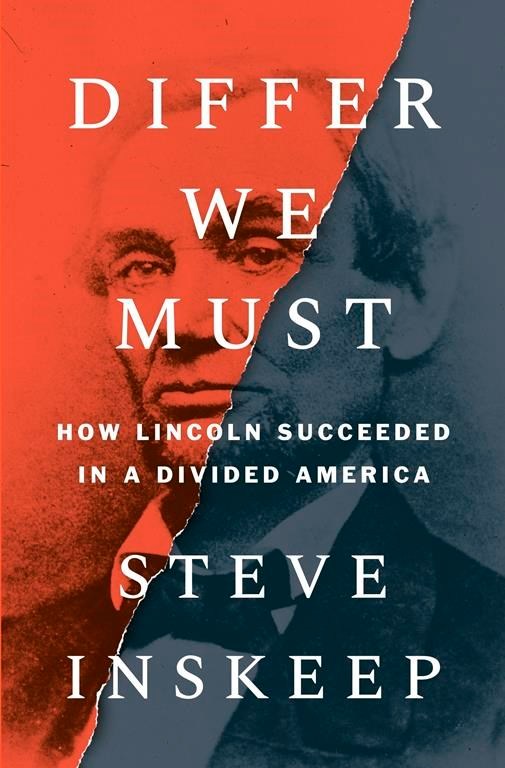
Inskeep illustrates that political skill by focusing on 16 encounters Lincoln had throughout his lifetime. They include well-known and well-chronicled figures in Lincoln’s political upbringing, such as William Seward, George McClellan and Frederick Douglass.
Even though these chapters tread familiar ground, Inskeep manages to adeptly use them to show how Lincoln’s mastery of politics adapted and evolved throughout his career.
But the most compelling chapters profile lesser-known figures and their connections to Lincoln. They include Mary Ellen Wise, who disguised her gender to serve as a Union soldier and confronted Lincoln to collect her back pay. As Inskeep recounts, Lincoln ensured Wise got her pay and the president also got news coverage that reinforced him as a man of the people.
In the last chapter, Inskeep uses Lincoln’s at-times fraught marriage with Mary Todd to show how his rocky home life helped prepare him for leading a country during the Civil War.
“The skills he needed at home resembled some he needed for work,” Inskeep writes.
The brisk biography, filled with lively anecdotes and interesting analysis, offers more than enough to stand out among recent additions to the collection of Lincoln biographies.