
Ducks Unlimited offers dormant seeding incentives
Advertisement
Read this article for free:
or
Already have an account? Log in here »
We need your support!
Local journalism needs your support!
As we navigate through unprecedented times, our journalists are working harder than ever to bring you the latest local updates to keep you safe and informed.
Now, more than ever, we need your support.
Starting at $15.99 plus taxes every four weeks you can access your Brandon Sun online and full access to all content as it appears on our website.
Subscribe Nowor call circulation directly at (204) 727-0527.
Your pledge helps to ensure we provide the news that matters most to your community!
To continue reading, please subscribe:
Add Brandon Sun access to your Free Press subscription for only an additional
$1 for the first 4 weeks*
- Enjoy unlimited reading on brandonsun.com
- Read the Brandon Sun E-Edition, our digital replica newspaper
*Your next Free Press subscription payment will increase by $1.00 and you will be charged $20.95 plus GST for four weeks. After four weeks, your payment will increase to $24.95 plus GST every four weeks.
Read unlimited articles for free today:
or
Already have an account? Log in here »
Hey there, time traveller!
This article was published 27/10/2023 (938 days ago), so information in it may no longer be current.
Despite the wet snow that has blanketed much of Westman the past few days, Ducks Unlimited Canada says the time is right for farmers in the area to spread forage seed and allow it to sit dormant over winter, allowing it to germinate next spring.
To help motivate producers to take part in dormant seed forages, Ducks Unlimited Canada (DUC) is offering incentives and suggestions on how to improve success rates.
The best time for dormant seeding is when the soil temperature is 5 C or less, said DUC forage specialist Charlotte Crawley.
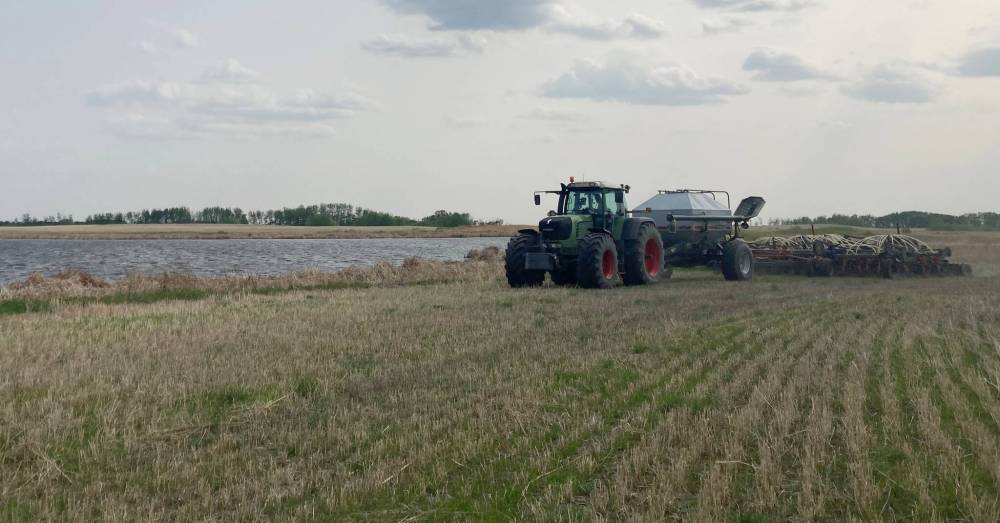
Ducks Unlimited Canada is offering producers $200 per acre to seed forages in underperforming crop areas, and can provide custom seed blends to maximize establishment success. (Submitted)
“You want the ground as cold as possible so the seed does not germinate until next spring. If temperatures are too warm, you run the risk of germination and winterkill, ruining your chances of a successful forage establishment.”
While it hasn’t yet become a common practice in Western Canada, dormant seeding can provide farmers with several benefits over waiting for the spring seeding of forage crops.
Dormant seeding is a great solution for areas that are typically wet and difficult to access during the springtime, Crawley says, since fields are typically drier in the fall and less prone to surface crusting, which can prevent seedlings from breaking through the soil.
Marginal crop areas — lands that are characterized by poor climate, poor physical characteristics or difficult cultivation — also respond well to dormant seeding because forage seedlings emerge as early as spring conditions allow, getting a hump on weeds that tend to populate saline spots.
Crawley recommends direct seeding into stubble using a seed drill, since it’s the best option to ensure optimal seed-to-soil contact.
“Forages should be planted no deeper than one-half inch to three-quarters of an inch. If the soil is heavily worked, broadcast seed to prevent seeding too deep and follow up with a harrowing pass,” she said, adding that seeding at a higher-than-normal rate, from 15 pounds per acre to 20 pounds per acre. “Seeding heavy is cheap insurance on a good establishment. Resist the urge to only seed the bare patches. Make a pass or two where you have some stubble in the moderately saline areas to ensure plants establish. This will keep the salinity from spreading further into your crop and, over time, the forage will fill in the bare spots.”
When seeding into existing forage stands, DUC has seen success with sod seeding of legumes when done with the proper equipment. A disc drill with coulters designed to cut through sod is the best option, especially in lighter soils where early spring seeding with adequate moisture cannot take place, the organization says. Snow shouldn’t stop producers from successfully dormanting seeds, as long as they can get seed-to-soil contact, Crawley said.
DUC is currently offering producers $200 per acre to seed forages in underperforming crop areas, and can provide custom seed blends to maximize establishment success. In addition to programs for dormant seeding, forage and marginal areas, DUC provides incentives and agronomic support for winter wheat, sod seeding, rangeland and pasture upgrades, and the preservation and restoration of wetlands and uplands.
For more information, visit ag.ducks.ca.
» mleybourne@brandonsun.com
» X: @miraleybourne