
Conservation deal aims to protect 30 per cent of B.C. land by 2030
Advertisement
Read this article for free:
or
Already have an account? Log in here »
We need your support!
Local journalism needs your support!
As we navigate through unprecedented times, our journalists are working harder than ever to bring you the latest local updates to keep you safe and informed.
Now, more than ever, we need your support.
Starting at $15.99 plus taxes every four weeks you can access your Brandon Sun online and full access to all content as it appears on our website.
Subscribe Nowor call circulation directly at (204) 727-0527.
Your pledge helps to ensure we provide the news that matters most to your community!
To continue reading, please subscribe:
Add Brandon Sun access to your Free Press subscription for only an additional
$1 for the first 4 weeks*
- Enjoy unlimited reading on brandonsun.com
- Read the Brandon Sun E-Edition, our digital replica newspaper
*Your next Free Press subscription payment will increase by $1.00 and you will be charged $20.95 plus GST for four weeks. After four weeks, your payment will increase to $24.95 plus GST every four weeks.
Read unlimited articles for free today:
or
Already have an account? Log in here »
Hey there, time traveller!
This article was published 03/11/2023 (1101 days ago), so information in it may no longer be current.
Canada’s greatest ally in the fight against climate change is nature itself, federal Environment Minister Steven Guilbeault said Friday, after signing a $1.1 billion deal with British Columbia and Indigenous leaders to protect 30 per cent of B.C’s land by 2030.
The target of the Tripartite Framework Agreement on Nature Conservation means another 100,000 square kilometres of land must be designated adding to the 20 per cent of B.C. that’s already protected, the most of any province or territory.
Guilbeault said the march of climate change couldn’t be more evident, after a summer when wildfires devastated millions of hectares of B.C. forests and forced thousands from their homes, and the need to protect lands, ecosystems and species couldn’t be more desperate.
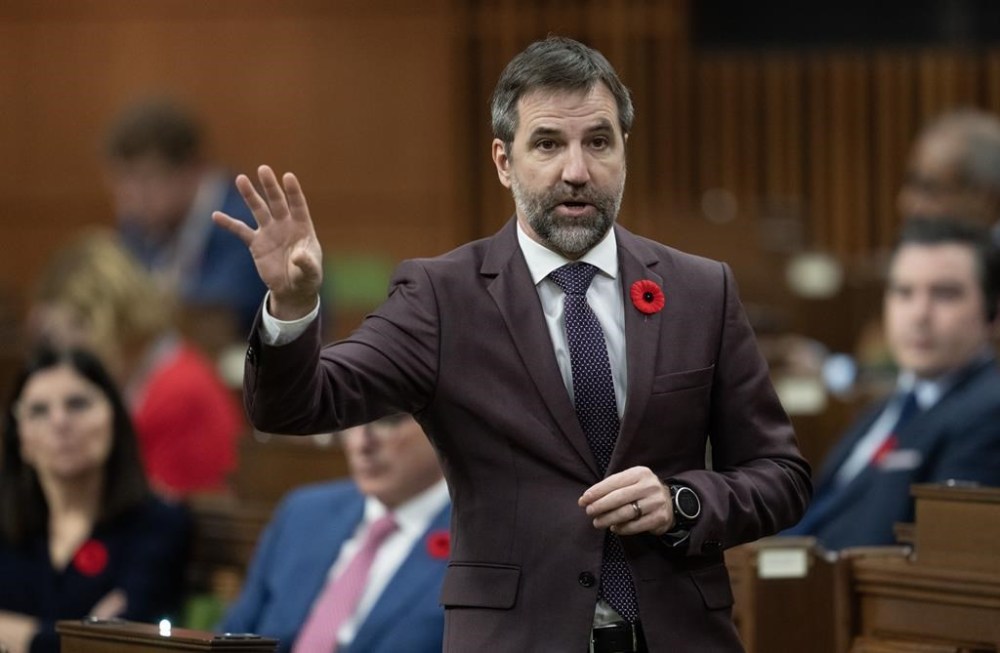
“This is what climate change looks like,” he told a news conference. “In the climate fight our greatest ally is nature. When we care for nature we care for ourselves because nature and climate are linked.”
The agreement is a definitive moment in collaboration to protect B.C. lands, said Premier David Eby and First Nations leaders who also signed the agreement in Vancouver.
“It’s about the children,” Eby said. “It’s about the next generation and it’s about the prosperity of British Columbians today.”
Robert Phillips, a member of the First Nations Summit political executive, said Indigenous people are deeply connected to the land and their participation in the agreement is based on sharing and help during challenging times.
“The land, Mother Earth, is screaming,” he said. “This agreement we have is so important. It is a mechanism. It is a tool.”
It’s the first agreement with a province to support Ottawa’s 30-per-cent-protection goal, which underpins Canada’s national biodiversity strategy, Guilbeault said.
The federal government will invest up to $500 million over the life of the deal, with B.C. contributing $563 million, which includes a recently announced $150 million First Nations-led fund to protect old-growth forests.
The federal funding has not been fully allocated yet, but will include $50 million to protect 4,000 square kilometres of old-growth forest, and $104 million to restore the habitat of species at risk.
Other targets of the deal include supporting the recovery of spotted owls, and protecting enough old-growth forest to support 250 of the endangered birds.
“This framework agreement will help us halt and reverse the decline of species and advance the protection and restoration of habitats in B.C.,” Guilbeault said. “It will strengthen natural climate solutions and protect old-growth forests and help us recover species at risk, like the spotted owl.”
The spotted owl is considered the most endangered bird in Canada, with only one wild-hatched female specimen living in the B.C. Fraser Canyon area. Two captive-bred males were released this year.
The federal government said last month it would not issue an emergency order to prevent logging in two Fraser canyon watersheds which could be spotted owl habitat.
Environmental groups largely applauded the nature agreement, saying involving First Nations marks a necessary step toward ensuring the joint protection of lands.
Tegan Hansen, a senior forest campaigner with Stand.earth, said environmental groups will be looking for the province to make good on pledges to protect old-growth forests.
“The reality is we’re still tracking old-growth logging in the most at-risk old-growth forests,” she said in an interview.
The B.C. Green Party said in a statement it views the agreement as an essential step forward, but called on the B.C. government “to finally introduce legislation that will provide legal protections to species at risk and biodiversity in B.C.”
There are more than 1,800 species at risk of extinction in B.C., the Greens said.
This report by The Canadian Press was first published Nov. 3, 2023.