
Bird flu case detected in Manitoba
Advertisement
Read this article for free:
or
Already have an account? Log in here »
We need your support!
Local journalism needs your support!
As we navigate through unprecedented times, our journalists are working harder than ever to bring you the latest local updates to keep you safe and informed.
Now, more than ever, we need your support.
Starting at $15.99 plus taxes every four weeks you can access your Brandon Sun online and full access to all content as it appears on our website.
Subscribe Nowor call circulation directly at (204) 727-0527.
Your pledge helps to ensure we provide the news that matters most to your community!
To continue reading, please subscribe:
Add Brandon Sun access to your Free Press subscription for only an additional
$1 for the first 4 weeks*
- Enjoy unlimited reading on brandonsun.com
- Read the Brandon Sun E-Edition, our digital replica newspaper
*Your next Free Press subscription payment will increase by $1.00 and you will be charged $20.95 plus GST for four weeks. After four weeks, your payment will increase to $24.95 plus GST every four weeks.
Read unlimited articles for free today:
or
Already have an account? Log in here »
Hey there, time traveller!
This article was published 17/11/2023 (1076 days ago), so information in it may no longer be current.
Only time will tell if a case of bird flu detected in Manitoba last week is an isolated incident or if it’s the “tip of the iceberg,” Manitoba Chicken Producers says.
On Nov. 8, a case of highly pathogenic avian influenza (HPAI) was confirmed by the Canadian Food Inspection Agency on a commercial poultry operation in the Rural Municipality of Rhineland, located 241 kilometres southeast of Brandon.
It’s the first domestic case Manitoba has seen since around this time last year. On Nov. 17, 2022, bird flu was discovered in a non-commercial, non-poultry premise in the Rural Municipality of Woodlands, 196 km northeast of Brandon.
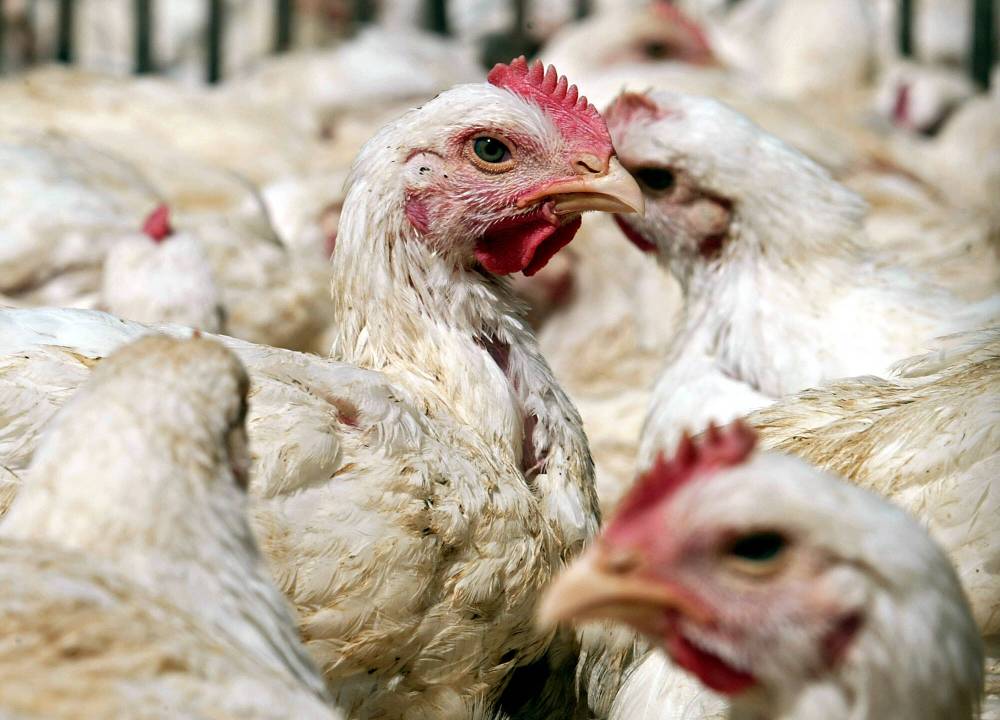
On Nov. 8, the Canadian Food Inspection Agency confirmed a case of highly pathogenic avian influenza on a commercial poultry operation in the Rural Municipality of Rhineland, located 241 kilometres southeast of Brandon. (File)
“I can’t predict the future, but the fact that it’s taken this long for Manitoba to have its first case tells me that producers are doing everything in their control to mitigate the risk,” said Wayne Hiltz, executive director of Manitoba Chicken Producers.
Last year, 21 confirmed cases of HPAI hit the province, leading to the death or euthanization of 287,000 birds. This month alone, there have been 28 confirmed cases of bird flu in B.C., three in Alberta, and six in Saskatchewan.
“We’ve certainly seen from other provinces a lot more activity with this virus,” Hiltz said. “In Manitoba, this is our only affected premises, so we’ve done a really good job.”
The Manitoba government states that owners of all poultry and non-poultry flocks should prevent contact between flocks and wild birds; clean up feed spills immediately; not store dead birds and manure near flocks; and ensure all clothing, footwear, equipment and materials that come into contact with flocks are clean. In addition to that, feeding and watering equipment should be cleaned and disinfected frequently.
Under current regulations, small flock and non-commercial flock owners are required to complete an application with Manitoba’s Premises Identification Program, which allows rapid contact should HPAI be found nearby.
Producers should contact a veterinarian immediately if any increase in sudden death or respiratory signs is seen in a flock. Veterinarians working with small holder or hobby flocks can submit samples under the province’s Small Flock Avian Influenza Program.
The Sun contacted the Canadian Food Inspection Agency but did not receive a reply by press time.
» mleybourne@brandonsun.com
» X: @miraleybourne