
Crime-stopping cameras an idea worth considering
Advertisement
Read this article for free:
or
Already have an account? Log in here »
We need your support!
Local journalism needs your support!
As we navigate through unprecedented times, our journalists are working harder than ever to bring you the latest local updates to keep you safe and informed.
Now, more than ever, we need your support.
Starting at $15.99 plus taxes every four weeks you can access your Brandon Sun online and full access to all content as it appears on our website.
Subscribe Nowor call circulation directly at (204) 727-0527.
Your pledge helps to ensure we provide the news that matters most to your community!
To continue reading, please subscribe:
Add Brandon Sun access to your Free Press subscription for only an additional
$1 for the first 4 weeks*
- Enjoy unlimited reading on brandonsun.com
- Read the Brandon Sun E-Edition, our digital replica newspaper
*Your next Free Press subscription payment will increase by $1.00 and you will be charged $20.95 plus GST for four weeks. After four weeks, your payment will increase to $24.95 plus GST every four weeks.
Read unlimited articles for free today:
or
Already have an account? Log in here »
Hey there, time traveller!
This article was published 20/11/2023 (1052 days ago), so information in it may no longer be current.
Last Friday, the Kinew government announced that it has partnered with the City of Dauphin to confront criminal activity in that city by using funds from the Criminal Property Forfeiture Fund to pay for the installation of closed-circuit television cameras.
According to the release, the use of the cameras “is an effort to discourage vandalism and break-ins while adding additional tools that RCMP can use during criminal investigations. The project includes upgrading seven existing cameras to high-resolution and adding 10 high-resolution cameras.”
Dauphin mayor David Bosiak is quoted in the release, saying that “The funds from the forfeiture of criminal property have been put to very good use here in Dauphin as part of council’s efforts to take proactive measures to both deter and help to investigate criminal activity in our community.”
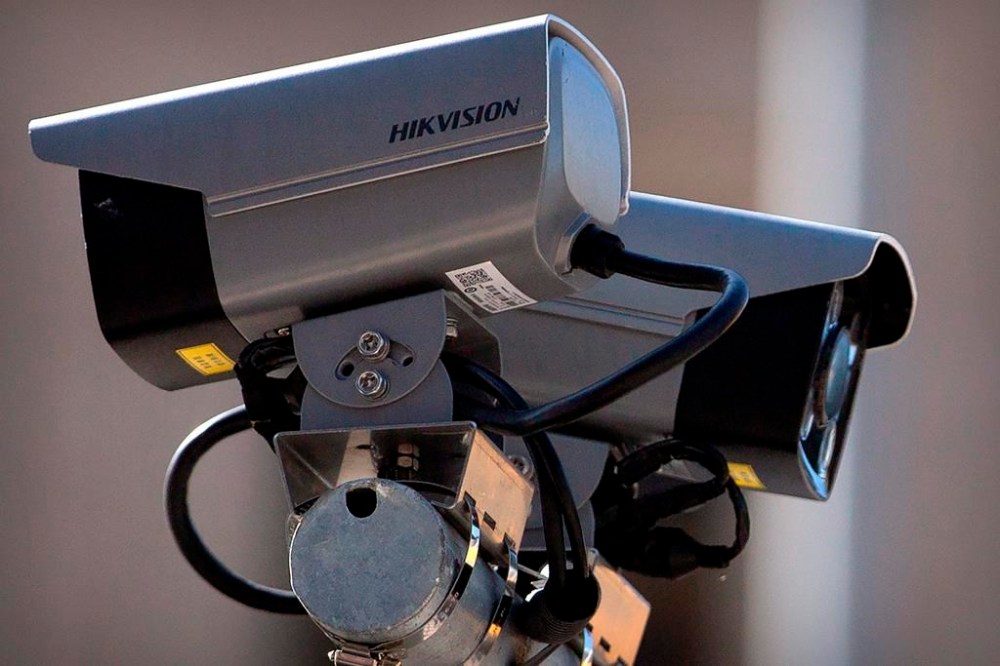
He adds that “The 17 high-resolution cameras have now been installed on city-owned properties, and we anticipate they will contribute to the sense of safety and security we are working to achieve.”
Justice Minister Matt Wiebe echoed Bosiak’s comments, saying that “This program is a win-win. We can make communities safer while making drug traffickers and organized crime pay the price.”
That may be happening in Dauphin, but we also note that a 2019 report by the Manitoba Police Commission recommended the increased use of CCTV cameras to reduce crime in downtown Winnipeg. Further, the Stefanson government promised last summer to spend $10 million on 75 additional CCTV cameras for downtown Winnipeg, along with improved lighting and other measures.
If the provincial government, the police commission, the justice minister and Dauphin’s mayor all believe surveillance cameras could reduce criminal activity and create a greater sense of safety and security, it is fair to ask whether they would be helpful here in Brandon.
In fact, it is not merely fair to ask that question. It is also timely.
That’s because Brandon community housing and wellness co-ordinator Shannon Saltarelli will be making a presentation at tonight’s Brandon city council meeting, during which she plans to update council “on the Community Safety and Wellbeing Plan we are doing in conjunction with the Canadian Network of Municipalities for Crime Prevention, community partners and supported by the Department of Justice.”
Attached to the agenda for tonight’s meeting is a report to council by city manager Ron Bowles, in which he recommends that Satarelli’s report “be referred to the Downtown Wellness and Safety Task Force when they reconvene in early 2024.”
He adds that “In the meantime, the City of Brandon is actively pursuing progress on the twenty recommendations from the Downtown Wellness and Safety Task Force,” which he then lists in his report. (A link to his report is found of Page 3 of the agenda for Monday’s meeting, which is found on the city website).
Surprisingly, not one of those 20 recommendations includes any reference to the use of cameras. Based upon what is happening in Winnipeg and Dauphin, maybe it should.
Indeed, there appears to be ample research that suggests CCTV cameras can help reduce criminal activity. For example, a report on the ADT security website says that “In Orange County, New Jersey, surveillance cameras installed around the city showed a 50 per cent drop in all crime types. Police officers who participated in this study noted that having access to surveillance recordings made it much easier for them to investigate cases.”
Beyond that, a New York Times report from last year discussed a study by researchers at City University of New York, Northeastern University and Cambridge University, in which scientists conducted a systemic review of the effects of CCTV networks on crime trends in various countries. The researchers found that crime decreased 13 per cent overall in areas with CCTV cameras.
The Times report adds that “Cameras, according to the study, were effective as a deterrent for crimes such as car burglaries and property theft.”
Following the Brandon planning commission’s recent decision to reject a proposed downtown homeless shelter, the issue of downtown safety is once again top of mind in our city. If a convincing case can be made that the use of cameras could reduce criminal activity in our downtown area and create a greater sense of safety — and if the province is willing to contribute toward the cost of those cameras — it may be an idea worth considering.