
Rare Raymond Chandler poem is a tribute to his late wife, with a surprising twist
Advertisement
Read this article for free:
or
Already have an account? Log in here »
We need your support!
Local journalism needs your support!
As we navigate through unprecedented times, our journalists are working harder than ever to bring you the latest local updates to keep you safe and informed.
Now, more than ever, we need your support.
Starting at $15.99 plus taxes every four weeks you can access your Brandon Sun online and full access to all content as it appears on our website.
Subscribe Nowor call circulation directly at (204) 727-0527.
Your pledge helps to ensure we provide the news that matters most to your community!
To continue reading, please subscribe:
Add Brandon Sun access to your Free Press subscription for only an additional
$1 for the first 4 weeks*
- Enjoy unlimited reading on brandonsun.com
- Read the Brandon Sun E-Edition, our digital replica newspaper
*Your next Free Press subscription payment will increase by $1.00 and you will be charged $20.95 plus GST for four weeks. After four weeks, your payment will increase to $24.95 plus GST every four weeks.
Read unlimited articles for free today:
or
Already have an account? Log in here »
Hey there, time traveller!
This article was published 11/12/2023 (1018 days ago), so information in it may no longer be current.
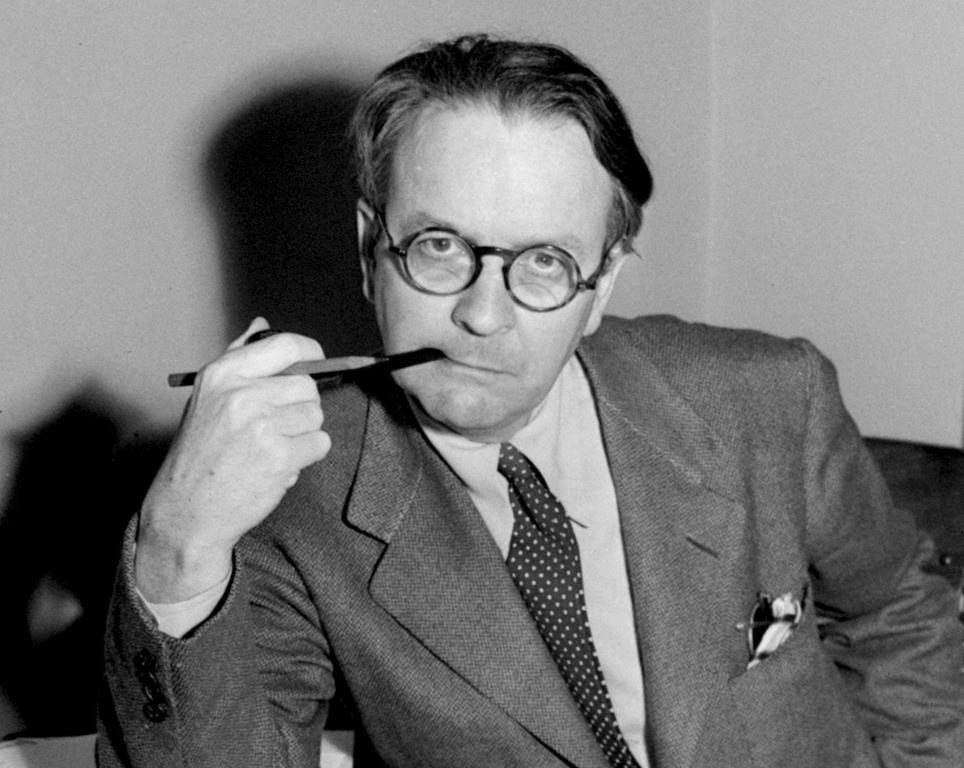
NEW YORK (AP) — Near the end of 1954, the wife of Raymond Chandler died after a long battle with lung disease. The famed crime novelist fell into near-suicidal depression from which he never recovered. He drank heavily and died just five years later, at age 70.
Chandler completed no major books after the death of Cissy Pascal Chandler, but he did summon a brief, unpublished work, in a format he was not known for mastering: poetry. Written during the year following Cissy’s death, the 27-line “Requiem” is a grieving fatalist’s tribute to his longtime spouse, with opening lines that have the aura of a crime scene — and of a final glance at the victim.
There is a moment after death when the face is beautiful
When the soft, tired eyes are closed and the pain is over,
And the long, long innocence of love comes gently in
For a moment more, in quiet to hover.
Chandler’s poem appears in the winter edition of Strand Magazine, which has published rare pieces by William Faulkner, John Steinbeck and Tennessee Williams among others. Strand editor-in-chief Andrew Gulli says he found the poem in a shoe box at the University of Oxford’s Bodleian Library.
“I liked this departure from the wise cracking tales” of Chandler sleuth Philip Marlowe, Gulli says of “Requiem.”
Chandler, known for such classic novels as “The Long Goodbye” and “The Big Sleep,” had released poems early in his career that Charles Ardai, a crime writer and founder of the imprint Hard Case Crime, calls “juvenilia.” But Ardai praised “Requiem” as “heartfelt and lovely and observed as only a longtime spouse recently bereaved could.”
“This is a mature poem, a legitimate addition to Chandler’s body of work. I’m very glad it has been found,” Ardai says.
According to Tom Williams, whose Chandler biography “A Mysterious Something in the Light” came out in 2012, the author met Cissy Pascal some time before World War I, corresponded with her while he was serving overseas and married her in 1924. Chandler was in his mid-30s at the the time they wed, Cissy was nearly 20 years older.
Biographers have long speculated about their bond, whether the Chandlers’ age difference or their frequent changes of residence or their brief separation in the early 1930s. They did reconcile and remain together, in part so Chandler could care for his ailing wife.
“I think they needed one another,” Williams said. “He would never leave her and certainly felt that he owed her a duty of care when she was sick.”
“Requiem” includes a surprising twist. Resigned to the loss of his wife, to the end of the “long, wild dream,” Chandler consoles himself with the letters that recall “the long, long innocence” of their feelings for each other.
I hold them in my hand, tied with green ribbon
Neatly and firmly by the soft, strong fingers of love.
The letters will not die.
But the letters apparently did die; Chandler is believed to have destroyed them.
“We know that Chandler was a man who flirted with self destruction — he attempted suicide several times, including at least once after his wife’s death,” Ardai says. “Perhaps destroying the letters he so clearly cherished came out of the same self-destructive impulse. Or maybe he simply knew he was dying and had limited time left and felt that the letters were intensely private.”
Admirers forgot neither Chandler nor his wife. Because Chandler never got around to processing the necessary documents, Cissy did not have a formal burial; her remains were stored inside a mausoleum in San Diego, where the couple had lived in their latter years. But Chandler fan Loren Latker led an effort for a posthumous reunion. In 2011, a judge approved and Cissy was interred alongside her husband at San Diego’s Mount Hope Cemetery — on Valentine’s Day.