
Brandon attracts $200 million in investment across 2 sectors in ’23
Advertisement
Read this article for free:
or
Already have an account? Log in here »
We need your support!
Local journalism needs your support!
As we navigate through unprecedented times, our journalists are working harder than ever to bring you the latest local updates to keep you safe and informed.
Now, more than ever, we need your support.
Starting at $15.99 plus taxes every four weeks you can access your Brandon Sun online and full access to all content as it appears on our website.
Subscribe Nowor call circulation directly at (204) 727-0527.
Your pledge helps to ensure we provide the news that matters most to your community!
To continue reading, please subscribe:
Add Brandon Sun access to your Free Press subscription for only an additional
$1 for the first 4 weeks*
- Enjoy unlimited reading on brandonsun.com
- Read the Brandon Sun E-Edition, our digital replica newspaper
*Your next Free Press subscription payment will increase by $1.00 and you will be charged $20.95 plus GST for four weeks. After four weeks, your payment will increase to $24.95 plus GST every four weeks.
Read unlimited articles for free today:
or
Already have an account? Log in here »
Hey there, time traveller!
This article was published 29/12/2023 (992 days ago), so information in it may no longer be current.
The City of Brandon has identified investments worth about $200 million in the heavy-industry and food-processing sectors in 2023. The trend is expected to continue into 2024, according to the city’s economic development director, Gerald Cathcart.
The investment, Cathcart said, signifies a robust and sustained commitment to fostering growth and development within these pivotal sectors of Brandon’s economy.
“Through its industry visitations, Economic Development Brandon has identified nearly $200 million of investment made into these sectors,” he said. “Despite facing the challenges of soaring interest rates, Brandon witnessed local businesses persistently pour substantial investments into the community.”
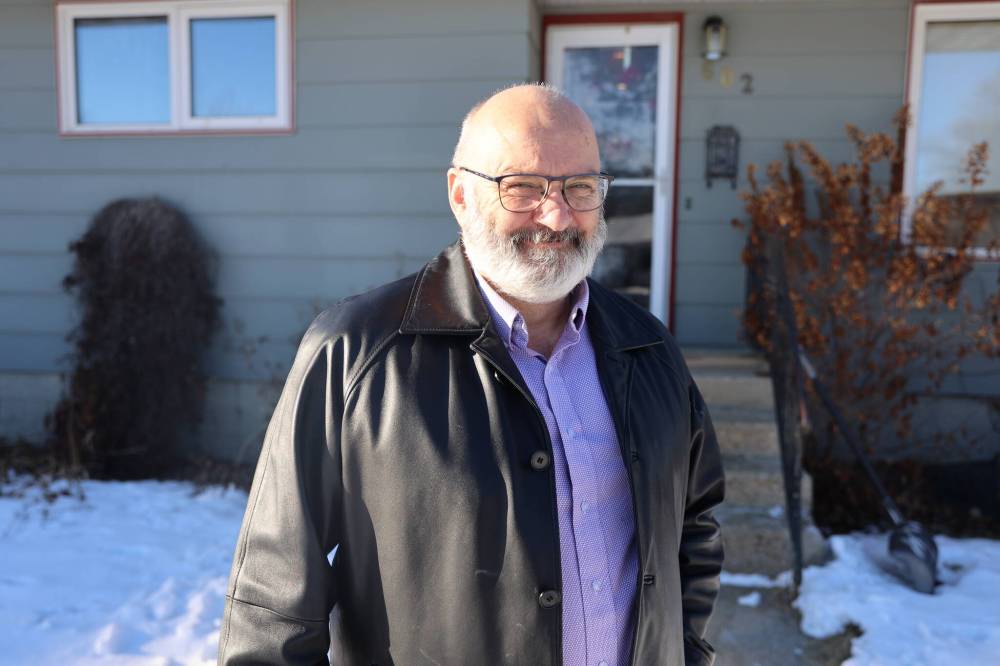
The city's economic development director, Gerald Cathcart, says Brandon has identified investment worth about $200 million in its heavy-industry and food-processing sectors in 2023, and the trend is expected to continue into 2024. (Abiola Odutola/The Brandon Sun)
Cathcart said the steadfast investment behaviour is a key indicator, showcasing the community’s unwavering belief in the local economy’s strength and prospects.
Some of the notable investments in 2023, he said, were done by Forman Honda, Full Tilt Towing, Pfizer, Sobeys West, Kullberg’s Warehouse, Wheat City Fieldhouse and Christies Office Supplies, among others.
Eyes now turned to 2024, he said ventures such as Brandon Fresh Farms, Cascadia Metals, Enns Brothers, Nissan and Dingu Technologies are undertaking site-selection processes.
These ongoing projects, he said, are across diverse sectors and underscore Brandon’s allure to a spectrum of industries.
Reviewing the real estate market trends in the city for 2023, Brandon Area Realtor president Zach Munn said the city experienced stability in home prices, a shortage in available properties, and enduring effects from the COVID-19 pandemic, notably affordability challenges and elevated interest rates.
“The statistics collected from the beginning of the year until Oct. 31, 2023 depict Brandon’s average residential sales price at $312,141, marking a $1,261 increase compared to 2022,” he said. “However, the number of residential transactions dipped to 437, down from 445 in 2022, marking the lowest transaction rate witnessed in over a decade.”
In terms of property activity and potential growth areas, he said the residential segment within the price range of $200,000 to $400,000 dominates the market, representing 65.45 per cent of total sales in Brandon, with 286 out of 437 transactions falling within this range.
This highlights a substantial demand across various real estate categories. Condos featuring garages and spacious backyard areas, along with well-maintained residential houses in prime locations, are notably sought after and deemed highly desirable by local real estate professionals, reflecting the prevailing demand in the market.
An economist with RBC, Rachel Battaglia, said economic growth, which stood at around 3.3 per cent in 2022, is expected to decline significantly in 2023, to 1.4 per cent, marking a notable slowing.

This decline is attributable to the substantial challenges faced by many businesses and households coping with escalated interest rates, she said, adding there has been a slight alleviation in labour market pressures compared to 2022.
For the first half of 2024, she highlighted the likelihood of affordability challenges, decreased investments, and heightened interest rates. However, with the Bank of Canada expected to lower rates later in the year, a significant portion of these economic pressures is projected to be alleviated.
If the economic pressures ease, Battaglia said it might present a promising opportunity for both businesses and households as the economy gears toward a phase of recovery and growth in the upcoming year.
During difficult economic periods, she said individuals typically trim back on non-essential spending, particularly in areas like restaurants, travel, and tourism — considered discretionary expenses. These sectors are likely to experience initial cuts as people reassess their spending habits due to higher interest rates and the overall challenging economic environment in the new year.
“I would advise caution. We’re not foreseeing a severe recession; by historical standards, it’s expected to be relatively mild,” she said. “However, there remains a potential downside risk. The recession might surpass our current predictions, so it’s wise to prepare accordingly.”
Looking ahead, readiness for potential economic shifts and the subsequent return to a growth phase is essential, as many challenges observed in 2022 might resurface, hence the importance of preparation for an eventual rebound in the economy.
Westoba Credit Union chief executive officer Jim Rediger said the outlook for 2024 might vary for different people.
Borrowing money right now provides short-term stability because of current interest rates, he said, noting the five per cent rate on bank accounts has a big effect on these short-term rates, which are expected to stay steady.

“If rates remained steady, there was a level of comfort that overall consumer prices would stabilize and hopefully decrease, offering the expectation for Canadians to witness a gradual moderation or potential long-term decline in prices,” he told the Sun. “Such changes take time to permeate the economy.”
Rediger said that seeking assistance is crucial for those facing challenges in today’s environment, noting the common struggles among individuals and urging prompt action to explore available options. These might not always be apparent, he said, without consulting a financial services professional.
As the horizon stretches into 2024, Cathcart is optimistic, and Brandon remains cautiously optimistic, attracting investments while bracing for potential economic shifts.
» aodutola@brandonsun.com
» X: @AbiolaOdutola