
Beef industry reports 15% reduction in GHG emissions
Advertisement
Read this article for free:
or
Already have an account? Log in here »
We need your support!
Local journalism needs your support!
As we navigate through unprecedented times, our journalists are working harder than ever to bring you the latest local updates to keep you safe and informed.
Now, more than ever, we need your support.
Starting at $15.99 plus taxes every four weeks you can access your Brandon Sun online and full access to all content as it appears on our website.
Subscribe Nowor call circulation directly at (204) 727-0527.
Your pledge helps to ensure we provide the news that matters most to your community!
To continue reading, please subscribe:
Add Brandon Sun access to your Free Press subscription for only an additional
$1 for the first 4 weeks*
- Enjoy unlimited reading on brandonsun.com
- Read the Brandon Sun E-Edition, our digital replica newspaper
*Your next Free Press subscription payment will increase by $1.00 and you will be charged $20.95 plus GST for four weeks. After four weeks, your payment will increase to $24.95 plus GST every four weeks.
Read unlimited articles for free today:
or
Already have an account? Log in here »
Hey there, time traveller!
This article was published 16/01/2024 (984 days ago), so information in it may no longer be current.
The Canadian beef industry is reporting a 15 per cent reduction in greenhouse gas emissions, according to the second National Beef Sustainability Assessment and Strategy report, released yesterday by the Canadian Roundtable for Sustainable Beef (CRSB).
The result of three years of in-depth scientific analysis, the report focused on sustainability indicators such as greenhouse gas emissions, carbon storage, biodiversity and wildlife habitat.
The report was conducted with help from a $2.8-million funding boost from the federal government’s AgriAssurance Program — National Industry Association Component under the Sustainable Canadian Agricultural Partnership.
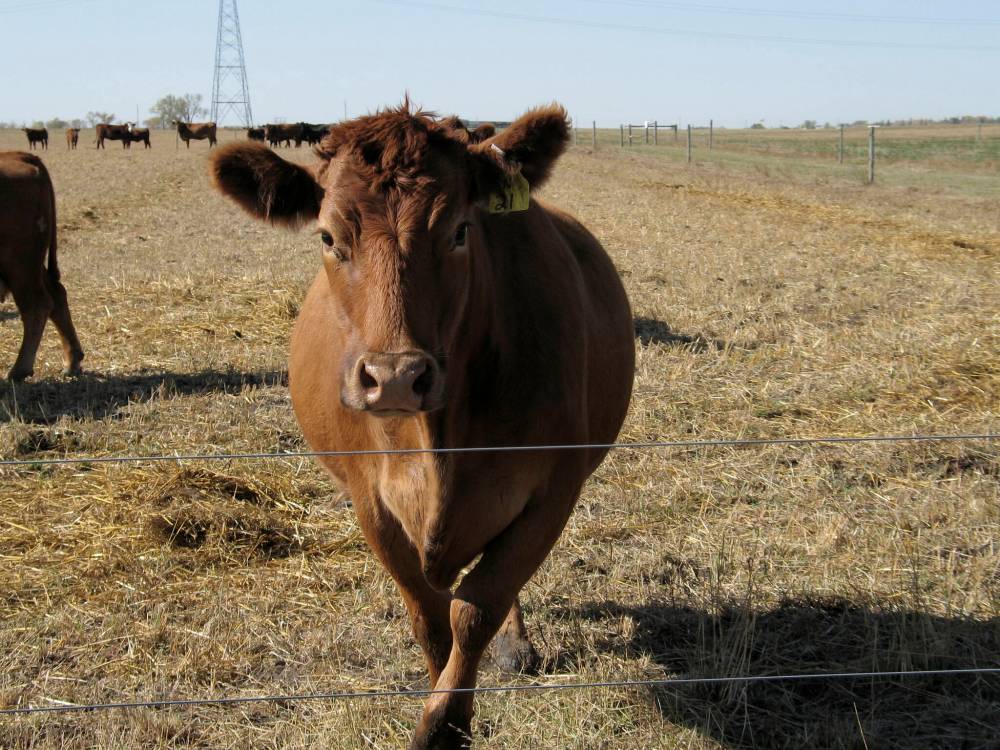
The Canadian Roundtable for Sustainable Beef's second National Beef Sustainability Assessment and Strategy report was released Monday. (File)
Among the environmental improvement successes outlined in the report is a 15 per cent reduction in greenhouse gas emissions to produce one kilogram of beef since 2014, which has largely contributed to more efficient cattle growth. This has led to a smaller overall carbon footprint for the industry, since fewer amounts of resources like land, water and feed are needed to produce the same amount of beef, Ryan Beierbach, chair of the CRSB and a Saskatchewan beef producer, said in an online media conference regarding the report on Monday morning.
“It’s exciting to see the 15 per cent reduction in greenhouse gas emissions intensity, which puts us on track to achieve the 33 per cent reduction 2030 goal that the industry has set,” he said.
Land being used for cattle production stores around 1.9 billion tonnes of soil organic carbon, the report also shows. With overall loss of habitat, Canadian beef farmers and ranchers are providing an important service in preserving intact critical wildlife habitat, Beierbach said.
The next steps for the industry are outlined with a National Beef Sustainability Strategy for the CRSB and its members over the next several years.
“The Canadian beef sector is committed to transparency and continuous improvement in sustainability,” Beierbach said. “We look forward to further collaborations and innovations to make a positive impact and meet our goals for the Canadian beef industry’s social, economic and environmental performance.”
The Sun will have more in-depth coverage on the CRSB’s report and assessment in the Jan. 25 edition of Westman This Week.
» mleybourne@brandonsun.com
» X: @miraleybourne