
Japan’s imperial family hosts a poetry reading with a focus on peace to welcome the new year
Advertisement
Read this article for free:
or
Already have an account? Log in here »
We need your support!
Local journalism needs your support!
As we navigate through unprecedented times, our journalists are working harder than ever to bring you the latest local updates to keep you safe and informed.
Now, more than ever, we need your support.
Starting at $15.99 plus taxes every four weeks you can access your Brandon Sun online and full access to all content as it appears on our website.
Subscribe Nowor call circulation directly at (204) 727-0527.
Your pledge helps to ensure we provide the news that matters most to your community!
To continue reading, please subscribe:
Add Brandon Sun access to your Free Press subscription for only an additional
$1 for the first 4 weeks*
*Your next subscription payment will increase by $1.00 and you will be charged $20.00 plus GST for four weeks. After four weeks, your payment will increase to $24.00 plus GST every four weeks.
Read unlimited articles for free today:
or
Already have an account? Log in here »
Hey there, time traveller!
This article was published 19/01/2024 (804 days ago), so information in it may no longer be current.
TOKYO (AP) — A mother’s love and a yearning for peace flowed from Japanese Empress Masako’s poem, read Friday at an annual celebration of poetry at the Imperial Palace in Tokyo.
The poem sings of how Masako was touched by what her daughter, Princess Aiko, wrote after her school trip to the southern Japanese city of Hiroshima, which was devastated by an atomic bomb in the closing days of World War II.
Starting the new year with poetry is part of Japanese culture. The gathering at the palace is believed to have begun in the 13th century, according to the Imperial Household Agency.
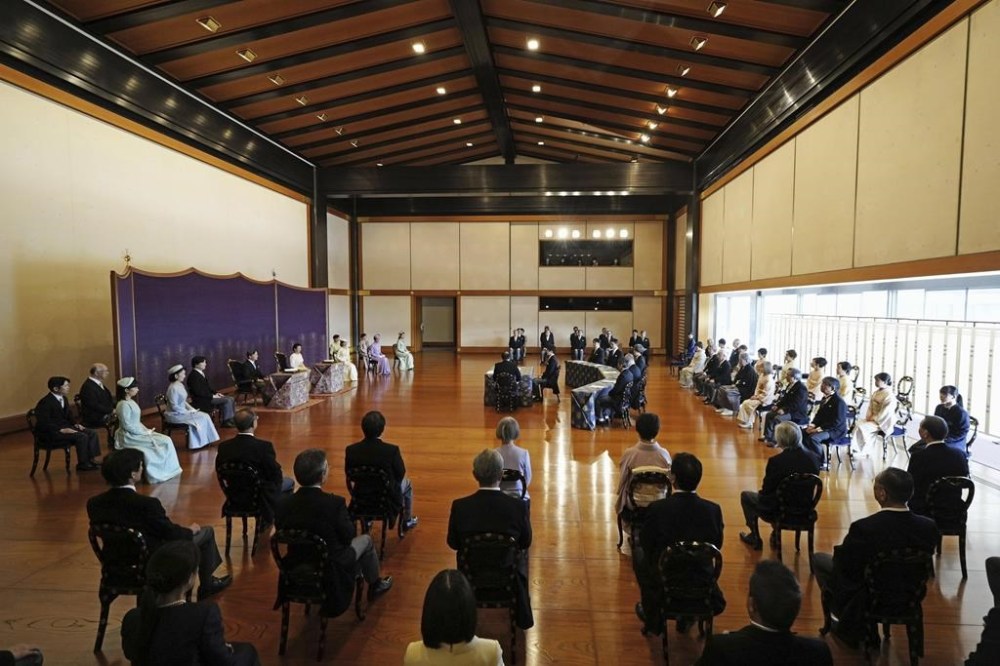
Among the guests wearing suits, kimono and other formalwear were people who had won awards for their own poems.
Various works written in traditional “waka” style were presented Friday, solemnly read aloud in a sing-song way, like a chant, as the imperial family watched. Waka — literally meaning Japanese-style song — is short-form poetry that usually follows a 5-7-5-7-7 syllable format.
Aiko’s poem depicted her fascination with the waka form, which she has studied at Gakushuin University. She marveled at how the art has survived a thousand years, which she imagined to include deep human suffering.
Emperor Naruhito’s poem affirmed the idea of peace by describing seeing the smiles of all the people during his travels throughout Japan.
Naruhito — grandson of the wartime emperor Hirohito — and his family are fairly popular, greeted by waving crowds wherever they go. The emperor does not have political power, but he carries symbolic significance for Japan. Naruhito’s father, Akihito, abdicated in 2019. The move is rare for a Japanese emperor, whose reign typically ends upon death.
The official translation of Masako’s poem reads: “How moved I was to read / My daughter’s deep feelings for peace / After her first visit / To Hiroshima.”
___
Yuri Kageyama is on X: https://twitter.com/yurikageyama