
‘Axe the Tax’ campaign ignites food-price debate
Advertisement
Read this article for free:
or
Already have an account? Log in here »
We need your support!
Local journalism needs your support!
As we navigate through unprecedented times, our journalists are working harder than ever to bring you the latest local updates to keep you safe and informed.
Now, more than ever, we need your support.
Starting at $15.99 plus taxes every four weeks you can access your Brandon Sun online and full access to all content as it appears on our website.
Subscribe Nowor call circulation directly at (204) 727-0527.
Your pledge helps to ensure we provide the news that matters most to your community!
To continue reading, please subscribe:
Add Brandon Sun access to your Free Press subscription for only an additional
$1 for the first 4 weeks*
- Enjoy unlimited reading on brandonsun.com
- Read the Brandon Sun E-Edition, our digital replica newspaper
*Your next Free Press subscription payment will increase by $1.00 and you will be charged $20.95 plus GST for four weeks. After four weeks, your payment will increase to $24.95 plus GST every four weeks.
Read unlimited articles for free today:
or
Already have an account? Log in here »
Hey there, time traveller!
This article was published 07/02/2024 (948 days ago), so information in it may no longer be current.
The Conservatives’ “Axe the Tax” campaign to curb rising food prices in Canadian supermarkets has sparked a fierce debate among politicians and economic experts.
The focus of the disagreement revolves around whether the tax significantly determines the cost of food in grocery stores, with both parties presenting contrasting arguments and claims.
Brandon-Souris MP Larry Maguire said the carbon tax, currently applied to natural gas and propane used on farms for activities such as drying grain and heating livestock barns, is projected to cost farmers a staggering $978 million by 2030, as confirmed by a report from the Parliamentary Budget Officer.
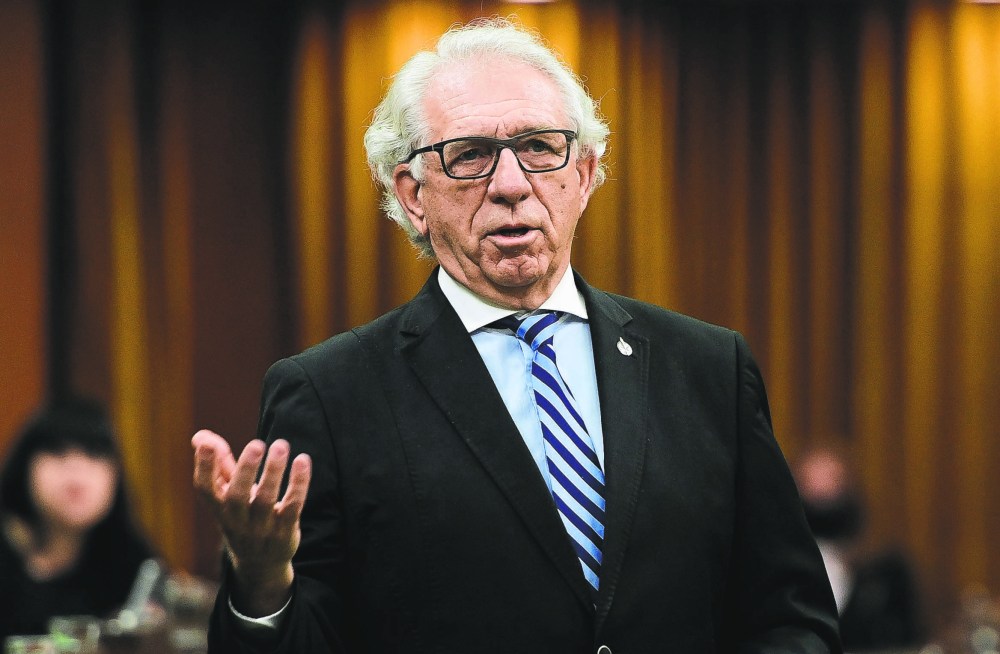
“As farmers are forced to recover the higher costs of production for the food they grow and raise, consumers will ultimately be left with higher grocery bills,” Maguire told the Sun. “The reality is the carbon tax adds costs to every part of the supply chain from farm to plate — on the farmer growing food, the trucker transporting it and the store selling it.“
Highlighting the financial challenges faced by farmers, he noted margins are tight in agriculture and growing and raising food is a costly endeavour, so anything that helps a farmer’s bottom line and keeps their costs low can make a big difference.
Passing Bill C-234, he said, “tackles one part of this equation by reducing production costs right at the onset.”
Proposed by Huron-Bruce MP Ben Lobb, the bill aims to amend the Greenhouse Gas Pollution Pricing Act, seeking exemptions from the federal carbon tax for natural gas and propane used in heating livestock barns and grain drying.
Senate amendments removed barns and greenhouses from the exemption and shortened the sunset period for propane and natural gas to three years. Despite changes, the bill passed third reading on Dec. 12.
“They have to dry their grain and heat their barns if they want to put food on Canadians’ tables and axing the carbon tax from these activities is a common-sense way to bring their costs down,” Maguire said. “The Senate’s decision to gut the bill puts this in jeopardy and means that it’ll cost more to grow and raise food and therefore it’ll cost more for consumers to buy it.”
Maguire criticized the Liberal government, claiming the carbon tax is more of a tax plan than an environmental strategy.
“While trying to defend the decision to only give Atlantic Canadians a break from the carbon tax, Liberal (rural economic development) minister Gudie Hutchings told Canadians that they ‘need to elect more Liberals in the Prairies so that we can have that conversation as well.’ This was a clear admission that their carbon tax has always been about politics, not the environment,” Maguire said.
“The decision to pause the tax in one part of Canada is also an admission that the tax burden is pushing Canadians over the edge.”
In contrast, Centre for Future Work director Jim Stanford said there is no visible connection between carbon pricing and the prices of food in Canadian supermarkets.

The carbon pricing system, implemented in 2019, did not show a significant impact on food inflation during its initial years, he said.
“Inflation accelerated after mid-2021 when the increase in the carbon price was much smaller,” Stanford told the Sun in an email. “Now, since mid-2023 (with the biggest single increase in the carbon price), food inflation is slowing down dramatically.”
The economist said carbon pricing mainly affects the relative cost of fossil-fuel consumption, with exemptions for diesel and gasoline used in farm equipment and greenhouse gas for fruit and vegetable growers.
“The key drivers of food price inflation since 2021 have been disruptions in global supply chains from the pandemic, the big spike in world oil prices due to OPEC, geopolitics and the power of giant oil companies,” Stanford said. “Others are climate disasters that affect food production (including droughts and floods) and the concentrated corporate power of the big 3 supermarket chains (which control two-thirds of Canada’s food retail sector, allowing them to increase food prices far more than their costs).”
Dismissing the notion of blaming the carbon tax for economic issues, Stanford described it as “ideologically motivated misinformation.” He argued food inflation is decreasing, “because most of those issues (including world oil prices) have been partly alleviated. That will continue, even as the carbon price is increased in future years.”
» aodutola@brandonsun.com
» X: @AbiolaOdutola