
First Nations call on feds to oppose nuclear waste disposal site near Ottawa River
Advertisement
Read this article for free:
or
Already have an account? Log in here »
We need your support!
Local journalism needs your support!
As we navigate through unprecedented times, our journalists are working harder than ever to bring you the latest local updates to keep you safe and informed.
Now, more than ever, we need your support.
Starting at $15.99 plus taxes every four weeks you can access your Brandon Sun online and full access to all content as it appears on our website.
Subscribe Nowor call circulation directly at (204) 727-0527.
Your pledge helps to ensure we provide the news that matters most to your community!
To continue reading, please subscribe:
Add Brandon Sun access to your Free Press subscription for only an additional
$1 for the first 4 weeks*
*Your next subscription payment will increase by $1.00 and you will be charged $20.00 plus GST for four weeks. After four weeks, your payment will increase to $24.00 plus GST every four weeks.
Read unlimited articles for free today:
or
Already have an account? Log in here »
Hey there, time traveller!
This article was published 14/02/2024 (680 days ago), so information in it may no longer be current.
OTTAWA – First Nations leaders are calling on the federal government to oppose a nuclear waste disposal site near the Ottawa River that they say threatens drinking water and their rights.
Last month, a federal regulator approved a proposal from Canadian Nuclear Laboratories to build a near-surface disposal facility for nuclear waste close to Chalk River, Ont., located near the Ottawa River.
The Canadian Nuclear Safety Commission said the project isn’t “likely to cause significant adverse environmental effect.”
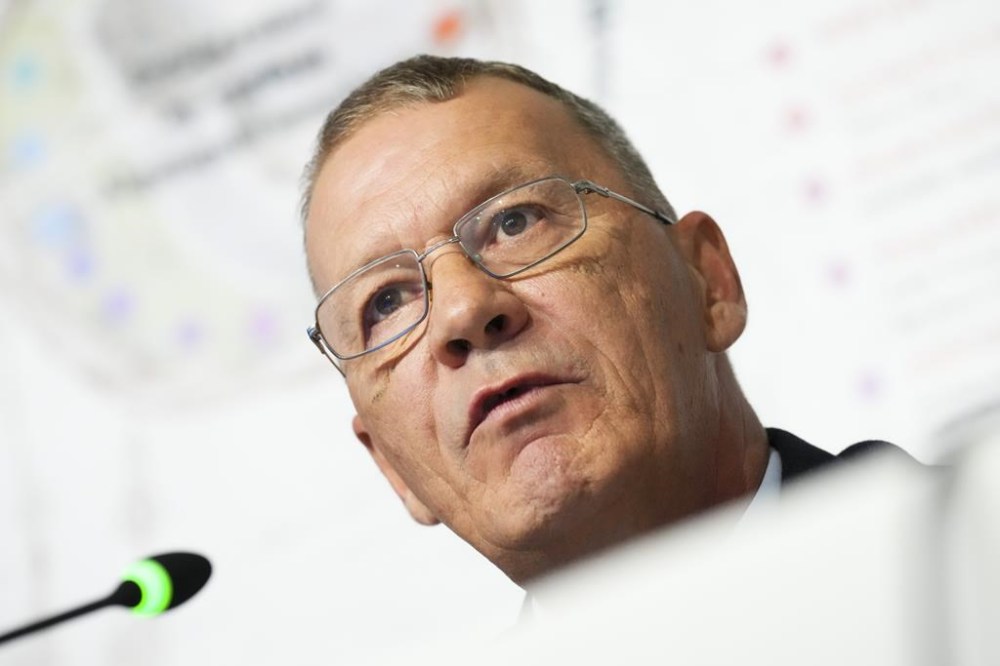
But multiple First Nations and dozens of municipalities in Ontario and Quebec object to the project.
The facility is located on the traditional territories of Kebaowek First Nation.
It launched a judicial review of the decision last month, accusing the federal government of breaching its duty to consult by failing to obtain consent for the project.
“We stand united in safeguarding the well-being of our shared environment and the fundamental right of all Canadians to access clean and uncontaminated drinking water,” Chief Lance Haymond said Wednesday on Parliament Hill.
He was joined by Bloc Québécois and Green Party MPs, along with other Indigenous leaders.
“As First Nations, we have a deep respect for our responsibility to protect our land,” said the Assembly of First Nations regional chief for Quebec-Labrador, Ghislain Picard.
“We expect governments to recognize that.”
Dozens of supporters gathered on Parliament Hill after their remarks, carrying signs calling on Canadians to “say no” to nuclear waste.
Bloc Leader Yves-François Blanchet pressed Prime Minister Justin Trudeau on the project during question period as First Nations leaders looked on from the public gallery.
Trudeau said the approval was handled by the regulator and was not a political decision. He added that protecting the safety of Canadians and the environment is a priority.
The facility is slated to be built on the Chalk River Laboratories site about a two-hour drive northeast of the capital, where nuclear technology is tested.
During the final public hearing held by the Canadian Nuclear Safety Commission, councillor Justin Roy of Kebaowek First Nation likened the project to building an outhouse beside a well.
The proposed facility consists of nine disposal cells and a base liner, along with systems to collect leachate, monitor the environment and detect leaks, according to the nuclear safety commission.
It’s expected to have an operating life of at least 50 years and hold up to a million cubic metres of low-level radioactive waste.
The Canadian Nuclear Safety Commission launched an environmental assessment of the site in 2016, but First Nations say the assessment wasn’t culturally relevant, leading them to pen their own. It was released in June.
The report says the area around Chalk River was never ceded by the Anishinabeg people, nor were they consulted when the original Chalk Rivers Laboratories site was developed.
Among the First Nations’ concerns are the possible effects the nuclear waste site could have on cultural practices, wildlife and the land, as well as whether there is potential for radioactive waste to leach into the supply of drinking water for those who live in the river’s watershed.
Part of the goal in demonstrating on Parliament Hill was to catch ministers’ attention.
But the office of Energy Minister Jonathan Wilkinson said Wednesday he has “no role” in licensing decisions.
His office said it’s aware of two judicial review applications filed last week in the Federal Court, but has no comment as Canada awaits the court’s decision.
“I grew up watching The Simpsons, and we’re going to have a situation potentially of three-eyed fish,” said Kitigan Zibi First Nation Chief Dylan Whiteduck on Wednesday, referring to the cartoon’s depiction of mutated fish living near a nuclear power plant.
“I’m really ashamed of this and this project.”
This report by The Canadian Press was first published Feb. 14, 2024.